
In today's fast-paced, often remote work environment, the simple act of peer feedback has transformed from a 'nice-to-have' into a critical driver of engagement, retention, and performance. Generic praise falls flat, but specific, timely, and value-aligned recognition can ignite motivation and strengthen team bonds. The importance of team recognition is paramount; it reinforces positive behaviors and builds a culture where colleagues feel seen and actively support each other's growth. When employees feel appreciated, they are more engaged, more productive, and more likely to stay with the company.
Table of Contents
This guide moves beyond theory to provide concrete examples of peer feedback systems you can implement immediately, especially within platforms like Slack. We'll explore 8 powerful models, dissecting the strategy behind each one so you can adapt them to your unique team culture. You won't just get templates; you'll get a blueprint for building a self-sustaining ecosystem of appreciation.
You will learn not just what to say, but how and when to deliver feedback that resonates. We will cover everything from lightweight, emoji-based kudos to structured, data-driven insights. These practical examples are your roadmap to making meaningful recognition a daily habit, not an annual formality. By the end, you'll have a versatile toolkit to ensure every team member feels seen, valued, and connected to your company's mission.
1. Emoji-Based Recognition
Emoji-based recognition transforms peer feedback into a lightweight, engaging, and highly visual process directly within your team's chat platform. This method uses specific emojis as tokens of appreciation, allowing colleagues to instantly acknowledge contributions with a simple reaction. It’s one of the most accessible examples of peer feedback because it lowers the barrier to entry, making recognition a frequent and natural part of daily communication.
Instead of typing a formal message, a team member can add a custom emoji like :taco:, :kudos:, or a company-specific icon to a message to signify a job well done.
A practical example: After a developer posts in a channel, "Just deployed the hotfix for the login bug," a teammate can simply add a :life-saver: emoji reaction to that message. The feedback is instant, public, and requires no extra effort.
Platforms like AsanteBot or Bonusly build entire systems around this concept, often linking these emojis to a points system that employees can redeem for rewards. This gamified approach makes giving and receiving feedback feel fun and rewarding.
Strategic Breakdown
- Why It Works: This method leverages the "micro-interaction" principle. Small, low-effort actions create a positive feedback loop and a sense of immediate gratification. It’s psychologically powerful because it's instant, visual, and public (within a channel), amplifying the recognition's impact.
- When to Use It: It is ideal for acknowledging small-to-medium wins that might otherwise go unnoticed. Examples include thanking a colleague for quick help on a task, celebrating a bug fix, or appreciating a well-articulated point in a meeting summary. It’s perfect for fast-paced, remote-first environments where traditional feedback can be slow.
Actionable Takeaways
To implement this effectively, go beyond just enabling emoji reactions. Create a structured system to give them meaning and value.
- Define Your Emojis: Assign specific meanings to a set of custom emojis. For example,
:brain:for innovative ideas,:life-saver:for unblocking a teammate, and:rocket:for shipping a feature. - Create Scarcity: Use a tool like AsanteBot to limit the number of recognition emojis an employee can give per day or week. This prevents overuse and makes each token of appreciation more meaningful.
- Visualize Success: Implement leaderboards that showcase top givers and receivers. This encourages participation and visibly celebrates both the employees doing great work and those who actively recognize it.
By turning simple reactions into a structured program, you create a powerful, self-sustaining culture of recognition. For a deeper dive into making this work in Slack, discover how to leverage emojis for powerful team recognition.
2. Leaderboard-Based Recognition
Leaderboard-based recognition gamifies the peer feedback process by creating a friendly, competitive environment that encourages active participation. This system publicly showcases the top givers and receivers of praise, tapping into social proof and the innate human desire for achievement. By making recognition visible and measurable, it turns the act of giving feedback into a celebrated team activity and stands out as one of the most motivating examples of peer feedback.
Tools like AsanteBot automatically generate and post weekly leaderboards in designated Slack channels, highlighting who is leading in giving and receiving appreciation.
A practical example: Every Monday, a bot posts in the #announcements channel: "🏆 Weekly Recognition Roundup! Top Giver: Sarah J. with 8 kudos given! Top Receiver: Mike L. for his amazing work on the Q3 report! Let's keep the appreciation flowing!"
This not only celebrates high-achievers but also encourages others to participate more frequently. It transforms team recognition from a sporadic event into a consistent, trackable habit that builds a positive and appreciative culture.

Strategic Breakdown
- Why It Works: This method leverages gamification principles like competition, status, and public recognition to motivate behavior. Seeing names on a leaderboard provides a powerful psychological reward, encouraging consistent participation and making appreciation a core part of the team's weekly rhythm. It creates a virtuous cycle where giving recognition is as celebrated as receiving it.
- When to Use It: Leaderboards are ideal for teams looking to jumpstart or re-energize their recognition program. They work especially well in environments with a competitive yet collaborative spirit, such as sales teams, engineering squads, or any group that thrives on visible metrics. Use it to build momentum and establish a baseline of frequent, positive peer interaction.
Actionable Takeaways
A successful leaderboard is more than just a list of names; it's a strategic tool for shaping company culture.
- Highlight Both Sides: Always feature separate leaderboards for "Top Givers" and "Top Receivers." This dual focus is crucial because it rewards both the employees doing exceptional work and the culture champions who actively acknowledge it.
- Keep It Fresh: Update and post leaderboards on a consistent, frequent schedule, such as every Monday morning. Weekly resets prevent stagnation and give everyone, including new hires, a fair chance to participate and make their mark.
- Amplify the Wins: Don’t just post the leaderboard and walk away. Discuss the results in team meetings, give shout-outs to the leaders, and share stories behind the recognition. This adds a human element and reinforces the importance of peer appreciation.
By strategically implementing leaderboards, you create a dynamic and self-reinforcing system that makes peer recognition a celebrated and integral part of your team's identity.
3. Structured Feedback Day Sprints
Structured Feedback Day Sprints dedicate a specific, recurring time block for the entire team to give and receive peer feedback. This method transforms recognition from a spontaneous, often forgotten act into a consistent, scheduled ritual. It's one of the most effective examples of peer feedback for remote or distributed teams because it removes the guesswork and cognitive load of remembering to share appreciation, creating a reliable touchpoint that builds connection and reinforces positive behaviors.
Rather than waiting for inspiration to strike, the team is prompted at a set time to acknowledge colleagues.
A practical example: Every Friday at 2 PM, a bot pings everyone in the #team-marketing channel with the message: "It's Feedback Friday! Who on the team helped you succeed this week? Give them a shout-out in this thread!"
Tools like AsanteBot can automate this process entirely, sending notifications and guided prompts directly in Slack. This structured approach formalizes the habit of peer recognition and makes it a core part of the team's operational rhythm.
Strategic Breakdown
- Why It Works: This method leverages the "habit formation" loop. By providing a clear cue (the scheduled notification), a simple routine (answering a prompt), and a rewarding outcome (receiving and seeing recognition), it turns feedback into an ingrained team behavior. It ensures consistency and prevents recognition from falling through the cracks during busy periods.
- When to Use It: It is ideal for teams that struggle with inconsistent feedback or for remote environments where organic opportunities for praise are scarce. Use it to build a foundational culture of recognition, ensure everyone participates, and gather regular insights into team wins and collaboration highlights that might otherwise be invisible to leadership.
Actionable Takeaways
To make Feedback Day Sprints successful, focus on consistency, simplicity, and closing the loop. A well-run sprint should feel like a positive, low-effort ritual, not another mandatory task.
- Schedule and Automate: Pick a consistent day and time (e.g., Friday at 10 am) and use a tool to send automated reminders. A simple prompt like, "Who made your week better and why?" or "Recognize a colleague who went above and beyond this week" is highly effective.
- Set Realistic Goals: Don't expect 100% participation immediately. Aim for 60-70% in the first month and celebrate increases in participation to reinforce the habit. This encourages momentum without creating pressure.
- Amplify the Results: Share a summary of the recognition in a public channel or team meeting. This amplifies the positive impact, shows that the feedback is valued, and motivates others to join in during the next sprint.
4. Values-Aligned Peer Recognition
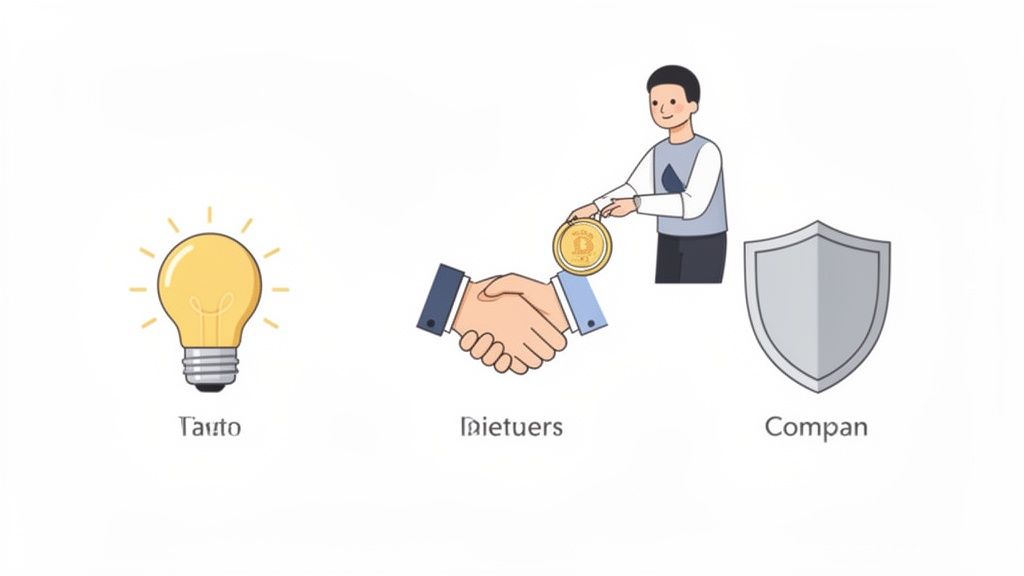
Values-aligned recognition connects peer feedback directly to your company's core principles, transforming praise from a simple "good job" into a powerful reinforcement of your culture. Instead of generic compliments, colleagues highlight specific actions that embody organizational values like "Customer Obsession" or "Innovate and Simplify." This method is one of the most strategic examples of peer feedback because it makes your company culture tangible and actively rewards the behaviors you want to see.
This approach works by creating a clear framework for recognition.
A practical example: In a #kudos channel, an employee writes, "@JaneDoe deserves a huge shout-out for #CustomerObsession. She stayed late to walk a new client through the setup process, ensuring they had a fantastic first experience."
This turns every act of appreciation into a data point, illustrating which values are truly alive in your organization.
Strategic Breakdown
- Why It Works: This method operationalizes culture. By linking feedback to values, you provide employees with a clear model of what success looks like in your organization. It moves values from a poster on the wall to the fabric of daily interactions, creating a self-reinforcing loop where desired behaviors are seen, celebrated, and replicated.
- When to Use It: It is ideal for organizations looking to build or strengthen a specific culture, especially during periods of growth or change. Use it to acknowledge contributions that reflect strategic priorities, such as rewarding innovative thinking during a product pivot or celebrating collaboration on a cross-functional project. It's particularly effective for embedding culture in remote or distributed teams where values can feel abstract.
Actionable Takeaways
To implement values-aligned recognition, you need to create a system that is both clear and consistently applied.
- Define and Socialize Values: Clearly define 3-5 core values with specific behavioral examples. For "Own It," a behavior might be "proactively identifying and solving a problem without being asked."
- Map Values in Your Tools: Use a platform like AsanteBot to map custom emojis or hashtags to each value (e.g.,
#Innovation,#Collaboration). This makes tagging recognition quick and intuitive within Slack. - Promote and Visualize: Regularly use prompts in team channels, like "Who lived our value of 'Think Big' this week?" Share the best examples in all-hands meetings and use dashboards to track which values get the most recognition, revealing insights into your company culture.
5. Milestone and Anniversary Recognition
Milestone and anniversary recognition is a systematic approach to celebrating work anniversaries, birthdays, and significant career achievements through automated peer recognition and team shout-outs. This method ensures that no team member's personal or professional milestone goes unnoticed, fostering a powerful sense of inclusion and belonging. It stands out as one of the most consistent examples of peer feedback because it builds celebration directly into the company calendar.
Rather than relying on manual reminders, this system uses tools like AsanteBot's Birthday and Work Anniversary bot to automatically post celebratory messages in public channels.
A practical example: A bot automatically posts in the #general channel: "🎉 Happy 3-Year Work Anniversary to @DavidSmith! Thanks for everything you do for the engineering team. Let's fill this thread with our favorite memories of working with David!"
This prompt encourages team members to chime in with their own well wishes, photos, and memories, turning a simple date on the calendar into a meaningful, team-wide event.
Strategic Breakdown
- Why It Works: This method taps into the human need for belonging and recognition of loyalty. Celebrating tenure and personal milestones reinforces that employees are valued as individuals, not just for their output. The importance of this type of team recognition lies in its ability to build long-term loyalty and make employees feel like a core part of the company's story.
- When to Use It: This is essential for building long-term team cohesion and reducing employee turnover. Use it to mark work anniversaries (especially the first, third, and fifth years), significant birthdays, and promotions. It is particularly impactful in remote or distributed teams where these personal connections can be harder to build and maintain organically.
Actionable Takeaways
To make milestone celebrations feel genuine and not just automated, you must infuse them with personality and encourage peer participation.
- Automate with a Personal Touch: Use a tool like AsanteBot's Birthday and Work Anniversary bot, which can be activated at no cost, but customize the message templates. Add company-specific inside jokes, values, or a unique tone to make the automated posts feel authentic.
- Encourage Peer Contributions: The automated post is just the starting point. Prompt colleagues to share a favorite memory or a specific way the celebrated employee has helped them. This transforms a bot notification into a rich, peer-driven tribute.
- Tie to Greater Recognition: Pair the public shout-out with a small, tangible reward like a gift card, extra "kudos" points in your recognition platform, or a half-day off. Highlighting major milestones in all-hands meetings also amplifies their importance.
By systemizing these celebrations, you create a reliable and scalable ritual that strengthens team bonds. To craft the perfect message for these occasions, explore these templates for a heartfelt work anniversary message.
6. Anonymous Feedback Mechanisms
Anonymous feedback mechanisms create a psychologically safe channel for employees to share honest, constructive input without fear of personal or professional repercussions. This method leverages tools that remove attribution, encouraging candid feedback on sensitive topics or systemic issues. It is one of the most powerful examples of peer feedback for uncovering blind spots and fostering a culture of genuine transparency.
Instead of attaching their name to a comment, team members can use tools to submit their thoughts privately. The feedback is then aggregated or delivered to the relevant person or team without revealing the source.
A practical example: After a major project launch, a manager sends out an anonymous survey link with the question, "What is one thing we could have done better during the project planning phase?" This allows team members to provide candid criticism about processes without fear of blaming individuals.
Strategic Breakdown
- Why It Works: This method addresses the "social desirability bias," where people tend to give feedback they think others want to hear. Anonymity strips away the fear of damaging relationships or facing retaliation, leading to more direct and actionable insights. It empowers individuals to speak up about difficult truths, which is crucial for organizational health.
- When to Use It: It is ideal for pulse surveys about team morale, 360-degree reviews where peer input on leadership is needed, or collecting suggestions on broad cultural topics. It’s also valuable for post-project retrospectives where team members can highlight process friction without singling out specific colleagues.
Actionable Takeaways
To implement this without fostering a negative or untrustworthy environment, you need to be deliberate and transparent.
- Make Anonymity Optional: Frame anonymity as a tool for safety, not a default for all communication. Encourage attributed feedback when appropriate but provide the anonymous option for sensitive subjects to build trust.
- Establish Clear Guidelines: Create and communicate rules of engagement. Specify that feedback must remain constructive and professional, focusing on behaviors and systems rather than personal attacks. This prevents the channel from becoming a source of unhelpful criticism.
- Act on Aggregated Themes: Don't let feedback disappear into a void. Regularly analyze submissions for recurring themes, share these high-level insights with the team, and communicate a clear action plan. For organizations looking to implement systems that allow individuals to provide candid input without fear, consider how to build an effective anonymous feedback form.
7. Real-Time Contextual Feedback
Real-time contextual feedback is the practice of giving immediate, in-the-moment recognition directly following a specific action or achievement. Unlike formal, scheduled reviews, this approach captures authentic reactions while events are fresh. It is one of the most powerful examples of peer feedback because it leverages recency and specificity to maximize impact and reinforce positive behaviors instantly.
This method works by closing the gap between an action and its acknowledgment.
A practical example: Immediately after a team meeting concludes, a colleague sends a direct message to the presenter: "That presentation was fantastic! Your data visualizations made a complex topic so easy to understand."
Tools like AsanteBot and Bonusly are built around this principle, allowing users to submit recognition that is tied to the specific moment it happened. This immediate reinforcement makes the feedback feel more genuine and relevant.
Strategic Breakdown
- Why It Works: This method capitalizes on the psychological principle of immediate reinforcement. The human brain is wired to create stronger connections between behavior and reward when they occur closely together. By providing instant feedback, you create a powerful, positive loop that motivates employees to repeat the desired actions.
- When to Use It: It's ideal for acknowledging dynamic contributions as they happen. Use it during project launches to celebrate milestones, after team meetings to praise insightful comments, or in a shared Slack thread to recognize a quick and helpful response. It’s particularly effective in fast-paced agile or remote environments where momentum is critical.
Actionable Takeaways
To implement real-time feedback effectively, you need to embed it into your team's natural workflow and make it frictionless.
- Make It Effortless: The process of giving feedback should take less than 30 seconds. Use emoji-based tools like AsanteBot within Slack so recognition is just a click away, removing any barriers to participation.
- Create Dedicated Spaces: Establish specific Slack channels like
#winsor#shoutoutswhere real-time celebration is the norm. This creates a visible and dedicated stream of positivity that everyone can see and contribute to. - Highlight and Amplify: Don't let great feedback disappear into the scroll. Regularly feature top real-time feedback moments in weekly stand-ups or team newsletters to amplify their impact and visibly demonstrate the kind of behavior you want to encourage.
8. Analytics-Driven Feedback Insights
Analytics-driven feedback transforms peer recognition from a collection of individual moments into a strategic, measurable asset. This approach uses data to uncover patterns in how, when, and to whom feedback is given, offering a macroscopic view of your company culture and collaboration networks. It is one of the most powerful examples of peer feedback for leaders because it moves beyond anecdotal evidence, providing objective insights to guide talent management and cultural initiatives.
Instead of just celebrating individual shout-outs, you analyze the aggregate data.
A practical example: A People Ops leader reviews a quarterly recognition report and notices that the design team gives 40% more recognition tagged with the #collaboration value to the engineering team than vice versa. This insight sparks a conversation about improving the design feedback loop for engineers.
This data can also highlight a high-performing employee who receives little recognition, flagging a potential retention risk.
Strategic Breakdown
- Why It Works: This method applies the principle of "what gets measured gets managed" to company culture. By quantifying recognition, leaders can diagnose organizational health, identify hidden influencers, and make data-informed decisions about team structure and development programs. It connects the dots between daily interactions and high-level business outcomes like engagement and retention.
- When to Use It: It is essential for organizations looking to scale their culture and ensure fairness and inclusivity. Use it quarterly to review team dynamics, annually to inform performance cycles, or continuously to monitor the health of a new remote or hybrid work model. It is particularly valuable for identifying "collaboration gaps" between teams or spotting burnout risks before they escalate.
Actionable Takeaways
To leverage feedback analytics, you must be intentional about collecting and interpreting the data. Turn raw numbers into a narrative about your organization's health.
- Start with Key Metrics: Track simple but powerful data points first. Focus on participation rates (aim for 60-70%+), the distribution of recognition across teams, and the volume of feedback. Use a tool like AsanteBot to access these insights directly within Slack.
- Create a Culture Insights Report: Compile key findings into a monthly or quarterly report for leadership. Visualize feedback networks to identify natural team leaders and connectors who bridge departmental silos.
- Link Feedback to Business Outcomes: Correlate recognition trends with other key metrics like employee Net Promoter Score (eNPS), productivity, and retention rates. This demonstrates the tangible ROI of a strong recognition culture and justifies further investment in people-first initiatives.
8-Method Peer Feedback Comparison
| Method | Implementation Complexity 🔄 | Resource Requirements ⚡ | Expected Outcomes ⭐📊 | Ideal Use Cases 💡 | Key Advantages ⭐ |
|---|---|---|---|---|---|
| Emoji-Based Recognition | Low 🔄 — simple emoji mapping and chat hooks | Low ⚡ — minimal admin, native chat tooling | Quick morale boosts, high participation, scalable recognition 📊 | Chat-first and async teams, large orgs, lightweight habits 💡 | Low-friction, inclusive, easy to track trends ⭐ |
| Leaderboard-Based Recognition | Medium 🔄 — ranking logic, anti-gaming controls | Medium ⚡ — moderation, reward/integration work | Higher engagement and visibility; risk of competition bias 📊 | Competitive teams (sales), programs needing visible incentives 💡 | Motivates participation, social proof, surfaces connectors ⭐ |
| Structured Feedback Day Sprints | Medium 🔄 — scheduling, templates, reminders | Medium ⚡ — automation plus admin coordination | Consistent feedback rhythm, broader coverage, archival data 📊 | Distributed teams, routine retrospectives, synchronized touchpoints 💡 | Predictable participation, reduces decision fatigue ⭐ |
| Values-Aligned Peer Recognition | Medium–High 🔄 — define values, map behaviors & templates | Medium ⚡ — training, value mapping and maintenance | Stronger behavior alignment and measurable cultural reinforcement 📊 | Culture-change initiatives, onboarding, strategy alignment 💡 | Reinforces values, creates shared language, measurable impact ⭐ |
| Milestone & Anniversary Recognition | Low–Medium 🔄 — HR integration and automation | Medium ⚡ — HR data sync, templates and opt-ins | Increased belonging and retention signals; regular celebration moments 📊 | Remote orgs, retention-focused programs, tenure recognition 💡 | Automated celebrations, low admin, high perceived care ⭐ |
| Anonymous Feedback Mechanisms | Medium 🔄 — anonymity tech, moderation processes | Medium–High ⚡ — moderation, governance, safe channels | More candid input; surfaces sensitive issues but needs follow-up 📊 | Hierarchical/high-pressure contexts, sensitive topics, HR diagnostics 💡 | Encourages honesty, protects dissenting voices (requires moderation) ⭐ |
| Real-Time Contextual Feedback | Low–Medium 🔄 — triggers and context capture | Low ⚡ — embedded in workflows, lightweight tooling | Timely, specific recognition with high emotional impact 📊 | Fast-paced teams, launches, meetings, project milestones 💡 | Immediate reinforcement, specific/actionable feedback ⭐ |
| Analytics-Driven Feedback Insights | High 🔄 — data pipelines, dashboards, privacy controls | High ⚡ — analytics tools, analysts, governance overhead | Strategic insights, identifies connectors and disparities; informs HR 📊 | Large orgs, People Ops, leadership needing evidence-based decisions 💡 | Actionable intelligence, ROI evidence, targeted interventions ⭐ |
From Examples to Action: Weaving Recognition into Your Team's DNA
We've journeyed through a comprehensive collection of examples of peer feedback, moving from the instantaneous power of an emoji to the strategic depth of analytics-driven insights. The core lesson is clear: an effective feedback ecosystem is not a happy accident but a deliberate architectural choice. It's about designing a system where recognition is not just encouraged, but expected, visible, and seamlessly integrated into the daily workflow.
The true importance of team recognition emerges when it becomes a consistent habit rather than a rare event. It transforms abstract company values into tangible, celebrated actions. A well-placed "kudos" in a public Slack channel does more than praise one person; it broadcasts to the entire team what success and collaboration look like in practice. This consistent reinforcement is what shifts a company's atmosphere from simply productive to genuinely supportive and engaged.
Synthesizing the Strategies: Building Your Feedback Playbook
The power of the examples shared lies not in choosing one, but in combining them to create a multi-layered approach that caters to different needs and personalities. Imagine a system where quick, emoji-based recognition handles daily micro-wins, while structured Feedback Day Sprints provide a dedicated space for more thoughtful, developmental conversations. This blend ensures that both immediate encouragement and long-term growth are addressed.
Your goal is to build a virtuous cycle. When employees see recognition happening regularly and feel its positive effects, they become more likely to participate themselves. This momentum is the engine of a strong feedback culture.
Key Takeaways to Implement Now:
- Start Small, Be Consistent: You don't need to launch a complex, company-wide program overnight. Begin with a single, simple practice, like a dedicated
#kudoschannel in Slack or an end-of-week "wins" thread. Consistency is far more impactful than initial complexity. - Empower, Don't Mandate: The most genuine feedback is given freely. Provide the tools, templates, and encouragement, but avoid making recognition feel like a forced KPI. The examples of peer feedback in this article are meant to be templates, not rigid scripts.
- Make it Visible: Public recognition amplifies impact. Leaderboards, public channels, and all-hands shout-outs create social proof and reinforce desired behaviors across the organization. This visibility is a critical component of building a thriving team environment. For a deeper dive into how these practices shape the overall environment, explore resources on understanding workplace culture.
- Measure and Adapt: Use data to understand what's working. Are certain teams more engaged? Is feedback flowing primarily from managers to reports, or is it truly peer-to-peer? Tools that provide analytics can help you identify bright spots to replicate and friction points to address.
The Ultimate Goal: Making Feedback Your Competitive Advantage
Mastering the art of peer feedback is more than a "nice-to-have" cultural initiative; it is a strategic imperative. A team where feedback flows freely is a team that learns faster, innovates more boldly, and resolves conflicts constructively. It builds psychological safety, where individuals feel secure enough to take risks and be vulnerable, knowing their contributions are seen and valued.
This investment in communication and recognition pays dividends in retention, engagement, and overall performance. You are not just implementing a new process; you are building a more resilient, connected, and high-performing organization from the inside out. Let these examples be your starting point, your inspiration to design a feedback culture that makes your team an incredible place to work.
Ready to move from theory to practice? AsanteBot helps you implement many of the examples of peer feedback discussed in this article directly within Slack, from emoji-based kudos to automated celebrations. Start building a stronger, more connected team today by exploring AsanteBot.