

When you peel back all the layers, motivating remote employees really comes down to three things: authentic recognition, clear communication, and empowering autonomy. Forget the old-school office perks. Real engagement, when your team is spread out, is built on a foundation of trust, purpose, and making sure every single person feels seen and valued for what they bring to the table.
Table of Contents
The Real Keys to Remote Employee Motivation
As more of us have shifted to distributed work, what drives performance has completely changed. You can't rely on the casual check-ins or the culture that just exists when you're all in the same building. That's all gone.
What you're left with is a need for much more intentional leadership. Trying to micromanage or issue top-down commands, which never really worked well anyway, becomes an absolute motivation killer for a remote team. The focus has to shift from watching over tasks to empowering people to achieve great outcomes.
This new reality demands a culture built on psychological safety. Your team needs to feel trusted to manage their own time and produce their best work without someone constantly looking over their shoulder. It’s all about creating an environment where the purpose is crystal clear, contributions get celebrated, and individuals have the freedom they need to really shine. When people feel that respect and autonomy, their engagement and productivity just naturally follow.
The Foundation of Remote Motivation
The move to remote work isn't a temporary blip; it's a permanent part of how we work now. Back in 2023, around 28% of the entire global workforce was already working remotely. Employee expectations have caught up, and flexibility is no longer a "nice-to-have."
In fact, a Statista study found that a staggering 91% of employees globally prefer to work either fully or almost fully remote. This data is sending a loud and clear message to every leader out there: figuring out how to motivate remote employees isn't optional anymore. It's a critical skill for attracting and keeping the best people.
The core of remote motivation is not about replicating the office online. It's about building a better, more intentional system of trust, recognition, and clarity that allows talented people to thrive from anywhere.
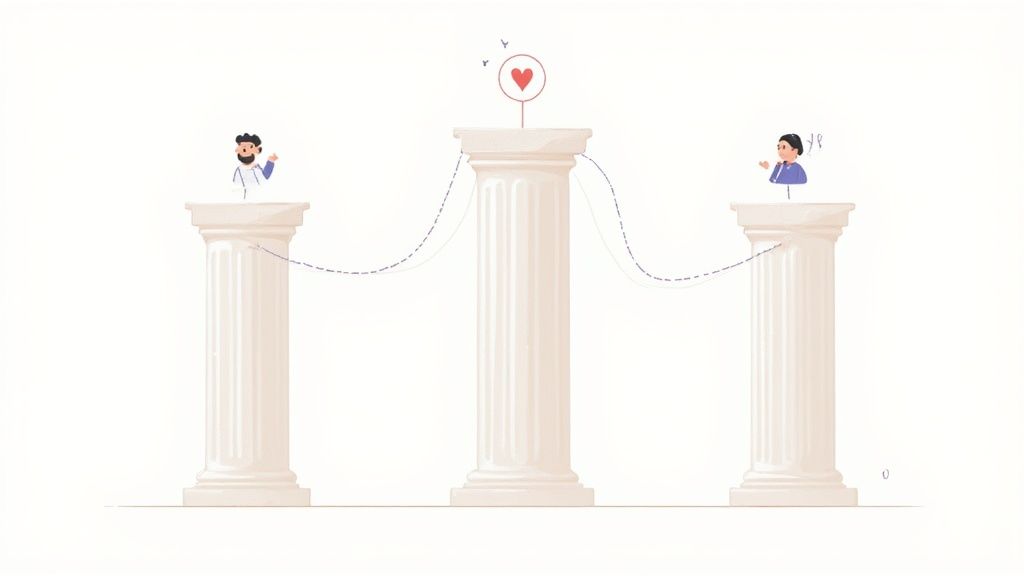
To help you get started, here's a breakdown of the core pillars that truly matter.
Core Pillars of Remote Motivation
| Pillar | Why It Matters for Remote Teams | Key Action to Implement |
|---|---|---|
| Authentic Recognition | Without a physical office, great work can go unnoticed. Recognition makes employees feel seen and valued, directly boosting morale and connection. It's so important because it reinforces the specific behaviors you want to see repeated. | Create a public #wins channel in Slack and start the week by celebrating a team member who went above and beyond. For example: "Shoutout to Sarah for staying late to fix that critical bug. Her dedication saved the launch!" |
| Clear Communication | Ambiguity creates stress and kills productivity. Remote teams need absolute clarity on goals, expectations, and how their work fits into the bigger picture. | Implement daily stand-ups, maintain clear project documentation, and ensure every team member understands their core KPIs. |
| Empowering Autonomy | Trust is the currency of remote work. Giving employees freedom over their "how" and "when" shows you respect their expertise and builds ownership. | Focus on outcomes, not hours logged. Provide the tools and resources needed, then step back and let your team deliver. |
These pillars aren't just theories; they are the practical foundation for a high-performing, motivated remote team.
Moving Beyond Generic Perks
So many companies fall into the trap of offering generic perks like virtual happy hours or food delivery stipends. While the intention is good, these gestures often miss the mark because they don't solve the core needs of remote workers. Real motivation is intrinsic—it's tied directly to feeling valued and effective in your role.
Instead of throwing superficial benefits at the problem, focus on what actually moves the needle:
- Meaningful Recognition: Get into the habit of consistently and publicly acknowledging specific contributions. For example, instead of a generic "good job," post in your team channel: "Huge thanks to Mark for creating that amazing sales deck under a tight deadline. It was a game-changer for our pitch."
- Absolute Clarity: Make sure every single person on your team understands their goals and, just as importantly, how their work connects to the company's mission.
- Empowering Autonomy: Give your people the trust and freedom to own their work and manage their schedules. If you're looking for fresh ways to keep people engaged, you might even consider incorporating gamification in training programs to make skill development more motivating.
Building a Recognition-First Culture
When your team is out of sight, their incredible work can't be. Out of all the ways to motivate remote employees, creating a culture of recognition is probably the most powerful. It’s the engine that makes people feel seen, valued, and connected to the mission, even when they're miles apart. The importance of team recognition is that it directly fights isolation and reinforces a positive, high-performance culture. It shows everyone what "great" looks like and encourages them to strive for it.
This isn’t about just handing out praise during a performance review. It’s about weaving appreciation into the very fabric of your daily work. The real goal is to shift from random compliments to a consistent, visible system where great work is always celebrated.
Make Recognition Visible and Frequent
In a remote world, the casual "thank you" by the water cooler just doesn't happen. You have to be intentional and create dedicated spaces for that appreciation to live. This simple act fights the isolation that can so easily creep in and reinforces the exact behaviors you want to see more of.
A brilliant place to start is with a dedicated #wins or #shoutouts channel in your team's Slack. This public forum opens the door for peer-to-peer recognition, which often feels even more meaningful than praise coming only from the top. For instance, a developer could post, "Big thanks to Jane from marketing for providing such clear copy for the new feature. It made my job so much easier!"
Here's what celebrating wins in a dedicated Slack channel can look like.
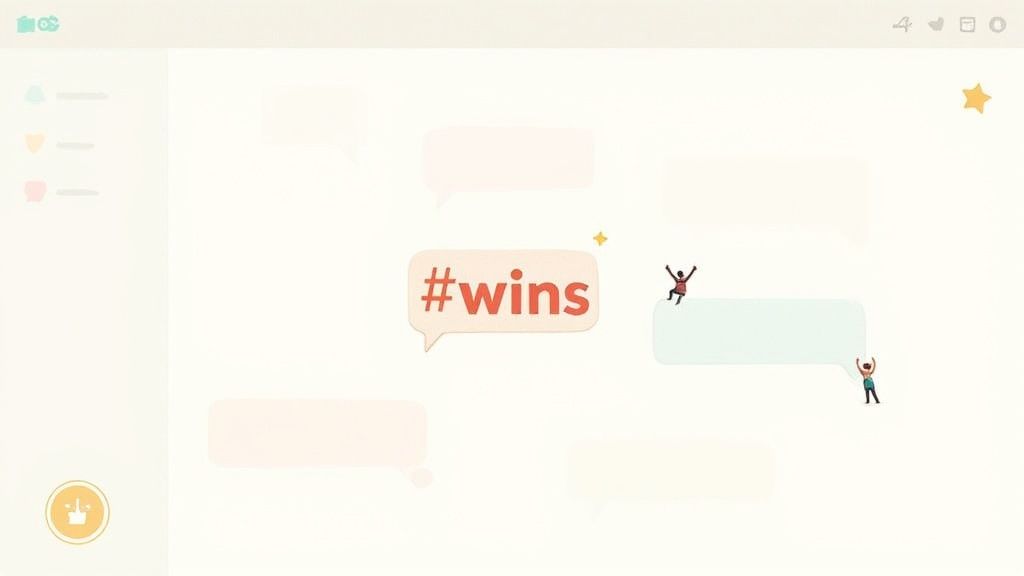
This kind of visual praise makes appreciation a tangible, celebrated part of how you operate.
Another great habit? Kick off your weekly team meetings with a "recognition round." Just give each person 30 seconds to give a shout-out to someone who helped them that week. It immediately sets a positive tone and keeps wins top-of-mind.
Connect Praise to Company Values
A generic "good job" feels nice, but it doesn't really land. To make recognition truly motivational, you have to connect it directly to your company values. This simple tweak turns a compliment into a powerful coaching moment that reinforces your culture for everyone.
For example, instead of just saying, "Thanks for handling that project," try something more specific:
"I really appreciate how you demonstrated our 'Customer First' value on that tough support ticket yesterday. Your patience and clear communication turned a frustrating situation into a positive one for the client."
See the difference? That specificity shows you’re paying attention to the details. More importantly, it tells the entire team what success actually looks like in your organization.
The Impact of Consistent Appreciation
Building these habits pays off in a big way. Consistent recognition is a huge motivational driver for remote workers, directly boosting their engagement and productivity. In fact, a recent report found that among remote employees who get regular appreciation, 57% report higher motivation and a stronger commitment to their teams.
The importance of this is clear: when people feel their contributions are seen and celebrated, they are more likely to go the extra mile and feel a stronger sense of belonging. Organizations that actually invest in cultural rituals like feedback and recognition simply see better results from their people.
If you're a manager looking to build a more formal system, exploring different employee recognition program examples can give you a solid roadmap. The key is to find a rhythm that feels authentic to your team and then make it an unbreakable habit.
Give Their Work Meaning With Crystal-Clear Communication
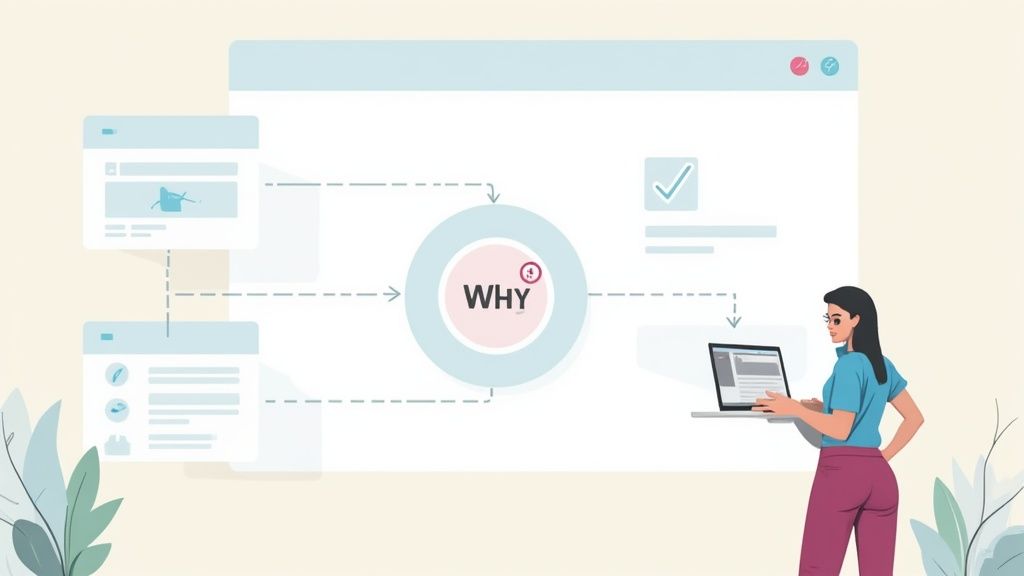
In a remote setting, ambiguity is the enemy. It's the fastest way to kill motivation. When your team doesn't understand the "why" behind their work, tasks feel disconnected and pointless. It's only a matter of time before disengagement creeps in.
The fix? Build a communication culture that prioritizes absolute clarity. You have to connect the dots between daily tasks and the big-picture goals.
This goes way beyond just assigning tasks. It’s about creating a system that anticipates questions and makes the mission obvious. When everyone knows what you're all trying to achieve and how their specific work moves the needle, a powerful sense of shared purpose takes hold. That clarity is the foundation of any great remote team.
Turn Status Updates into Coaching Sessions
One of the most powerful changes you can make is to completely rethink your one-on-one meetings. Too many managers let these devolve into simple status reports—a laundry list of what got done last week. That's a huge missed opportunity.
Instead, start treating your one-on-ones as forward-looking coaching sessions. Shift the focus to goals, progress, and, most importantly, what's getting in their way.
A one-on-one that actually motivates people should cover things like:
- Blockers: What's slowing them down? How can you, as their manager, clear the path for them? A practical example is asking, "Is there any red tape or approvals I can help you push through this week?"
- Goal review: Are their quarterly objectives still on track? Do those goals even make sense anymore?
- Development: What skills are they itching to learn? What projects or training can you offer to help them grow?
This simple shift proves you're invested in their personal success, not just their output. It transforms a routine check-in into a genuinely motivating conversation about growth and impact.
Build a Single Source of Truth
Without a central place for information, remote teams get messy. Fast. People start working from outdated documents, priorities get confused, and hours are wasted just trying to figure out what’s current. This is exactly why a shared project management dashboard is non-negotiable.
Tools like Asana, Trello, or Jira act as a single source of truth for everything your team is working on. Everyone can see the major projects, who owns what, and when it’s all due. This kind of transparency is a game-changer because it visually connects an individual's to-do list to the company's biggest goals.
When someone can literally see the line from their task to a major company objective, their sense of purpose goes through the roof. The dashboard makes their contribution real.
To keep everyone on the same page, you have to invest in the right remote team communication tools. The right platforms bring conversations and context together, cutting down on the friction that bogs remote teams down.
Align the Team (Without Adding More Meetings)
Clarity is essential, but the solution isn't always another meeting. We all know Zoom fatigue is real, and it can absolutely tank a team's energy. A much better approach is to establish simple, asynchronous check-ins.
Think about a daily stand-up post in a dedicated Slack channel. It's a quick, low-effort way to keep everyone in sync without a formal call. Each morning, team members can share a quick update on:
- What they knocked out yesterday. For example: "Completed the first draft of the Q3 report."
- What their top priority is for today. For example: "Integrating customer feedback into the new UI mockups."
- Any roadblocks they've hit. For example: "Blocked on the API key from the dev team."
This ritual takes five minutes but delivers so much value. It keeps the team informed, surfaces problems before they escalate, and reinforces a culture of accountability—all without clogging up anyone's calendar.
Empowering Your Team with Trust and Autonomy
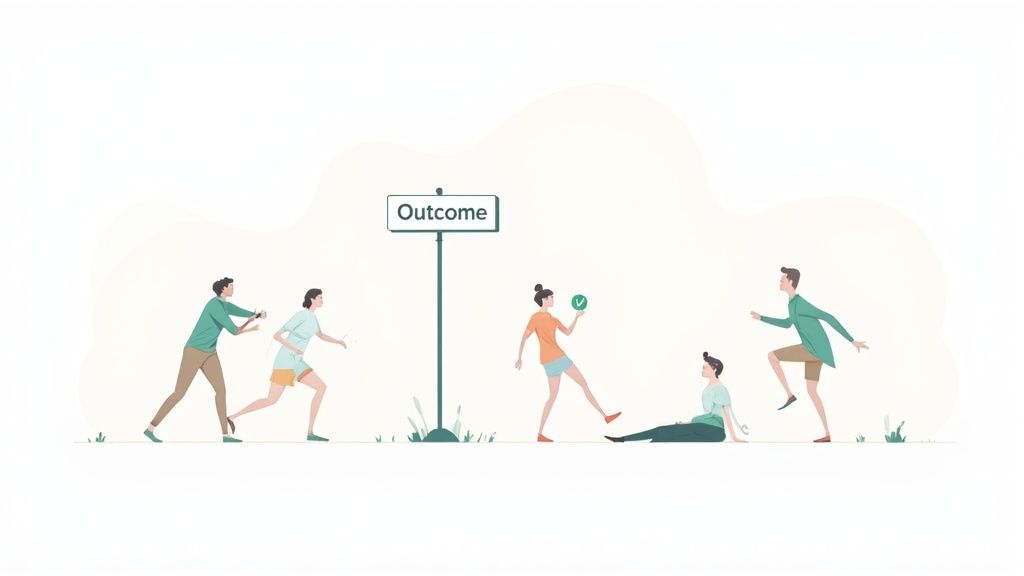
We’ve all experienced micromanagement in an office. It’s draining. For a remote team, though, it’s a total motivation killer. If you want to build real, lasting engagement, it has to start with a deep-seated trust in your people to own their work and deliver their best.
This means you have to fundamentally shift how you lead—moving away from watching tasks and toward measuring outcomes.
When you give your team the freedom to figure out how they'll do something, you aren't just delegating. You're handing them real ownership. This is one of the most important lessons in motivating a remote team for the long haul. Set the goal, make sure it’s crystal clear, and then get out of their way.
From Managing Tasks to Managing Outcomes
The old "butts in seats" management style is completely useless for a distributed workforce. Your focus has to be on the results, plain and simple. Work with your team to set ambitious, clear goals, and then empower them to find the best path to get there.
This approach naturally builds a culture of both accountability and innovation. When an engineer has the leeway to experiment with a new coding library or a marketer can test a wild campaign idea, they become far more invested in what happens. A practical example is defining the "what" but not the "how." For instance, tell your content team, "We need to increase blog traffic by 15% this quarter," instead of saying, "Write five blog posts of 1,000 words each." This empowers them to use their expertise to find the best solution.
The ultimate sign of trust is giving your team the space to solve problems without you dictating the process. This is what transforms a group of task-doers into a team of genuine problem-solvers.
This doesn't mean you just disappear. It means your role evolves. You become a provider of resources, a remover of roadblocks, and a source of guidance when they ask for it.
Implement True Flexibility
One of the most powerful ways to demonstrate trust is to offer genuine flexibility. Remote work isn't just about changing your location; it's about giving people control over their own time. It's a non-negotiable part of modern leadership to accommodate different time zones, family needs, and personal productivity cycles.
When you trust your people to manage their own schedules, the message you're sending is loud and clear: "I trust you to get your work done." That respect is almost always repaid with loyalty and a much deeper personal investment in the company's success.
Think about it: a parent on your team might do their most focused work after the kids are in bed, while an early bird is firing on all cylinders at 6 AM. A flexible schedule allows both of them to contribute when they're at their best. If you're looking for ideas to keep everyone connected across these different schedules, check out our guide on fun team-building activities for remote workers.
Invest in Their Professional Growth
Empowerment isn't just about the work right in front of them; it's also about showing you're invested in where they're going. Providing clear opportunities for growth is one of the single most effective ways to keep top talent motivated and sticking around.
In a remote setting, this can take a few different forms:
- Skill Development: Offer stipends for online courses, professional certifications, or tickets to virtual conferences. A practical example is providing a yearly $1,000 learning budget for each employee to use on platforms like Coursera or Udemy.
- Mentorship: Set up a formal program that pairs junior team members with senior leaders for guidance.
- Career Pathing: Sit down with each person and map out a transparent, actionable plan for how they can advance within the company.
When you actively invest in their skills and career goals, you're not just making them better at their jobs—you're showing them they have a real future with you. That creates a powerful reason to stay and help the company succeed long-term.
Prioritizing Wellbeing to Prevent Burnout
Let's be honest: an exhausted employee is never a motivated one. When you work from home, the lines between your desk and your living room get blurry, fast. That makes burnout a very real threat, not just to productivity, but to your team's overall spirit. Thinking about employee wellbeing isn't some fluffy "perk"—it's a core strategy for keeping your team firing on all cylinders.
It all starts at the top. Managers need to walk the talk and show everyone it's not just okay, but necessary, to switch off. A practical example is a manager publicly announcing in Slack, "I'm signing off for the day to take my kid to the park. See you all tomorrow!" These small gestures send a huge message: we respect your time, and we don't expect you to be "on" 24/7. That's how you kill the always-on culture before it kills your team's energy.
Fostering a Healthy Remote Environment
Beyond just setting the right tone, you can get practical with initiatives that directly support your team's health. You want to build an environment where logging off is celebrated, not secretly judged.
Simple things can make a huge difference. Think about offering a small stipend for a decent office chair or an external monitor. It shows you care about their physical comfort. You can also make bigger structural changes, like introducing "no-meeting Fridays," which gives everyone a solid block of time to do deep, focused work without constant interruptions.
The real goal here is to build a culture where rest is seen as a crucial ingredient for great work, not a sign of weakness. When people feel safe enough to unplug, they come back refreshed, more focused, and way more creative.
Listening to Your Team
You can't solve a problem you don't know you have. That's why you absolutely have to check in on your team's stress levels. Anonymous pulse surveys are a fantastic tool for this. They let you get honest feedback on workload and wellbeing without making anyone feel like they're on the spot. Ask direct questions about burnout and what kind of support would actually help them. For instance, you could ask, "On a scale of 1-5, how manageable has your workload felt this month?" followed by an open-ended question like, "What is one thing we could change to better support your work-life balance?"
This isn't just about collecting data; it's about being proactive. You can spot troubling trends and step in before small issues snowball into massive problems. More importantly, it shows you’re actually listening, and that alone can be a powerful motivator.
Here's something interesting: remote work can boost engagement, but it doesn't automatically fix wellbeing. Research from Gallup found that fully remote employees have a 31% engagement rate—way higher than their peers. But at the same time, 45% of those remote workers reported feeling a lot of stress, compared to just 39% of on-site workers. You can discover more insights on the connection between engagement and wellbeing from recent studies.
That data tells a critical story: engagement without wellbeing is a ticking time bomb. To truly motivate your remote team, you need to focus on two things at once: keeping them connected to their work and making sure they have the support and boundaries to thrive as people.
Got Questions About Motivating Your Remote Team? We've Got Answers.
Even when you've got a solid plan, leading a remote team can throw you some curveballs. It’s totally normal for questions to pop up as you navigate the day-to-day. Let’s tackle a few of the most common hurdles managers run into.
What Do I Do With an Employee Who Seems Checked Out?
When you notice someone is quiet or withdrawn, your first move should always be a private, one-on-one chat. It's easy to jump to conclusions, but the goal here is to listen and understand, not to point fingers.
Kick things off with a few open-ended questions. This creates a safe space for them to open up. Try something like:
- "How have you been feeling about your work lately?"
- "What's been energizing you recently, and what's felt like a drag?"
- "Is there anything I can do to help you feel more supported right now?"
Disengagement can stem from anything—burnout, fuzzy expectations, or even personal issues that have nothing to do with work. Once you get to the root of it, you can work on a solution together. Maybe that means tweaking their workload, clarifying goals, or finding a new project that lights them up. The most important thing is showing them you care about their well-being.
What Are Some Budget-Friendly Ways to Recognize My Team?
You don't need a huge budget to make your team feel valued. In fact, some of the most powerful forms of recognition are completely free. The secret is making it personal, specific, and visible. When done right, public praise is a huge motivator.
The importance of team recognition is critical because it shines a light on individual wins, shows everyone what success looks like, and builds a culture where people feel seen. It's a direct antidote to the isolation that can creep into remote work. When employees see their peers getting praised for great work, it motivates them to contribute at a higher level too.
Here are a few low-cost ideas you can use right away:
- Peer-to-Peer Shout-Outs: Create a dedicated Slack or Microsoft Teams channel where anyone can give a public high-five to a colleague. This is amazing for morale.
- Meeting Mentions: Dedicate the first few minutes of your weekly meeting to spotlight specific contributions from the past week. For example: "Before we start, I want to recognize Alex for the fantastic job he did on the customer presentation. The client loved it."
- Non-Monetary Perks: Think outside the gift card. Offer an extra afternoon off after a tough sprint, write a killer LinkedIn recommendation, or let them take the lead on a new initiative they're excited about.
How Can I Build Team Spirit Without Cheesy Virtual Events?
Let's be real: forced fun is rarely fun. You can't schedule genuine connection. Instead of another awkward virtual happy hour, focus on weaving opportunities for connection into your daily routine.
The trick is to create frequent, low-pressure moments for non-work chat. Kick off meetings with a quick five-minute check-in where people can share something personal. Set up optional, interest-based chat channels like #pets, #book-club, or #gaming so people can bond over shared hobbies.
Another great option is a "virtual coffee" program. You can use an app that randomly pairs up two team members for a 15-minute, non-work chat each week. These small, consistent interactions build real relationships over time, which is the foundation of any motivated, collaborative team.
Ready to build a culture of appreciation right inside Slack? With AsanteBot, you can make peer-to-peer recognition a seamless, fun, and measurable part of your team's day. Start for free in just two minutes.