
In a world where top talent can work from anywhere, non-monetary incentives have become the strategic advantage that sets great companies apart. We're talking about the rewards that go beyond a paycheck—things like genuine recognition, real opportunities for career growth, and the flexibility to live a full life. These are the things employees actually want, and they're the secret to building a resilient, high-performing team.
Table of Contents
Your Secret Weapon for Winning the Talent War
Think of it this way: a cash bonus is like an energy drink. It gives you a quick jolt, but the effect wears off fast. Non-monetary incentives, on the other hand, are like a long-term fitness plan for your company's health, building strength and loyalty that lasts.
These aren't just fluffy perks; they are essential tools for any leader trying to fight high turnover and the astronomical cost of a disengaged workforce.
When employees feel truly seen and valued for their contributions, their connection to the company goes from a simple job to a meaningful career. It could be as simple as a public shout-out in a team meeting for cracking a tough problem or a handwritten note from a manager acknowledging the late nights spent on a project. That’s what sticks. Celebrating team wins is just as crucial. A practical example is hosting a team lunch after a successful product launch; this acknowledges the collective effort and reinforces the importance of collaboration, making everyone feel part of a shared victory.
The Business Case for Recognition
The data doesn't lie. Gallup's long-term research shows that employees who feel consistently recognized are 45% less likely to look for another job. That number is huge, especially when you’re managing remote teams where building connection is both harder and more critical.
Even more telling, over half of the employees who leave their jobs say a lack of belonging was a key reason—often a bigger factor than their salary. With global disengagement costs hitting an estimated $8.8 trillion, you simply can't afford to ignore this.
A culture rich in recognition directly counters the financial drain of disengagement. It transforms a transactional employer-employee relationship into a partnership built on mutual respect and shared success.
This is especially true in hyper-competitive fields. For example, understanding specific tech recruiting use cases shows just how vital these incentives are. The tech industry is famous for its high turnover, making non-monetary rewards a critical way to stand out.
Offering clear paths for skill development, autonomy over exciting projects, or a transparent career ladder can easily outweigh a slightly bigger salary offer from a competitor. At the end of the day, these are the incentives that create an environment where people want to stay, do their best work, and grow right alongside the company.
Why a Thank You Can Be More Powerful Than a Bonus
Let’s be honest, a cash bonus is nice. It provides a quick thrill, but that feeling fades surprisingly fast. A genuine, heartfelt “thank you,” on the other hand? That sticks with you. The real power of non-monetary incentives is their unique ability to tap into the core psychological needs that drive us as people—something money alone just can’t do.
This isn't just a hunch; it's rooted in psychology. Self-Determination Theory points to three universal human needs: autonomy, competence, and relatedness. When a workplace fulfills these needs, people don't just show up for a paycheck. They become engaged, motivated, and truly invested. A bonus doesn't really touch these areas, but a thoughtful recognition program hits them all.
Tapping into Core Human Drivers
Think of these three needs as the foundation for lasting employee engagement. When you build your incentive programs around them, you’re creating a system that truly resonates.
- Autonomy: This is our fundamental need to feel in control of our work and decisions. A practical example is offering 'focus Fridays' where meetings are banned, allowing employees to manage their own schedules and deep work.
- Competence: We all have an innate drive to master our craft and feel effective. You can nurture this by providing mentorship opportunities, skill-building workshops, or the chance to lead a challenging new initiative.
- Relatedness: This is about our need to connect with others and feel like part of a team. A thriving peer-to-peer recognition system, where colleagues can easily celebrate each other’s contributions, builds powerful social bonds. Acknowledging a team's collaborative spirit after a tough quarter is vital, as it strengthens the collective identity and shows that the company values teamwork as much as individual heroics.
This is how non-monetary incentives become a cornerstone of talent retention, fueling loyalty, growth, and flexibility.
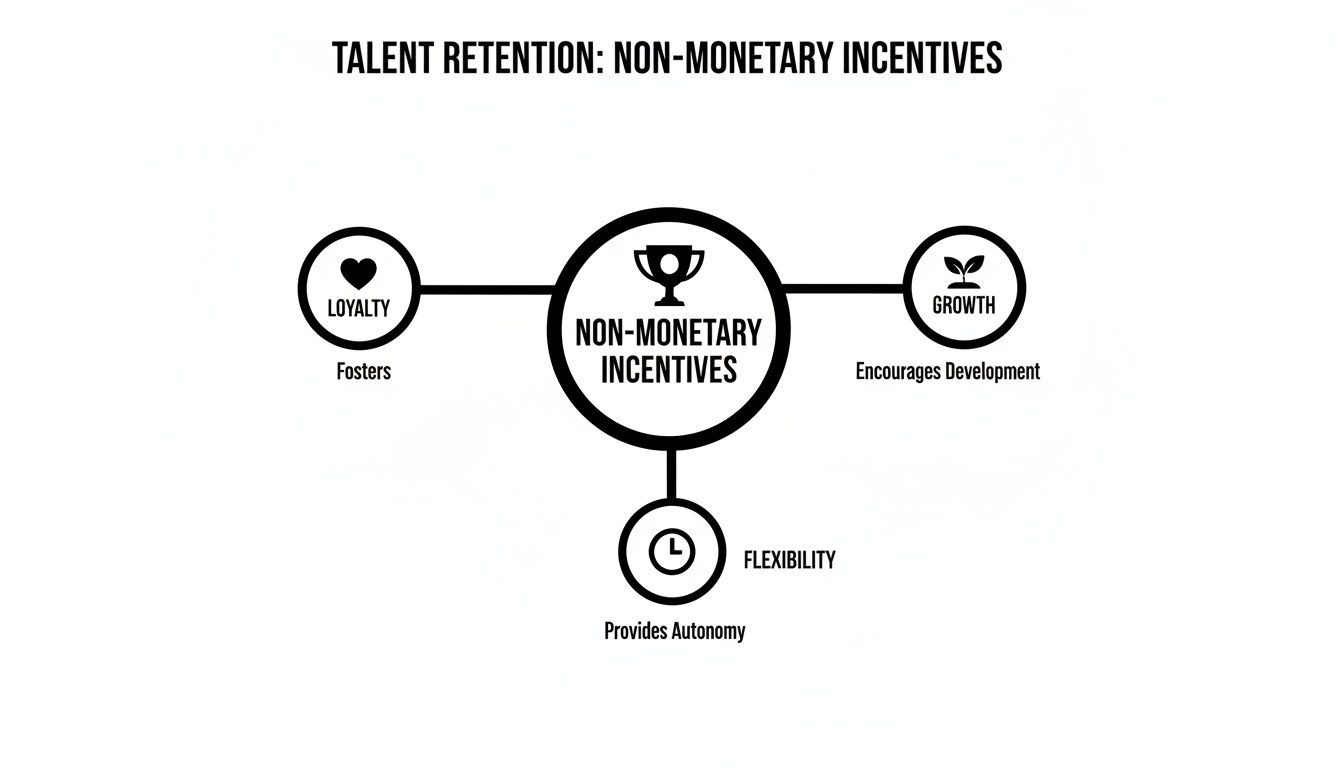
When you invest in these areas, you’re not just giving perks; you’re building a culture where people feel valued, connected, and empowered to do their best work.
To see this in action, imagine a developer who is given the green light to spearhead a passion project they've been advocating for. The trust and responsibility placed in them do more for their sense of competence and autonomy than a standard year-end bonus ever could. This is the magic of intrinsic motivation—it comes from a sense of purpose and recognition, not just a transaction.
(And if you're ever stuck on what to say, we have a great list of powerful employee appreciation phrases to get you started.)
This table shows how specific non monetary incentives fulfill core psychological needs, creating deeper and more sustainable employee motivation.
| Core Psychological Need | What It Means for Employees | Effective Non Monetary Incentives |
|---|---|---|
| Autonomy | The freedom to make choices, own their work, and have a voice in decisions. | Flexible work schedules, remote work options, leadership opportunities on new projects. |
| Competence | The feeling of being skilled, effective, and capable of overcoming challenges. | Professional development courses, mentorship programs, public recognition for a job well done. |
| Relatedness | The need to feel connected to others and part of a supportive community. | Peer-to-peer recognition systems, team-building events, social channels for celebrating wins. |
By aligning your incentives with these fundamental drivers, you move beyond temporary motivation and start building genuine, long-term loyalty.
The data backs this up, too. Research shows that while financial rewards might nudge performance by a tiny 0.04%, non-monetary tools like consistent feedback and supportive leadership can account for nearly 10% of performance variation over the long haul. It's no surprise that work-life balance is a top priority for 83% of employees—proof that flexibility and a sense of being valued are currencies that often carry more weight than cash.
The Four Pillars of a Strong Recognition Culture
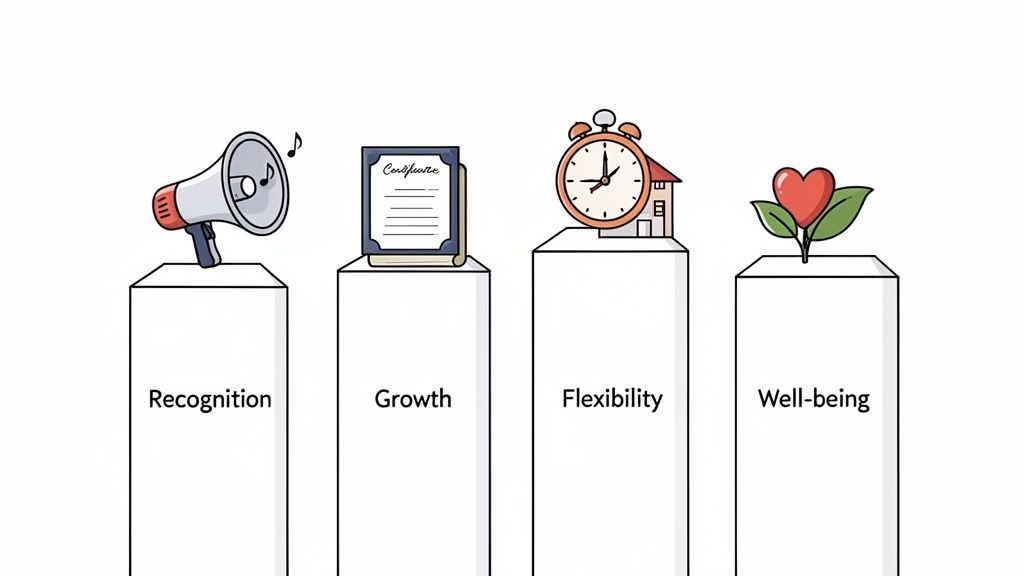
Truly effective non-monetary incentives aren't just random perks tossed out to boost morale. They're part of a deliberate strategy built on a solid foundation. To get practical, we can break them down into four essential pillars. Each one supports a different, critical part of the employee experience, and together, they create a culture where people feel seen, supported, and genuinely connected to their work.
Think of these pillars like the legs on a table. If one is missing, the whole thing gets wobbly. A strong recognition culture needs a balanced approach that nurtures employees both professionally and personally. By understanding these categories, you can build a program with enough variety to resonate with what your team members actually find valuable.
Pillar 1: Recognition and Appreciation
This is the bedrock. At its core, this pillar is about making sure people feel seen and that their work matters. When you give timely, specific praise, you’re not just saying "good job"—you're reinforcing the exact behaviors that drive success and showing how individual effort connects to the big picture. And don't forget the power of team recognition; celebrating group wins is a massive morale booster that creates a positive feedback loop and reinforces collaborative values. When a whole team is celebrated, it prevents individual burnout and fosters a sense of shared ownership.
Here are a few practical examples:
- Peer-to-peer shout-outs in a dedicated Slack channel give everyone a chance to celebrate each other's wins.
- A handwritten thank-you note from a leader after a team pushes through a tough project.
- Personalized awards that go beyond a generic "Employee of the Month" plaque, like a "Creative Problem-Solver of the Quarter" award that highlights a specific achievement.
Pillar 2: Professional and Personal Growth
Investing in your team's development is one of the most powerful signals you can send. It says, "We believe in you and see a future for you here." When people see a clear path to learn new skills and advance their careers, their loyalty and engagement go through the roof. This is all about giving them the tools and opportunities to master their craft.
For example, you could offer:
- Funding for a professional certification or an online course that's relevant to their role.
- Tickets to industry conferences, so they can network and bring back fresh ideas.
- A structured mentorship program pairing newer employees with seasoned leaders for guidance.
Pillar 3: Flexibility and Autonomy
After the massive shift in how we all work, flexibility isn't a "nice-to-have" anymore—it's an expectation. Giving your team more control over how, where, and when they work is a powerful display of trust. That kind of autonomy is a game-changer for job satisfaction, helping to reduce burnout while sparking huge gains in productivity and creative thinking.
When you focus on outcomes instead of hours clocked, you empower your team to truly own their work. This builds a culture of accountability and mutual respect, which is far more motivating than any micromanagement ever could be.
Consider putting these into practice:
- A hybrid work model that lets people balance in-office collaboration with deep, focused remote work.
- A compressed four-day workweek, where the team works the same hours but gets a three-day weekend.
- Letting a high-performer choose their next project based on their skills and what they're passionate about.
Pillar 4: Culture and Well-being
Finally, a great culture is built on psychological safety and genuine care for people as individuals. These incentives are all about creating a supportive, enjoyable environment where people feel like they belong. They acknowledge that your employees are whole human beings with lives, passions, and needs that extend far beyond their job titles.
Practical examples that build a positive culture include:
- Extra paid time off specifically for volunteering at a cause the employee is passionate about.
- A monthly wellness stipend to be used for a gym membership, a meditation app, or therapy sessions.
- Company-sponsored events that are actually fun and help build real connections, like a team cooking class, an escape room challenge, or a casual board game night.
How to Build an Incentive Program People Actually Use
Building a great non-monetary incentive program isn't about flashy, expensive gestures. It's about thoughtful design. A system that actually works is more than a list of perks; it becomes a living, breathing part of your company culture, making people feel genuinely seen and connected. The secret is to stop guessing and start building something that truly clicks with your team.
This takes a bit of strategy, but it needs to be authentic and crystal clear. When you get it right, your program becomes a powerful engine for reinforcing your company's values and encouraging the right behaviors every single day.
Let’s walk through the essential steps to create an incentive program your team will love.
Start With Your Values
Think of your company values as the North Star for your entire recognition program. Every single incentive, shout-out, or reward should tie directly back to the core behaviors you want to see more of.
For example, if "collaboration" is a key value, don't just talk about it—create a specific, peer-nominated award for incredible teamwork. This simple connection makes the program feel meaningful, not like some transactional, check-the-box exercise. It transforms a simple "thank you" into a powerful signal that reinforces your culture and shows everyone what success really looks like at your company.
Ask Your Team What They Want
Instead of sitting in a boardroom guessing what might motivate your employees, why not just ask them? A quick, simple survey can tell you everything you need to know. You might discover your team would kill for an extra day off but couldn't care less about a professional development course. Or maybe they crave public praise over a private email.
What works for your sales team might fall flat with your engineers. You can always explore a variety of employee recognition program examples to get some inspiration, but nothing beats direct feedback from your own people. This simple act of listening shows you respect their input and are serious about building a program that actually works for them.
Define Clear and Fair Criteria
Ambiguity is the fastest way to kill an incentive program. If people don't understand how it works or feel like it’s just a popularity contest, they'll check out. To avoid any whiff of favoritism, you need to set up clear, objective criteria for what gets recognized.
Define the specific actions, milestones, or contributions that earn an incentive. Is it closing a tough deal? Squashing a critical bug? Mentoring a new hire? Write it down and share it.
Transparency is everything here. When everyone understands the "rules of the game," they trust the system and feel motivated to jump in. It creates a sense of psychological safety and encourages people to bring their best work consistently.
Make Recognition Timely and Specific
Recognition has a short shelf life. For praise to land with maximum impact, it has to be delivered right after the achievement, not weeks or months later. A compliment that arrives long after a project is finished just doesn't have the same punch.
The same goes for specificity. A generic "good job" is nice, but it’s forgettable. Compare that to, "Thank you for finding that critical bug before the release; your attention to detail saved us a massive headache." Now that is powerful. It tells the person exactly what they did right and why it mattered.
The importance of timely and specific feedback can't be overstated. Major companies like General Motors proved this by engaging 67,000 employees across 26 countries with a non-monetary recognition system, hitting an incredible 90% monthly workforce engagement. This is the kind of approach that helps fight the widespread disengagement affecting 86% of employees globally, creating a culture that people don't want to leave. For more on the science, check out how these incentives boost well-being.
Bringing Daily Recognition to Life in Slack
The most effective non-monetary incentives aren't saved for a formal, once-a-quarter review. They're woven into the very fabric of your team's daily life. Recognition should feel as natural and easy as sending a quick message, which is exactly why Slack is the perfect place to build a modern appreciation program. It's instant, public, and it’s the digital space where your team is already working together and celebrating wins.
By bringing a lightweight tool like AsanteBot into your workspace, you can turn Slack from a communication channel into a powerful engine for peer-to-peer recognition. The idea is to make giving praise effortless, transforming it from a top-down chore into a vibrant, daily habit that genuinely strengthens team bonds.
Create a Fun Recognition Currency
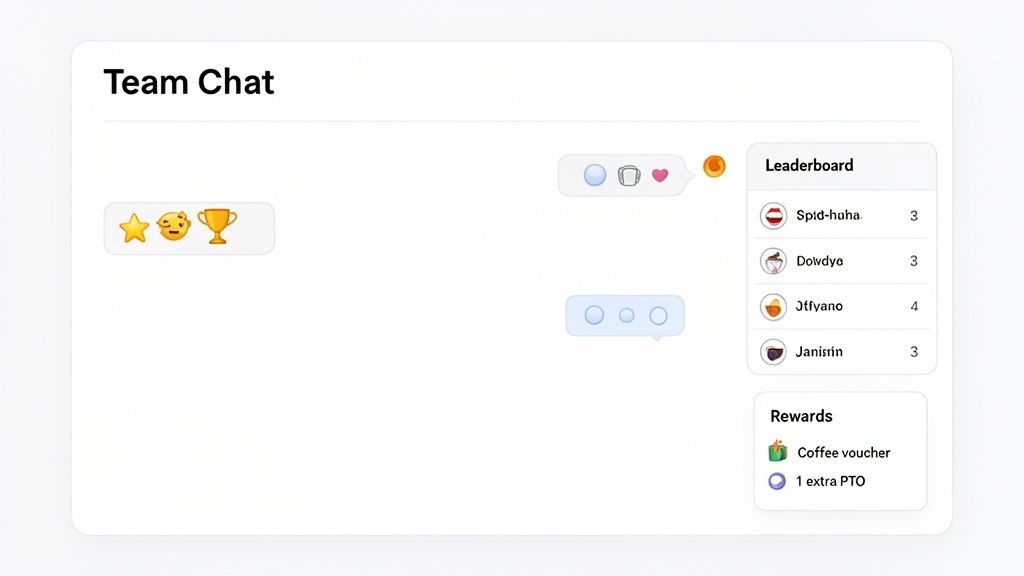
The secret is to make recognition feel fun, not forced. An easy way to do this is by creating a custom emoji—like a high-five 🙌 or a gold star ⭐—that acts as a sort of "praise currency." Team members can simply add this emoji to a message to send recognition points to a colleague. It’s a simple, visual cue that makes appreciation a natural part of the conversation.
To keep the system meaningful, it’s a good idea to set a daily or weekly limit on how many points each person can give out. This small guardrail prevents the "currency" from losing its value and ensures that every point given feels earned and special.
Spark Friendly Competition with Leaderboards
For any recognition program to gain momentum, it needs to be visible. Setting up a public leaderboard in a dedicated Slack channel celebrates your team's top contributors—both the biggest givers and receivers of praise. This isn't about fostering cutthroat rivalry; it's about making appreciation a visible, celebrated act.
A leaderboard gamifies the process just enough to encourage more people to get involved. It shines a spotlight on the employees who consistently lift their peers up, creating a positive feedback loop that inspires others to join in.
Offer a Catalog of Custom Rewards
Those recognition points need to lead somewhere. The points employees collect should be redeemable for rewards they actually find motivating. This is where you connect the digital high-fives to tangible, real-world incentives. You can create a custom catalog of rewards that people can browse and claim right from Slack.
The best reward catalogs mix it up, offering a variety of options that cater to different tastes. This reinforces the message that you value your employees as unique individuals.
These rewards don’t have to break the bank. In fact, some of the most popular choices are low-cost but high-impact:
- A voucher for a coffee or lunch on the company
- An extra hour of paid time off
- Company swag they’ll actually use, like a cozy hoodie or a nice water bottle
- A small donation to a charity of their choosing
Automating this process gives employees the power to choose what matters to them, making the entire experience more personal and much more satisfying.
Automate Milestone Celebrations
Finally, a great recognition culture never lets an important date slip by. You can use tools like AsanteBot to automatically post a celebratory message in a public channel for every team member's birthday and work anniversary.
This simple bit of automation ensures everyone feels seen and valued on their special days. It’s a zero-effort way to strengthen that sense of community and show people you care.
It’s All About Building a Culture of Appreciation
When you get right down to it, non-monetary incentives aren't just feel-good perks. They're a smart investment in the very people who make your company tick and the culture you're trying to build. We've walked through how these rewards tap into deep human needs—the drive for autonomy, the satisfaction of competence, and the need for connection—and how that translates into real business wins like higher productivity and lower turnover.
The secret sauce is consistency. The best recognition programs aren't saved for an annual performance review; they're part of the daily grind. They feel real because they are. When a colleague gives a shout-out for a specific contribution right after it happens, it builds camaraderie and reinforces great work in a way a bonus check three months later simply can't.
Think of a culture of appreciation as an ecosystem. Every small act of recognition is like a drop of rain. It might not seem like much on its own, but together, these acts nourish the entire team, fostering loyalty and a powerful sense of shared purpose.
So, where do you go from here? The first step is often the smallest and the most powerful: just start. You don't need a massive budget or a grand plan to make a difference.
Open a new peer-to-peer recognition channel in Slack this week. Make a point to celebrate one team win publicly. And if you want to take it a step further, think about how to choose thoughtful presents for your staff that show you’re genuinely invested in them as people, not just as employees.
Frequently Asked Questions
Jumping into a new incentive program naturally brings up some questions. Let's walk through a few of the most common ones that leaders ask when they're getting started.
How Can We Measure the ROI of a Program?
Measuring the return on non-monetary programs isn't about tracking dollars and cents directly. Instead, you look at key people-centric metrics. The best way is to take a "before and after" snapshot of your team's health.
Look at metrics like employee retention, absenteeism rates, and engagement survey scores (like eNPS). If you see turnover dropping and engagement climbing after you launch the program, you've found your ROI.
You can also look at the direct activity. How many peer recognitions are being sent each month? When you see a high-performing team also has high recognition activity, you can draw a pretty clear line between appreciation and results.
Are These Incentives Effective for Startups?
They're not just effective for startups—they’re practically designed for them. Why? Because many of the most impactful non-monetary incentives don't cost a dime. Things like public praise, flexible hours, or the chance to take the lead on a cool new project are free but incredibly valuable.
For a startup, a heartfelt and specific note of thanks from a founder can be far more motivating than a small cash bonus that gets lost in a paycheck. This builds a strong foundation of team recognition from day one, proving that culture is built on appreciation, not just capital.
How Do We Keep Our Program Fair?
Fairness really comes down to two things: clear guidelines and open participation. First, make sure everyone knows what "good" looks like. Define the specific behaviors and achievements that you want to celebrate, tying them back to your company values. This gets rid of any guesswork.
Second, don't make recognition a top-down affair. When you empower everyone to give praise through a peer-to-peer system, you naturally reduce the chances of favoritism. The importance of team recognition is key here as well; celebrating a collective success ensures that contributions from quieter, behind-the-scenes members aren't overlooked in favor of more visible individuals. Using a public channel in Slack for shout-outs is a great way to keep things transparent, since the whole team can see who is being recognized and why.
Ready to transform recognition from a formal process into a daily habit? With AsanteBot, you can build a vibrant culture of appreciation right inside Slack. Start creating a more connected and motivated team in just two minutes. Learn more and get started for free at asantebot.com.