

In a competitive landscape, employee retention and engagement are paramount. While annual bonuses and grand gestures have their place, the real driver of daily motivation and a strong company culture lies in consistent, authentic acknowledgment. The importance of team recognition cannot be overstated; it’s what connects individual contributions to shared goals, making employees feel seen and valued. These small tokens of appreciation are the bedrock of a positive workplace, transforming how teams connect and collaborate.
Table of Contents
This article moves beyond generic advice to provide a practical, actionable guide. You will discover eight distinct categories of small tokens of appreciation that you can implement immediately, complete with specific examples, such as Slack message templates, and guidance on how to use tools like AsanteBot to streamline the process. We'll explore how these small acts foster psychological safety, reinforce desired behaviors, and build a resilient team fabric.
By consistently recognizing effort and achievement, you create an environment where people are motivated to do their best work. By the end of this guide, you will have a clear blueprint for building a low-cost, high-impact appreciation program that boosts morale and strengthens your company culture from the ground up, directly within your daily workflow.
1. Custom Emoji Recognition Badges
Custom emoji recognition badges are one of the most effective yet simple small tokens of appreciation for modern teams. Instead of generic praise, this system uses unique, custom-designed emojis within platforms like Slack to represent specific achievements, behaviors, or milestones. For example, a :client-win: emoji could be awarded for positive client feedback. They transform everyday recognition from a fleeting comment into a tangible, shareable symbol of value.

This method shines because it integrates seamlessly into the daily workflow and makes team recognition visible and frequent. A manager can award a 🚀 emoji for a successful project launch, or a peer can give a 🤝 emoji for exceptional collaboration. These badges can then be displayed in user profiles or tracked on leaderboards, making positive contributions visible across the entire organization and fostering a culture of continuous acknowledgment, which is vital for maintaining high morale.
How to Implement Emoji Badges
- Define Your Core Values: Start by identifying 5-7 key behaviors you want to encourage, such as innovation, teamwork, or customer focus. Create a unique custom emoji for each. For example, an :innovator: emoji for a creative solution.
- Establish Clear Criteria: Document what each emoji represents in a public channel or onboarding guide. For example, a 💡 emoji might be for "A brilliant idea that improved a process."
- Integrate with a Tool: Use a platform like AsanteBot to automate the tracking and display of these emojis. This allows you to create leaderboards and tie badges to tangible rewards, gamifying the experience.
- Promote and Amplify: Regularly feature top emoji earners in team meetings or weekly update posts. This amplifies the recognition and reinforces the behaviors you value. For a deeper dive into creating the perfect set for your team, explore our guide on how to make the most of custom emojis in Slack.
2. Personalized Thank-You Notes Sent via Digital Cards
Personalized digital thank-you notes offer the sincerity of a handwritten card with the speed and convenience needed for today’s fast-paced work environments. These small tokens of appreciation move beyond a simple chat message, combining a thoughtful, specific note with a visually appealing digital card. Team recognition is most effective when it is specific and timely. A digital card allows you to instantly acknowledge a great contribution in a memorable way an employee can save and revisit.
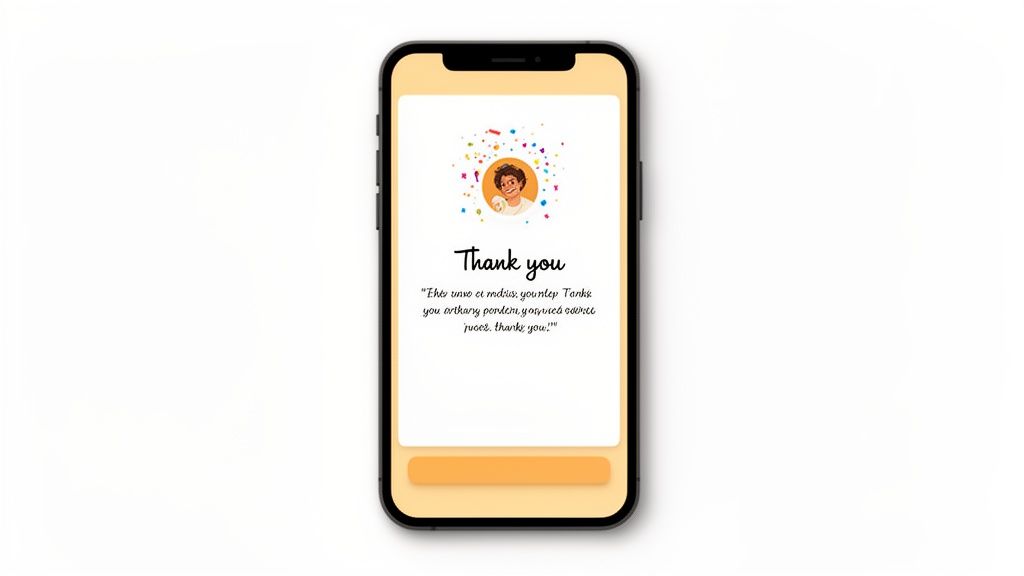
This method thrives because it bridges the gap between informal praise and formal rewards. A manager can use a branded digital card to celebrate a team member who went above and beyond on a project, or peers can send one to acknowledge helpful collaboration. For instance, after a successful presentation, a manager could send a card saying, "Your data visualization was brilliant and really helped the client understand our value." This level of detail formalizes appreciation just enough to make it feel special without adding administrative burden.
How to Implement Digital Thank-You Notes
- Choose a Platform or Template: Select a tool like Canva to create simple, branded templates or use a dedicated service like Greetabl. The goal is to have a professional-looking card ready to go.
- Be Specific and Timely: Send the note within 24-48 hours of the achievement. Instead of a generic "good job," reference the specific action and its positive impact, such as "Thank you for finding that critical bug before the client demo; your attention to detail saved us."
- Encourage Peer-to-Peer Notes: Promote a culture where everyone feels empowered to send digital cards. Recognition is most powerful when it comes from all directions, not just the top down.
- Automate for Milestones: Use a tool like AsanteBot's Birthday and Work Anniversary bot to automatically send personalized digital cards for key dates. This ensures no milestone is ever missed and reinforces that every team member is valued consistently.
3. Point-Based Micro-Rewards (Coffee Credits, Early Friday Departures)
A point-based system is a powerful way to turn peer recognition into tangible small tokens of appreciation. This method allows employees to accumulate points from recognition emojis and redeem them for a catalog of small, meaningful perks. Regular team recognition is crucial for sustained motivation. Micro-rewards like coffee credits, an early Friday departure, or extra break time provide consistent and frequent positive reinforcement that keeps morale high throughout the year.
This approach is highly effective because it offers choice and autonomy, allowing individuals to select rewards that are most meaningful to them. For example, a new parent might value an early departure, while another team member might prefer a gift card for a favorite coffee shop. This flexibility ensures the appreciation feels personal and impactful, directly connecting consistent positive contributions to a desired outcome and strengthening the culture of recognition.
How to Implement Point-Based Micro-Rewards
- Survey Your Team for Ideas: Before launching, ask your employees what small perks they would value most. Practical examples include a $10 lunch voucher, a subscription to a meditation app, or the ability to expense a book.
- Set Achievable Thresholds: Establish clear point values for rewards that feel attainable. For example, a $5 coffee credit could be 20 points, while an early Friday departure might be 50 points. This encourages frequent engagement rather than long-term hoarding.
- Integrate and Automate Redemption: Use a tool like AsanteBot to automate point tracking and create a one-click redemption store directly within Slack. This removes friction and makes it easy for employees to claim their well-earned perks.
- Rotate Rewards Seasonally: Keep the program fresh by introducing new rewards. Offer hot chocolate gift cards in the winter or a pass for an extra hour of PTO in the summer. To build a robust system, explore our guide to creating a comprehensive recognition and rewards program.
4. Public Recognition Shout-Outs in Team Channels
Public recognition shout-outs are a foundational method for delivering powerful yet simple small tokens of appreciation. By creating a dedicated space, like a #wins or #kudos channel in Slack, teams can publicly spotlight achievements and positive behaviors. This transforms individual praise into a shared cultural moment, making contributions visible across the entire organization. The importance of public team recognition is that it amplifies the impact of each acknowledgment, reinforcing company values and inspiring others to excel.
This approach is highly effective because it creates a continuous stream of positive reinforcement that is integrated directly into the team’s daily communication hub. Seeing a manager recognize a direct report for their exceptional problem-solving, or a peer celebrating a colleague for their collaborative spirit, builds a strong sense of community and psychological safety. It signals that every contribution, big or small, is seen and valued, which is crucial for morale and engagement in both remote and in-office settings.
How to Implement Public Shout-Outs
- Create a Dedicated Channel: Designate a specific public channel (e.g.,
#celebrating-wins,#kudos) for all recognition. This centralizes positive feedback and makes it easy for everyone to see. - Set Clear Guidelines: Define what makes a good shout-out. Encourage specificity by asking team members to explain the action and its positive impact. A practical example would be, instead of "Good job, Alex," try "Huge shout-out to Alex for identifying that critical bug before the release, saving us hours of troubleshooting!"
- Automate with Prompts: Use a tool like AsanteBot to activate its Feedback Day feature. This sends automated weekly or bi-weekly prompts to the channel, reminding everyone to share their appreciation and ensuring recognition becomes a consistent habit, not an afterthought.
- Amplify and Celebrate: Pin standout shout-outs in the channel for extended visibility. Reference them in team meetings or all-hands calls to further magnify the recognition and connect individual efforts to broader team goals.
5. Handwritten or Branded Physical Tokens (Coins, Cards, Certificates)
Handwritten or branded physical tokens are powerful small tokens of appreciation that bridge the gap between digital recognition and the physical world. These low-cost, tangible items like custom coins, notecards, or certificates commemorate specific achievements and create a lasting reminder of an employee's value. The importance of this form of team recognition is its permanence; in hybrid or remote settings, receiving a physical object makes appreciation feel more significant and personal, transforming a fleeting digital message into a keepsake.
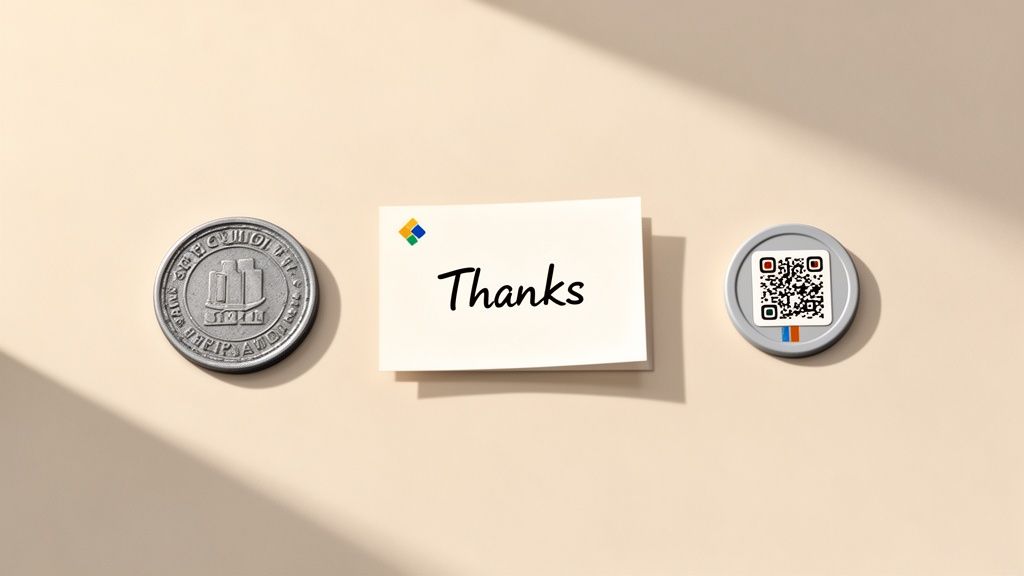
This method excels by creating collectible and displayable symbols of success. For a direct and heartfelt gesture, consider professionally printed physical Thank You Cards that managers can personalize. Companies like Southwest Airlines and Valve have famously used custom coins to celebrate milestones, fostering a sense of pride and belonging. This tactile approach reinforces company culture and makes appreciation a visible part of the physical workspace.
How to Implement Physical Tokens
- Design with Purpose: Create tokens that reflect your brand and values. Use your company mascot, logo, or key values on coins or certificates to reinforce your culture with every token given. A practical example is a coin inscribed with "Customer Champion" for an employee who receives outstanding client feedback.
- Link Digital and Physical: Print a QR code on cards or tokens that links to the recipient's public recognition profile in a tool like AsanteBot. This connects the tangible item to their broader history of contributions.
- Establish a Redemption System: Define clear exchange rates for your tokens to add a layer of gamification. For example, 5 tokens could be redeemable for a $10 gift card, a half-day of PTO, or exclusive company swag.
- Create a Recognition Ritual: Distribute tokens during team meetings or in-office days to create a moment of public celebration. For remote employees, mail the tokens in a small package to make the moment feel special and intentional.
6. Peer-Nominated Spotlights (Monthly/Quarterly Awards)
Peer-nominated spotlights are a powerful and structured way to offer small tokens of appreciation that carry significant weight. This method formalizes recognition through monthly or quarterly awards where employees nominate colleagues for specific, value-aligned achievements. The importance of peer-led team recognition is that it democratizes appreciation, empowering those who witness great work firsthand to celebrate it. Awards like "Collaborator of the Month" or "Innovation Champion" ensure recognition is distributed fairly across the organization.
This approach is highly effective because it strengthens team bonds and reinforces core company values. Instead of relying solely on top-down feedback, peer nominations build a culture where everyone is responsible for acknowledging great work. Highlighting winners in company-wide forums, like HubSpot does with its monthly peer awards, turns individual contributions into inspirational stories for the entire team. A practical example is an award for the "Most Helpful Teammate," nominated by peers with specific stories of support.
How to Implement Peer-Nominated Spotlights
- Define Focused Award Categories: Establish 3-5 clear award categories per cycle that reflect your company's core values. Consider rotating categories quarterly to highlight different behaviors and prevent recognition from becoming repetitive.
- Streamline the Nomination Process: Use a simple form or a dedicated Slack channel for nominations. A practical approach is to ask for a specific example of how the nominee demonstrated a core value, such as, "Nominate a colleague for the 'Think Big' award and describe the innovative idea they proposed."
- Utilize Leaderboards for Engagement: Integrate a tool like AsanteBot to create real-time leaderboards that showcase top nominees. This gamifies the process and builds excitement and transparency around who is being recognized for their efforts.
- Celebrate Winners Publicly: Announce winners during all-hands meetings, in a company-wide newsletter, or in a dedicated Slack channel. Combine a digital badge with a physical token like a certificate or small trophy to make the recognition more tangible and memorable.
7. Learning & Development Credits or Skill-Building Opportunities
Learning and development credits are powerful small tokens of appreciation that invest directly in an employee's professional growth. Instead of a one-time bonus, this reward offers access to courses, conference tickets, or skill certifications. This approach is an important form of team recognition because it demonstrates a company's commitment to its team's long-term career progression, transforming acknowledgment into a tangible investment in their future.
This method is highly effective because it aligns individual aspirations with organizational goals. A practical example: an employee recognized for excellent project management might receive credits for an advanced certification, while a creative team member could get a subscription to a platform like MasterClass. This creates a positive feedback loop where recognition fuels skill enhancement, which in turn drives higher performance and engagement, making it a strategic tool for retention.
How to Implement Learning & Development Credits
- Align Rewards with Interests: Survey employees about their professional development goals. Use this data to offer relevant rewards, such as credits for Coursera, Skillshare, or industry-specific workshops.
- Create a Tiered System: Link the value of the credit to the level of achievement. For example, a peer-to-peer shoutout might earn a $50 credit for a book, while a major project milestone could unlock a $500 stipend for a certification course.
- Integrate with Your Recognition Program: Use a tool like AsanteBot to automate the process. Award a specific emoji (e.g., a 🎓 for "Growth Mindset") that employees can accumulate and redeem for L&D opportunities directly from your rewards catalog.
- Encourage Knowledge Sharing: Ask recipients to host a brief lunch-and-learn or share key takeaways in a dedicated Slack channel after completing their course. This amplifies the investment by distributing new knowledge across the team and reinforces a culture of continuous learning.
8. Social Celebration Moments (Virtual Coffee Chats, Dedicated Team Time)
Social celebration moments are powerful, non-monetary small tokens of appreciation that prioritize human connection and visibility. This approach shifts the focus from tangible gifts to meaningful experiences, such as a one-on-one virtual coffee with a senior leader or a public shout-out during an all-hands meeting. The importance of this type of team recognition lies in its ability to foster a sense of belonging and make employees feel seen by leadership, which is especially critical for remote and distributed teams.
This method excels because it builds and strengthens relationships that might otherwise remain transactional. A practical example: a virtual coffee chat with the CEO, offered to a peer-nominated "Employee of the Month," can break down hierarchies and create a memorable, personal connection. Similarly, setting aside five minutes in a company-wide meeting to celebrate a team's achievement gives their hard work a prestigious platform, boosting morale far more than a simple email ever could.
How to Implement Social Celebration Moments
- Offer Meaningful Choices: Allow employees to choose their preferred form of recognition. Present options like a 30-minute chat with a leader, a team-wide virtual happy hour, or a public spotlight in the company newsletter.
- Structure for Success: Prepare for these moments. For coffee chats, have a few conversation prompts ready like, "Tell me about a project you're really proud of." For public shout-outs, record them and share clips or transcripts in a dedicated Slack channel to extend their impact.
- Automate Milestone Celebrations: Integrate a tool like AsanteBot's Birthday and Work Anniversary features to automatically trigger celebration prompts. This ensures no important dates are missed and creates a consistent culture of acknowledgment.
- Be Inclusive of Time Zones: For global teams, create a visible celebration calendar and rotate the timing of virtual events to accommodate different schedules. This ensures everyone has an equal opportunity to participate and feel included in the team's social fabric.
8-Option Comparison: Small Tokens of Appreciation
| Recognition Item | Implementation 🔄 | Resources ⚡ | Expected Outcomes 📊 | Ideal Use Cases 💡 | Key Advantages ⭐ |
|---|---|---|---|---|---|
| Custom Emoji Recognition Badges | 🔄 Low — quick Slack integration; design needed | ⚡ Low — design time, no physical costs | 📊 High visibility, scalable peer recognition; novelty risk | 💡 Distributed teams, high-frequency recognition, gamified cultures | ⭐ Immediate visual impact; collectible; encourages peer-to-peer |
| Personalized Thank‑You Notes (Digital Cards) | 🔄 Low–Moderate — templates & delivery workflows | ⚡ Low–Medium — personalization time, design tools | 📊 Thoughtful, revisitable appreciation; slower impact | 💡 Milestones, anniversaries, remote/hybrid thoughtful recognition | ⭐ Personal, emotional connection; permanent record |
| Point‑Based Micro‑Rewards | 🔄 Moderate — points, redemption, tracking required | ⚡ Medium — budget for rewards, admin overhead | 📊 Sustained motivation, measurable engagement; risk of entitlement | 💡 Frequent small rewards, flexible preferences, scalable orgs | ⭐ Drives consistent behavior; flexible reward choices |
| Public Recognition Shout‑Outs in Team Channels | 🔄 Low — set up channels and prompts | ⚡ Low — time to participate; minimal tooling | 📊 High visibility and culture building; can feel performative | 💡 Team cohesion, quick wins, onboarding culture display | ⭐ Highly visible, zero-cost implementation |
| Handwritten or Branded Physical Tokens | 🔄 Moderate — design, production, distribution logistics | ⚡ Medium — production cost + shipping for remote staff | 📊 Tangible keepsake; strong sentimental value; less instant | 💡 Hybrid/in‑office moments, milestone commemorations, collectibles | ⭐ Memorable tactile reminder; displayable keepsake |
| Peer‑Nominated Spotlights (Monthly/Quarterly Awards) | 🔄 Moderate — nomination, voting & admin processes | ⚡ Medium — admin time, possible prize budget | 📊 Prestige and morale boost; periodic, high-award value | 💡 Formal recognition cycles, large orgs, highlighting behaviors | ⭐ Peer-driven authenticity; historical recognition record |
| Learning & Development Credits / Skill Opportunities | 🔄 Moderate — partner setup and tracking systems | ⚡ High — course/conference budgets, coordination | 📊 Long-term retention and career growth; ROI over time | 💡 Retention strategies, career-focused rewards, skilling initiatives | ⭐ High perceived value; invests in employee future |
| Social Celebration Moments (Coffee Chats, Team Time) | 🔄 Low–Moderate — scheduling & leader involvement | ⚡ Low — leader/organizer time, coordination | 📊 Strong belonging and relationship building; scaling limits | 💡 Remote teams, leader accessibility, team bonding | ⭐ Low-cost, emotionally resonant, inclusive when well-run |
Turning Appreciation into Action: Your Next Steps
We've journeyed through eight distinct yet interconnected strategies for leveraging small tokens of appreciation to build a more engaged, motivated, and cohesive team. From the immediate feedback of custom emoji badges in Slack to the tangible impact of peer-nominated spotlights, the common thread is clear: the most powerful recognition is not about grand gestures but consistent, authentic acknowledgment.
The core insight is that a culture of appreciation is built moment by moment, day by day. It thrives on specificity, not just a generic "good job," but a detailed "thank you for catching that bug in the pre-launch code; your attention to detail saved us hours." This transforms recognition from a top-down corporate initiative into a peer-to-peer habit woven directly into your team's workflow. The importance of team recognition is that it makes appreciation an integral part of how work gets done.
Key Takeaways for Building Your Program
The ideas we covered, including point-based micro-rewards and social celebration moments, highlight that successful recognition is multifaceted. It should be:
- Timely: Acknowledgment that arrives weeks later loses its impact. Real-time recognition reinforces positive behaviors immediately.
- Visible: Public shout-outs and leaderboards amplify the effect, showing the entire team what success and collaboration look like in practice.
- Equitable: A well-designed system ensures everyone has a chance to be recognized, preventing appreciation from becoming a popularity contest.
- Personalized: Offering a choice of rewards, like coffee credits or extra learning time, shows you understand and value individual preferences.
Mastering this approach is crucial because it directly addresses core human needs at work: to feel seen, valued, and connected to a shared mission. When employees feel appreciated, their discretionary effort increases, their loyalty deepens, and their resilience in the face of challenges grows. This is the foundation of a high-performing, low-turnover team.
Your Actionable Next Steps
The path forward doesn't require a complete overhaul of your current processes. The beauty of these small tokens of appreciation is their accessibility. Your goal is to start a ripple effect that grows into a wave.
- Choose Your Pilot: Select just one or two ideas from this list that resonate most with your team's current culture and communication style. A custom emoji for a core company value is often an excellent, low-friction starting point.
- Define the "Why": Clearly communicate the purpose of this new initiative to your team. Frame it as an experiment to make acknowledging great work easier and more frequent.
- Gather Feedback: After a few weeks, ask your team what's working and what isn't. Is the process intuitive? Do the rewards feel meaningful? Use this input to iterate and improve.
While these daily and weekly tokens form the bedrock of a strong culture, they can be beautifully complemented by larger celebrations. For further inspiration on larger-scale appreciation efforts, explore various employee appreciation event ideas that can help you mark major milestones and team achievements. The key is to create a rhythm of both small, consistent acknowledgments and bigger, celebratory events.
Ultimately, the goal is to build a self-sustaining ecosystem of gratitude. When team members feel empowered to recognize each other freely and frequently, the responsibility for morale shifts from management alone to the entire collective. Start today, start small, and watch the positive impact unfold.
Ready to automate and amplify your recognition efforts? AsanteBot integrates directly into your Slack workspace to make implementing these ideas seamless, from custom emoji reactions that award points to leaderboards and a redeemable rewards catalog. See how easy it is to build a culture of appreciation by trying AsanteBot today.