
In today's competitive landscape, attracting and retaining top talent requires more than just a paycheck. It demands a culture where employees feel seen, valued, and genuinely appreciated. Generic gestures often fall flat; what truly moves the needle are intentional, consistent recognition practices woven into the fabric of daily work. While old standbys like traditional pizza parties can be a starting point, a truly effective strategy goes much deeper.
Table of Contents
This isn't just about making people feel good; it's a strategic imperative. The importance of team recognition lies in its proven power to reinforce desired behaviors, strengthen collaboration, and build psychological safety across teams. When appreciation flows freely and authentically between peers and leaders, it creates a positive feedback loop that directly boosts morale, engagement, and ultimately, business outcomes. A well-designed system of recognition signals what the organization truly values, encouraging a culture of excellence and mutual support.
This comprehensive guide moves beyond the obvious to explore a curated list of high-impact, actionable employee appreciation activities designed for the modern workplace. You will learn how to implement programs that are both meaningful and scalable, whether your team is in-office, remote, or hybrid. We'll provide practical examples, step-by-step implementation guidance, and ready-to-use templates to help you build a recognition program that not only celebrates your team but also drives your company culture forward. Forget one-off events and embrace a system that makes every employee feel like a vital contributor every day.
1. Emoji-Based Peer Recognition Programs
An emoji-based peer recognition program transforms your company's communication platform, like Slack or Microsoft Teams, into a dynamic hub for real-time appreciation. Instead of relying on formal, infrequent reviews, this system allows employees to instantly acknowledge colleagues' contributions using custom emoji reactions. The importance of this approach is that it integrates gratitude directly into daily workflows, making recognition a continuous and visible habit rather than a rare event.
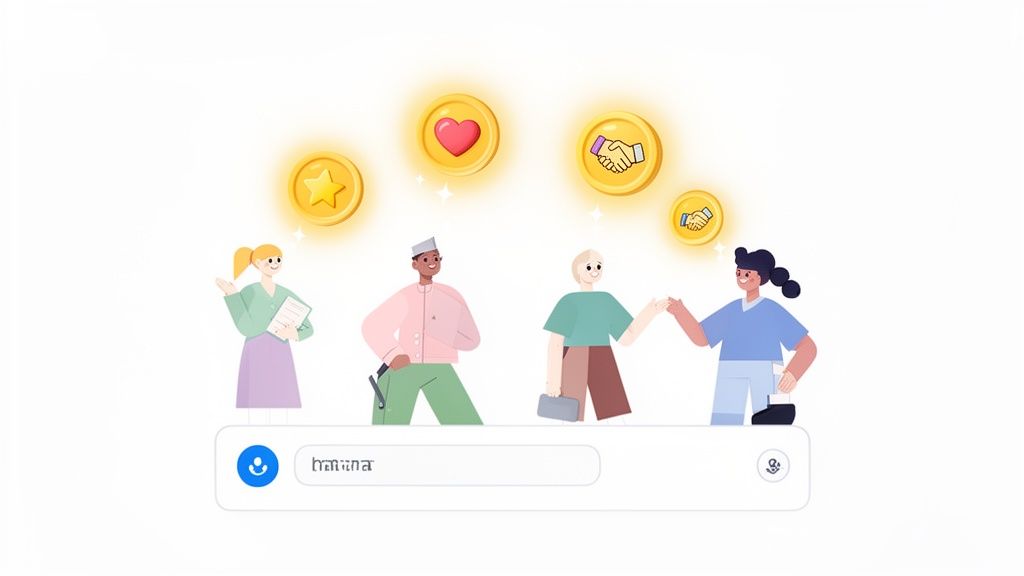
This method gamifies positive reinforcement. When a team member posts a project update or helps a colleague, others can react with a specific emoji, like a custom ":kudos:" or ":teamwork:" icon. These reactions are often tracked by a bot or integration, creating a public leaderboard and a measurable record of positive interactions. For example, a marketing specialist who shares a successful campaign result can immediately see their work being celebrated by peers across different departments, reinforcing the value of their contribution instantly.
How to Implement This Program
- Define Your Recognition Emoji: Create 3-5 custom emoji that align with your core company values. For instance, a handshake emoji for "Collaboration," a lightbulb for "Innovation," and a shield for "Integrity." This turns every reaction into a value-reinforcement moment.
- Set Clear Guidelines: Establish a daily or weekly limit on how many recognition emojis each employee can give. This creates scarcity and encourages more thoughtful, intentional recognition rather than mindless reactions.
- Automate and Track: Use a tool like AsanteBot to automate the tracking and reporting. The bot can tally reactions, announce top recipients in a public channel, and provide analytics to managers, highlighting who is being recognized and for what. This data helps identify unsung heroes and ensures recognition is distributed fairly.
- Promote and Model Behavior: Leadership participation is key. Encourage managers and executives to actively use the recognition emojis. Feature top recognizers and recipients in weekly all-hands meetings or newsletters to celebrate their impact and drive adoption.
To dive deeper into the strategic use of reactions for team building, you can learn more about how emojis in Slack can enhance company culture. This approach builds a culture where team recognition is not an event, but a constant, motivating force embedded in how your team communicates every day.
2. Automated Birthday and Work Anniversary Celebrations
Automated birthday and work anniversary celebrations ensure that no employee’s personal or professional milestones are ever overlooked. This system integrates with your HRIS or communication platforms to automatically trigger celebratory messages, rewards, and announcements on significant dates. By systematizing these acknowledgments, you eliminate the manual burden of tracking and create predictable moments of joy, making this one of the most consistent employee appreciation activities for building a culture where individuals feel seen and valued.
The importance of recognizing milestones is that it strengthens an employee's emotional connection to the company by acknowledging them as individuals beyond their job titles. When a bot posts a happy birthday message in a team channel, it cues colleagues to join in with well wishes, creating a communal celebration. A practical example comes from companies like HubSpot, where an employee’s five-year work anniversary is celebrated with both a public shout-out and a corresponding reward, reinforcing their long-term value to the organization.
How to Implement This Program
- Choose an Automation Tool: Integrate a tool like AsanteBot with your Slack or MS Teams. These bots sync with your HR system to pull employee data and schedule celebratory messages automatically, removing any chance of human error.
- Customize Your Message Templates: Create different templates for birthdays, work anniversaries, and major tenure milestones (e.g., 1, 3, 5 years). Write messages that reflect your company's authentic voice, moving beyond generic greetings to create a more personal touch.
- Pair Automation with Tangible Rewards: Configure your system to accompany messages with a small but meaningful reward, such as a digital coffee gift card for a birthday or an extra day of PTO for a five-year anniversary. This combination of public praise and a tangible gift amplifies the impact.
- Set Clear Celebration Preferences: Allow employees to opt-in or out of public celebrations. Some may prefer a private direct message from their manager, so providing this choice respects individual comfort levels and makes the recognition more meaningful.
To effectively manage these important milestones, you can explore how an integrated Birthday and Work Anniversary Bot streamlines the entire process. This method ensures that team recognition is a reliable, built-in part of your employee experience, consistently reinforcing that every team member’s journey is valued.
3. Leaderboard-Based Recognition Competitions
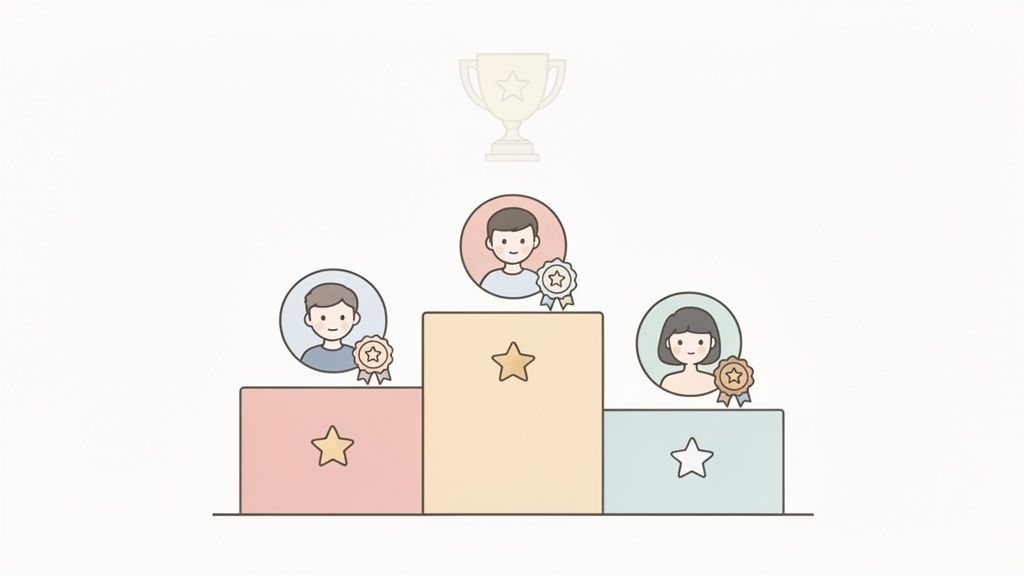
A leaderboard-based recognition competition adds a layer of friendly gamification to your employee appreciation activities by creating visible rankings of who gives and receives the most recognition. The importance of this system is that it leverages intrinsic motivators like social proof and achievement, transforming team recognition from a passive activity into an engaging, company-wide event. By making appreciation metrics transparent, leaderboards highlight cultural ambassadors and encourage broader participation in celebrating wins, big and small.
This method makes positive behavior both visible and aspirational. When integrated into a platform like Slack, a tool like AsanteBot can automatically track recognition data and display leaderboards in a public channel. For instance, a weekly leaderboard might show the "Top Giver" who consistently shouts out colleagues, or the "Top Receiver" whose cross-departmental support earned them the most praise. Seeing these names publicly celebrated inspires others to participate, ensuring that the culture of appreciation grows organically.
How to Implement This Program
- Frame it as Celebration, Not Competition: Position the leaderboards as a way to celebrate cultural champions. Use positive language like "Weekly Gratitude Leaders" or "Collaboration All-Stars" to avoid creating a sense of pressure or unhealthy rivalry. The goal is visibility, not a performance metric.
- Recognize Both Givers and Receivers: A healthy recognition culture is a two-way street. Create separate leaderboards for those who give appreciation and those who receive it. This acknowledges both the act of giving praise and the impact of great work, promoting a balanced ecosystem of gratitude.
- Rotate Leaderboard Cycles and Categories: Keep the program fresh by switching between weekly, monthly, and quarterly leaderboards to give everyone a chance to participate. Introduce creative categories tied to company values, such as "Innovation Advocate" or "Top Team Player," to recognize different types of contributions.
- Celebrate and Amplify Winners: Don't just post the leaderboard and walk away. Feature the top contributors in company-wide communications like newsletters or all-hands meetings. A brief mention from leadership validates their efforts and reinforces the importance of peer recognition for the entire organization.
By gamifying recognition, you create a self-sustaining cycle of positive reinforcement. This turns team recognition into a shared and celebrated company habit, making it one of the most dynamic employee appreciation activities for building a connected and supportive workplace.
4. Customizable Reward Redemption Systems
A customizable reward redemption system bridges the gap between intangible praise and concrete value. This approach creates a digital marketplace where employees can exchange recognition points, earned through peer-to-peer shoutouts or manager-led awards, for a curated catalog of rewards. The importance here is that it transforms recognition from a fleeting moment into a lasting incentive by giving employees the autonomy to choose rewards that are personally meaningful.
This system directly links positive actions to tangible benefits, creating a powerful motivation loop. For example, when an engineer receives points for fixing a critical bug, they can see their balance grow in real-time. They might save up these points for a larger reward like noise-canceling headphones or redeem them immediately for a smaller treat like a coffee gift card. This sense of ownership and choice significantly increases the perceived value of the recognition they receive.
How to Implement This Program
- Curate a Meaningful Catalog: Survey your employees to discover what rewards they genuinely want. Include a mix of options like gift cards, company swag, extra PTO, wellness subscriptions, and professional development courses to cater to diverse interests.
- Include Non-Monetary Options: Ensure the catalog includes experiences and charitable donations. Allowing an employee to redeem points to donate to a charity of their choice or to get a day pass to a local state park connects recognition with personal values and well-being.
- Integrate Seamlessly: Use tools like Bonusly or AsanteBot to embed the rewards marketplace directly into your communication platform. The process should be frictionless, allowing employees to redeem points with a single click in Slack or Teams, eliminating any administrative barriers.
- Establish Clear Point Values: Be transparent about the point-to-dollar ratio and ensure there are low-point options available. This allows for frequent, small celebrations, reinforcing positive behavior without requiring employees to wait months to redeem. For a practical example of how a points-based system can be structured, consider examining a real-world model such as Aeros Couriers' Reward Points Program.
By giving employees control over their rewards, you ensure that every act of appreciation feels both authentic and valuable, reinforcing a culture where great work is consistently and meaningfully acknowledged.
5. Weekly Feedback and Shout-Out Days
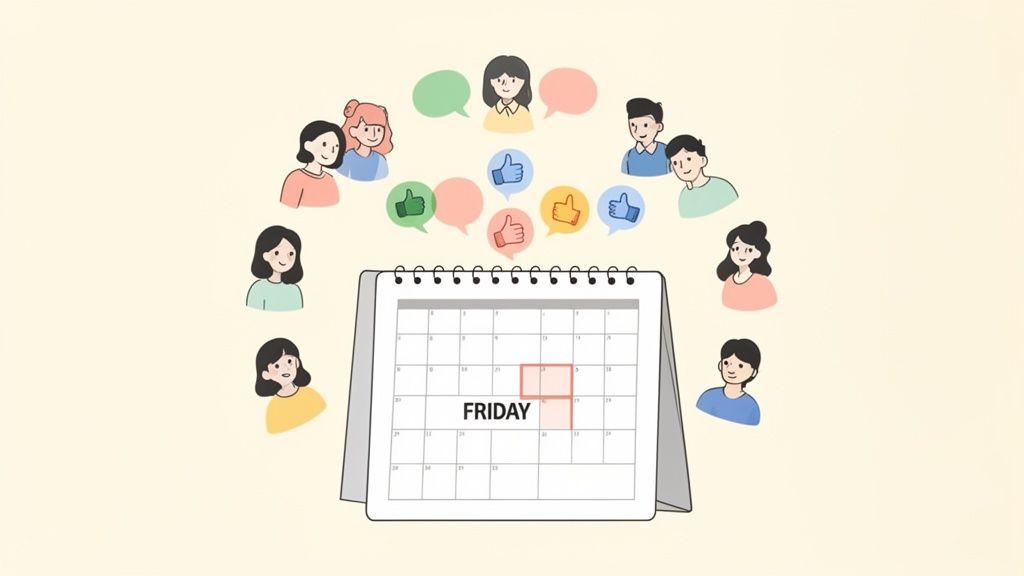
A weekly feedback and shout-out day dedicates a specific, recurring time for teams to pause their work and exchange public recognition. This structured ritual, often scheduled for Friday afternoons, transforms appreciation from an ad-hoc gesture into a predictable and anticipated event. The importance of this practice is that it normalizes gratitude and creates a reliable cadence for celebrating both individual and team achievements, ensuring it happens consistently.
This method institutionalizes team recognition, ensuring it happens consistently. Rather than hoping praise occurs spontaneously, companies can build a formal process that reinforces a positive culture. For instance, a development team can use their Friday stand-up to highlight a colleague who solved a difficult bug, explaining the specific impact their effort had on the project timeline. This regular practice keeps momentum high and embeds appreciation directly into the team's operational rhythm.
How to Implement This Program
- Establish a Predictable Cadence: Schedule the session at the same time each week (e.g., Friday at 3 PM) so employees can look forward to it. Announce it in a public channel to build anticipation and remind everyone to prepare their shout-outs.
- Provide Simple Templates: Guide participation by offering a simple structure for feedback, such as "What they did," "Why it mattered," and "The impact it had." This helps employees articulate meaningful praise beyond a simple "good job."
- Mix Synchronous and Asynchronous Formats: Accommodate different work styles and time zones by allowing both live shout-outs during a virtual meeting and asynchronous posts in a dedicated Slack channel. This ensures everyone, including remote team members, can participate.
- Rotate Facilitators and Focus: Prevent monotony by rotating who leads the session. Mix individual kudos with celebrations of team milestones and departmental wins to provide a comprehensive view of success across the organization.
To make each shout-out more impactful, you can discover a wide range of effective employee appreciation phrases to share with your team. This structured weekly practice builds a powerful, self-sustaining cycle of recognition that strengthens team bonds and reinforces company values.
6. Recognition Tied to Company Values and Behaviors
Connecting recognition directly to your company's core values transforms appreciation from a simple morale boost into a powerful culture-shaping tool. The importance of this strategy is that it clarifies and reinforces what truly matters to the organization. When employees are celebrated for demonstrating specific behaviors that drive the mission forward, it creates a direct line between individual actions and the company's identity.
This method makes recognition less arbitrary and more meaningful. Instead of a generic "great job," a manager can say, "Thank you for embodying our 'Customer Obsession' value by staying late to resolve that complex support ticket." This specificity shows the employee their work is seen and valued within a larger strategic context. For example, a company like Patagonia might formally recognize an employee's initiative to organize a local environmental cleanup, directly tying their personal passion to the company’s commitment to social responsibility. This reinforces the desired culture in a very public and affirming way.
How to Implement This Program
- Define and Socialize Core Values: Identify 3-5 core values and create clear behavioral examples for each. For instance, for a value like "Bias for Action," a behavioral example could be "Proactively identifying a problem and proposing a solution without waiting to be asked."
- Create Value-Based Recognition Channels: Designate a specific Slack channel (e.g.,
#living-our-values) or use dedicated tools where anyone can share stories of colleagues demonstrating these values. Create custom emoji or digital badges for each value to make recognition visual and trackable. - Train and Empower Managers: Equip managers with the language and framework to connect feedback and praise directly to company values during 1:1s, team meetings, and performance reviews. Their consistent reinforcement is crucial for success.
- Amplify Recognition Stories: Regularly feature examples of value-driven recognition in company-wide communications like all-hands meetings or internal newsletters. Sharing these stories celebrates the individuals involved and provides a clear model for others to follow, creating a virtuous cycle of positive behavior.
By integrating values into your recognition framework, you build a culture where every act of appreciation reinforces the behaviors that define your organization's success. This makes team recognition an essential part of your operational strategy, not just an occasional event.
7. Cross-Department and Cross-Team Recognition Networks
A cross-department recognition network intentionally breaks down organizational silos by creating formal channels for employees to appreciate colleagues in different teams. This system moves beyond recognizing immediate teammates and focuses on celebrating the cross-functional collaboration that drives complex projects forward. This is one of the most strategic employee appreciation activities for large or matrixed organizations, as it uses gratitude to build organizational cohesion and make vital inter-team partnerships visible.
The importance of this approach is that it makes hidden collaboration visible and valuable. When an engineer publicly thanks a marketing team member for providing crucial customer insights, or a finance specialist recognizes a sales lead for submitting perfect paperwork, it reinforces the interconnected nature of the business. For example, a healthcare system can use a dedicated channel to highlight a nurse, doctor, and administrator whose teamwork led to an exceptional patient outcome. This public acknowledgment not only validates their efforts but also models effective collaboration for the entire organization.
How to Implement This Program
- Create Dedicated Channels: Establish specific communication channels, like a Slack channel named
#cross-team-winsor#department-bridges. This creates a centralized, public forum exclusively for celebrating inter-departmental successes. - Feature Cross-Functional Projects: Use company-wide meetings or newsletters to spotlight projects that required significant collaboration between different teams. Interview key members from each department to share how their partnership led to success.
- Empower Manager Nominations: Ask managers to nominate one person from another team each month who was an invaluable partner. This encourages leaders to look outside their own silo and actively identify key connectors within the company.
- Analyze and Reward Collaboration: Use recognition data to identify employees who frequently receive praise from outside their own department. These individuals are natural connectors and bridge-builders. Create a special award or badge, like "Collaboration Champion," to honor their unique contribution to company culture.
By implementing this type of recognition, you transform appreciation from a simple morale booster into a powerful tool for organizational design. It helps you identify and reinforce the collaboration patterns that are essential for innovation and efficiency, making it a critical component of any holistic employee engagement strategy.
8. Peer Recognition Analytics and Insights Dashboards
Moving beyond simply facilitating recognition, an analytics and insights dashboard transforms your appreciation data into a powerful tool for strategic decision-making. Instead of viewing recognition as a collection of individual shout-outs, this system aggregates data to reveal patterns in team dynamics, collaboration, and cultural health. The importance of this is that it provides leaders with objective data to understand and improve team engagement, making recognition a measurable driver of business outcomes.
This approach turns qualitative appreciation into quantitative insights. By tracking who gives and receives recognition, which company values are most cited, and how different teams interact, you can visualize your organization's collaboration network. For example, a dashboard might reveal that the engineering team frequently recognizes the product team for "Clarity," but receives little cross-departmental recognition in return. This insight allows a manager to proactively facilitate better communication channels and celebrate engineering’s contributions more publicly, strengthening team recognition and cohesion.
How to Implement This Program
- Integrate a Recognition Analytics Tool: Adopt a platform like AsanteBot, Bonusly, or Culture Amp that offers robust analytics. These tools automatically collect recognition data from platforms like Slack and present it in customizable dashboards for managers and executives.
- Identify Key Metrics: Focus on tracking trends that align with business goals, such as cross-functional collaboration rates, alignment with company values, and the recognition frequency of new hires. Avoid focusing on individual tallies, which can feel punitive.
- Share Insights Responsibly: Use the data to start conversations, not to single people out. Share team-level insights during retrospectives to discuss collaboration strengths and identify areas for improvement. This creates a culture of shared accountability and continuous growth.
- Train Leaders on Data Interpretation: Equip managers with the skills to read dashboards and combine quantitative data with qualitative feedback. The goal is to use analytics to ask better questions and understand the "why" behind the trends, such as a sudden dip in recognition within a specific team.
To see how data can be practically applied, you can explore Google's people analytics approach, which demonstrates how tracking internal data can lead to better management and a stronger culture. This method elevates team recognition from a simple activity to a core component of your people strategy.
9. Peer-Nominated Awards and Recognition Programs
Peer-nominated awards elevate appreciation from informal shout-outs to a structured, story-driven celebration of excellence. This program empowers employees to formally nominate their colleagues for specific achievements, creating a powerful form of recognition rooted in firsthand experience. It is one of the most meaningful employee appreciation activities because it uncovers impactful contributions that might otherwise go unnoticed by leadership, directly involving the entire team in defining and celebrating success.
This method transforms recognition into a narrative. Instead of just acknowledging a task well done, nominations require a brief story explaining why a colleague deserves an award, detailing the context, challenges overcome, and the positive impact on the team or company. For example, a software developer might nominate a product manager not just for a successful launch, but for their exceptional communication and resilience during a high-pressure sprint, providing a rich, qualitative endorsement that boosts morale and reinforces company values.
How to Implement This Program
- Define Meaningful Award Categories: Create 3-5 award categories that reflect your company's core values, such as the "Innovation Champion" for creative problem-solving or the "Collaboration Catalyst" for exceptional teamwork. This ensures recognition is always tied to your desired culture.
- Simplify the Nomination Process: Use a simple, accessible form (e.g., a Google Form or Slack workflow) that asks for the nominee's name, the award category, and a short story (under 200 words) explaining their contribution. An easy process encourages higher participation.
- Establish a Regular Cadence: Hold award cycles monthly or quarterly to maintain momentum and create consistent opportunities for team recognition. Announcing winners during all-hands meetings or in a dedicated Slack channel keeps the program visible and exciting.
- Amplify the Winners' Stories: Don't just announce the winner; share their nomination story. Feature them in company newsletters, on an internal "Wall of Fame," or in a dedicated Slack channel. This provides context and inspires others by showcasing what excellence looks like in practice.
- Combine Recognition with Rewards: Pair the award with a tangible reward like a personalized trophy, extra paid time off, a gift card to a favorite local business, or a professional development stipend. This adds weight to the honor and makes recipients feel truly valued.
10. Recognition-Tied Professional Development and Growth Opportunities
Connecting peer recognition directly to professional development transforms appreciation from a momentary morale boost into a powerful career growth engine. Instead of praise existing in a vacuum, this system uses consistent, positive peer feedback as a clear indicator of an employee's readiness for new challenges and leadership roles. The importance of this strategy is that it demonstrates a tangible return on an employee's investment in teamwork and company values, making career advancement more transparent and merit-based.
This approach treats strong recognition data as a signal for talent potential. When an employee consistently receives kudos for mentorship, innovation, or cross-functional collaboration, it highlights their strengths in a real-world context. For example, a software engineer who frequently receives ":mentorship:" emoji reactions from junior colleagues can be identified as a prime candidate for a tech lead or team mentor role. Similarly, companies like Nextdoor use peer feedback to spot emerging leaders who can take on stretch assignments, ensuring that internal mobility is driven by demonstrated impact.
How to Implement This Program
- Explicitly Link Recognition to Growth: Clearly communicate to your team that consistent peer recognition is a key factor considered for promotions, special projects, and development programs. Frame it as "recognition data helps us see your impact, which opens doors to new opportunities."
- Use Data to Identify Talent: Regularly analyze recognition data to spot trends. Identify employees who are top givers (great culture carriers) and top receivers (high-impact contributors). Use this information as one input, alongside performance reviews, to guide conversations about career aspirations.
- Create Diverse Growth Pathways: Offer multiple avenues for advancement beyond traditional management. High-recognition individuals might be perfect for mentoring new hires, leading a cross-departmental task force, or receiving a budget for specialized training or certifications.
- Monitor for Bias and Ensure Fairness: It is crucial to monitor recognition patterns to ensure opportunities are distributed equitably across all demographics. Combine data with manager input to prevent popularity from being the sole determinant and ensure all high-performers are seen. This makes team recognition a fair and motivational force for everyone.
Comparison of 10 Employee Appreciation Activities
| Approach | Implementation Complexity 🔄 | Resource Requirements & Speed ⚡ | Expected Outcomes 📊 | Ideal Use Cases 💡 | Key Advantages ⭐ |
|---|---|---|---|---|---|
| Emoji-Based Peer Recognition Programs | 🔄 Low–Medium — quick Slack setup; needs adoption guidelines | ⚡ Low — minimal ops, fast interactions | 📊 More frequent, visible appreciation; collaboration data | 💡 Remote/hybrid teams, Slack-first startups | ⭐ Low-friction, highly engaging, cost-effective |
| Automated Birthday & Work Anniversary Celebrations | 🔄 Low — calendar/HR integration and privacy checks | ⚡ Low — automated once configured; needs accurate HR data | 📊 Consistent milestone recognition; improved retention | 💡 Any-sized orgs wanting scalable, low-effort rituals | ⭐ Predictable, inclusive celebrations with minimal manual work |
| Leaderboard-Based Recognition Competitions | 🔄 Medium — ranking rules + moderation required | ⚡ Medium — visible updates drive rapid participation | 📊 Increased participation and visibility; risk of pressure | 💡 Competitive cultures, sales, metrics-driven teams | ⭐ Drives engagement and highlights cultural ambassadors |
| Customizable Reward Redemption Systems | 🔄 Medium–High — catalog, fulfillment, tax/compliance setup | ⚡ Medium — transactional speed varies; budget-dependent | 📊 Tangible value conversion of recognition; sustained motivation | 💡 Organizations with discretionary reward budgets | ⭐ Personalization and measurable ROI of recognition spend |
| Weekly Feedback & Shout-Out Days | 🔄 Low — procedural change; scheduling and facilitation | ⚡ Low — time-based ritual; asynchronous-friendly | 📊 Predictable connection moments; deeper peer feedback | 💡 Teams wanting ritualized bonding, remote teams | ⭐ Establishes routine, allows thoughtful recognition |
| Recognition Tied to Company Values & Behaviors | 🔄 Medium — map values to behaviors and train teams | ⚡ Low–Medium — ongoing communication and moderation | 📊 Reinforced desired behaviors; clearer culture signals | 💡 Organizations with defined or evolving values | ⭐ Aligns recognition to strategic priorities and reduces ambiguity |
| Cross-Department / Cross-Team Recognition Networks | 🔄 Medium — channels, analytics and governance needed | ⚡ Medium — fosters cross-team interactions over time | 📊 Breaks silos; reveals connectors and collaboration patterns | 💡 Large, matrixed orgs or cross-functional projects | ⭐ Strengthens organizational cohesion and cross-team trust |
| Peer Recognition Analytics & Insights Dashboards | 🔄 High — data pipelines, privacy, and interpretation rules | ⚡ High resource — analytics tools, training, careful governance | 📊 Actionable insights into engagement, isolation, ROI | 💡 Data-driven leaders, large-scale recognition programs | ⭐ Makes culture visible and enables targeted interventions |
| Peer-Nominated Awards & Recognition Programs | 🔄 Medium — nomination, judging, and ceremony workflows | ⚡ Medium — recurring coordination; slower cadence | 📊 Deep, story-driven recognition; memorable moments | 💡 Orgs seeking meaningful, aspirational recognition rituals | ⭐ Creates rich narratives and formal acknowledgment of excellence |
| Recognition-Tied Professional Development & Growth | 🔄 High — integrate recognition with talent processes | ⚡ Medium–High — training, development slots, mobility ops | 📊 Converts recognition into career pathways; boosts retention | 💡 Companies prioritizing internal mobility and leadership pipelines | ⭐ Turns appreciation into tangible development and promotion signals |
From Activity to Culture: Making Appreciation Your Competitive Advantage
We've explored a comprehensive toolkit of ten powerful employee appreciation activities, from emoji-based peer recognition and automated celebrations to values-driven awards and analytics dashboards. Each strategy offers a unique pathway to acknowledge the hard work and dedication that fuels your organization. However, the true power of these initiatives isn't found in their isolated execution. It lies in weaving them together into the very fabric of your company culture, transforming appreciation from a sporadic event into a daily, instinctual habit.
The ultimate goal is to build a self-sustaining ecosystem of gratitude. When recognition is visible, frequent, and tied to meaningful behaviors, it creates a virtuous cycle. An employee who receives a public shout-out for demonstrating a core value feels seen and motivated; they are then more likely to recognize a colleague's efforts, perpetuating the cycle of positive reinforcement. This shift from top-down acknowledgment to a multi-directional flow of appreciation is what separates a good company from a great one.
Synthesizing Strategy: Key Takeaways for Lasting Impact
As you move from reading this article to implementing these ideas, keep these core principles at the forefront of your strategy. They are the common threads that connect all successful employee appreciation activities and ensure they deliver tangible results rather than becoming another short-lived HR initiative.
- Consistency Over Intensity: A small, daily act of recognition is often more powerful than a large, annual award. The goal is to make appreciation a consistent pulse within the organization, not a rare, grand gesture.
- Visibility is Vital: Recognition that happens behind closed doors has a limited impact. Leveraging public channels like Slack ensures that acknowledgment serves a dual purpose: it rewards the individual and reinforces desired behaviors for the entire team.
- Lower the Barrier to Entry: The easier it is to give recognition, the more frequently it will happen. This is where lightweight tools like emoji reactions and simple Slack commands become invaluable, removing friction and embedding appreciation directly into daily workflows.
- Tie Recognition to Results: Connect appreciation directly to your company values and strategic goals. Recognizing someone for "Excellence" or "Customer Obsession" does more than praise an individual; it teaches the entire organization what success looks like in practice.
Your Actionable Roadmap to a Culture of Appreciation
Building this culture doesn't require a massive, simultaneous rollout of all ten ideas. The most effective approach is incremental and strategic. Here are your next steps to turn these concepts into reality:
- Start Small and Specific: Choose one or two employee appreciation activities from the list that address an immediate need. If cross-team collaboration is a challenge, start with a cross-department recognition program. If morale feels low, a weekly shout-out day can provide an instant boost.
- Automate for Sustainability: Manually tracking birthdays, anniversaries, and points is a recipe for burnout. Implement a tool that automates these foundational elements of your program, freeing you up to focus on the more human, strategic aspects of recognition.
- Measure, Learn, and Iterate: Use analytics to understand what’s working. Are certain teams more engaged? Are specific company values being recognized more than others? Use these insights to refine your approach, celebrate your champions, and offer support where it's needed most.
Ultimately, investing in a robust system for employee appreciation is not a cost center; it's a strategic investment in your most valuable asset: your people. It's the engine that drives engagement, reduces turnover, and fosters the psychological safety needed for innovation to thrive. By making every employee feel seen, valued, and connected to a larger purpose, you are not just checking a box. You are building a resilient, high-performing organization and a true competitive advantage in the modern workplace.
Ready to transform these ideas into action? AsanteBot is a Slack-native tool designed to automate and simplify many of the employee appreciation activities discussed here, from emoji-based peer recognition to automated celebrations and rewards. Start building a culture of appreciation effortlessly by exploring what AsanteBot can do for your team.