
10 Employee Recognition Best Practices for High-Performing Teams in 2026
Dusan Milovanovic
In today's fast-paced, often remote work environment, genuine appreciation is the currency of a thriving team culture. It's the difference between employees who are just logging hours and those who are actively engaged, innovative, and committed. But a simple 'thanks' in a direct message isn't enough to build a resilient, high-performing team. A strategic approach, built on proven employee recognition best practices, is essential to make appreciation stick and drive tangible business outcomes.
Table of Contents
- 1. Real-Time, Peer-to-Peer Recognition
- 2. Gamification with Leaderboards and Point Systems
- 3. Milestone and Anniversary Recognition Automation
- 4. Customizable Rewards and Redemption Systems
- 5. Structured Feedback Day and Recognition Rituals
- 6. Values-Based Recognition Tied to Company Culture
- 7. Analytics-Driven Recognition Insights and Reporting
- 8. Cross-Functional and Cross-Silo Recognition Programs
- 9. Inclusive, Culturally-Responsive Recognition Design
- 10. Manager-Led Recognition with Coaching and Accountability
- Employee Recognition: 10-Point Best Practices Comparison
- Putting It All Together: Your Blueprint for a Culture of Appreciation
This comprehensive guide moves beyond generic advice to provide 10 actionable, evidence-backed strategies designed specifically for modern, Slack-first teams. We will explore how to transform recognition from a sporadic gesture into a consistent, measurable habit that boosts morale, strengthens collaboration, and improves performance. For team recognition to be effective, it must be visible, timely, and aligned with company values. When a team's collective effort on a difficult project is celebrated in a company-wide channel, it not only validates their hard work but also fosters a shared sense of accomplishment and reinforces the importance of collaboration.
Forget vague tips. Instead, you'll find a clear roadmap to building a powerful culture of appreciation right where your team already communicates. Each of the following best practices comes with practical implementation details, real-world examples, and specific dos and don'ts. We will also show how tools like AsanteBot can seamlessly integrate these rituals into your daily Slack workflow, automating the process and amplifying the impact. From real-time peer feedback and values-based shoutouts to analytics-driven insights and inclusive program design, this article provides everything you need to create a recognition program that truly resonates with and retains your top talent.
1. Real-Time, Peer-to-Peer Recognition
Real-time, peer-to-peer recognition shifts the focus from top-down, annual awards to immediate, colleague-driven acknowledgments. This approach empowers team members to celebrate each other's contributions the moment they happen, reinforcing positive behaviors instantly. For Slack-first and remote teams, this practice is crucial; it ensures valuable work doesn't disappear into a digital void, making every team member feel seen and valued regardless of their physical location.
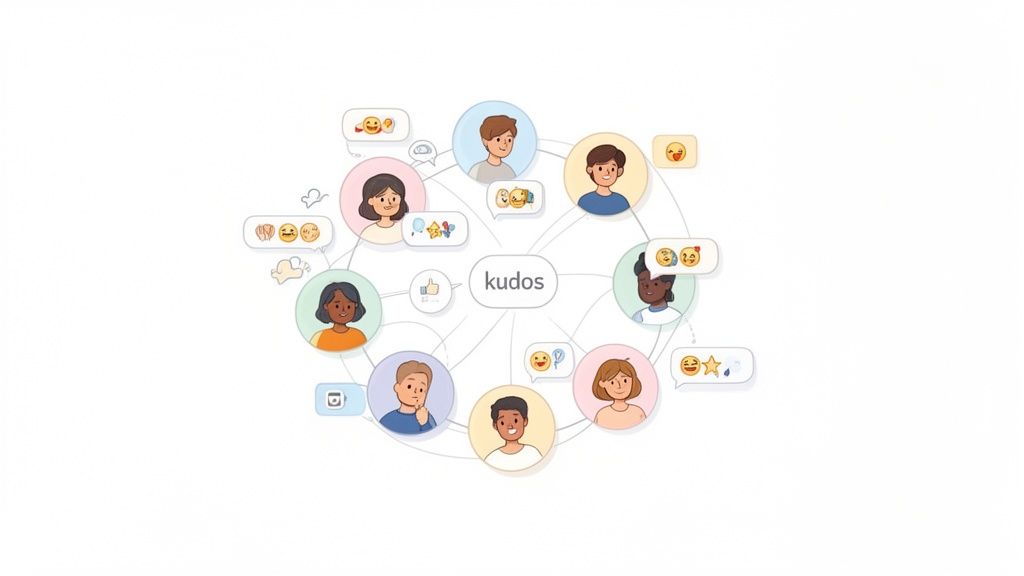
Unlike formal reviews that can be months apart, peer recognition provides immediate positive reinforcement, which is far more effective at motivating employees and shaping company culture. For example, when a developer helps a colleague debug a tricky piece of code, they can receive a shout-out in the #wins channel within minutes. This not only boosts the individual's morale but also broadcasts the collaborative behavior the company wants to encourage. It’s a foundational element of modern employee recognition best practices.
How to Implement Real-Time Recognition in Slack
- Establish a Dedicated Channel: Create a public Slack channel like
#kudos,#props, or#celebrationswhere anyone can post shout-outs. This visibility amplifies the recognition's impact. - Use an Integration: Tools like AsanteBot streamline the process, allowing employees to give recognition with a simple slash command or emoji reaction. This removes friction and encourages participation.
- Model the Behavior: Leadership participation is key. When managers and executives regularly give and receive peer recognition, it signals that the practice is valued by the entire organization.
- Set Clear Guidelines: Define what constitutes great recognition. Encourage specificity by asking employees to mention the specific action and its impact. For instance: "Kudos to @Jane for creating that detailed project brief! It saved the team hours of clarification work."
This approach democratizes appreciation and builds a stronger, more connected team. For more ideas on how to get started, explore these peer-to-peer recognition examples that you can adapt for your own team.
2. Gamification with Leaderboards and Point Systems
Gamification transforms recognition into an engaging, game-like experience by incorporating points, badges, and leaderboards. This strategy makes appreciation measurable and highly visible, tapping into intrinsic motivators like achievement and friendly competition. It’s particularly effective for driving specific behaviors and increasing participation in recognition programs, especially within competitive or goal-oriented teams.
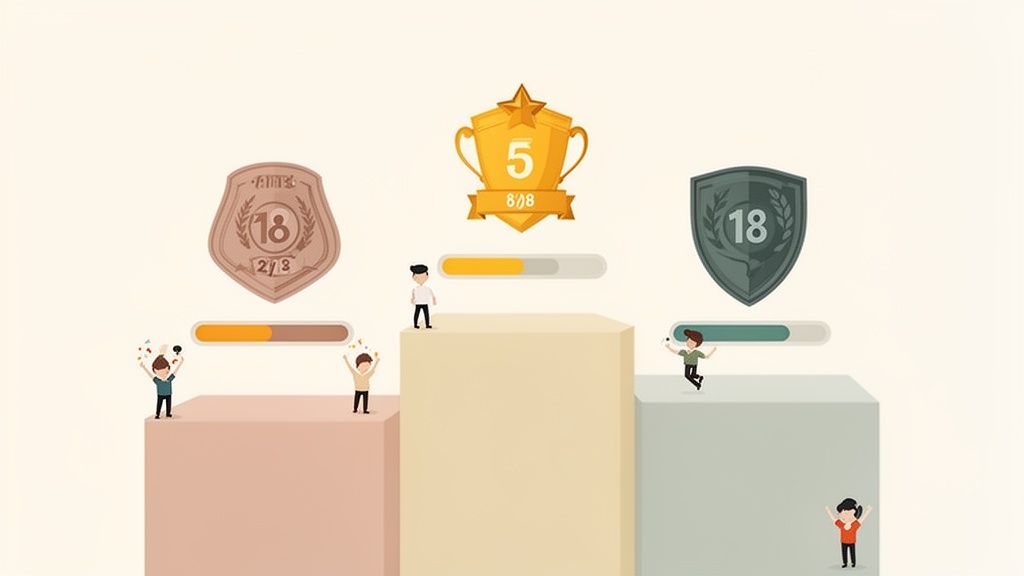
Unlike purely qualitative feedback, a points-based system provides a clear metric for engagement. When an employee receives kudos for embodying a company value, they also earn points that accumulate over time. This creates a positive feedback loop where good work is not only acknowledged but also contributes to a tangible and trackable goal. It’s a powerful method among employee recognition best practices for making your culture of appreciation both fun and data-driven. A practical example is celebrating a "Team Recognition Champion" of the month—the team that collectively gave the most meaningful kudos—which encourages group participation over individual glory.
How to Implement Gamification in Slack
- Choose the Right Tool: Platforms like AsanteBot or Bonusly integrate directly into Slack, automatically assigning points and maintaining leaderboards. This automation is key to making the system seamless and sustainable.
- Keep It Balanced: While competition is motivating, the goal is to celebrate everyone. Rotate leaderboard categories monthly (e.g., "Top Giver," "Most Core Values Recognized") to give different contributors a chance to shine.
- Ensure Transparency: Clearly communicate how points are earned and what they can be redeemed for, if anything. The system should feel fair and easy for everyone to understand.
- Celebrate All Contributions: Use leaderboards to spotlight top participants, but also make a point to celebrate team-wide milestones. A practical example is to post, "Great job, team! We shared over 500 kudos this month," to foster a sense of collective achievement.
- Reset and Refresh: Regularly reset leaderboards (monthly or quarterly) to give everyone a fresh start. This prevents early leaders from becoming uncatchable and keeps the program engaging long-term.
3. Milestone and Anniversary Recognition Automation
Automating the celebration of significant employee milestones, like birthdays and work anniversaries, ensures these important moments are never missed. This approach removes the manual burden from HR and managers, creating consistent, meaningful touchpoints that make employees feel valued. For distributed or remote-first teams, automated recognition is essential; it prevents individual achievements and personal milestones from being overlooked in a digital environment.
Unlike spontaneous shout-outs, milestone recognition is predictable, yet its impact is profound. When an automated message celebrates an employee's five-year anniversary in a public channel, it does more than just mark the date. It signals to the entire team that loyalty and long-term contributions are seen and cherished, reinforcing a key component of successful employee recognition best practices. It prompts colleagues to join in, turning a simple notification into a company-wide celebration.
How to Implement Milestone Automation in Slack
- Leverage a Dedicated Tool: Integrate a bot like AsanteBot to automatically post customized messages for birthdays and work anniversaries in designated channels. This ensures consistency and timeliness without manual effort.
- Integrate with Your HRIS: Connect your HR Information System (like BambooHR) to Slack. This keeps employee data, such as start dates and birthdays, accurate and automatically triggers recognition workflows.
- Customize Your Messages: Don’t settle for generic "Happy Anniversary" posts. A practical example is to tailor messages to reflect your company culture, like, "Celebrating 3 years of brilliant code and collaboration with @John! Thanks for being an amazing teammate."
- Pair Automation with Human Touch: Encourage team members to reply to the automated posts with their own personal messages, photos, or GIFs. This combination of systematic recognition and peer-to-peer warmth creates a powerful and memorable experience.
This automated-yet-personal approach guarantees that every team member feels acknowledged on their special days, boosting morale and fostering a stronger sense of belonging. For more inspiration, check out these ideas for a meaningful work anniversary message that you can adapt for your automated system.
4. Customizable Rewards and Redemption Systems
Customizable rewards shift recognition from generic, one-size-fits-all prizes to a system where employees choose what is most meaningful to them. This practice translates recognition points or earned credits into tangible rewards, empowering employees to redeem them for items they genuinely value. Whether it’s a gift card, a unique experience, or a donation to a favorite charity, personal choice dramatically increases the perceived value of the acknowledgment.
This approach is a cornerstone of effective employee recognition best practices because it acknowledges that motivation is personal. A top-down reward system might offer a restaurant voucher to an employee who prefers cooking at home, diminishing the reward's impact. By contrast, allowing that same employee to choose from a diverse catalog ensures the recognition feels thoughtful and tailored to their individual preferences, boosting their sense of being truly seen and appreciated. This is also important for teams; a practical example is offering a team-based reward, like a catered lunch or a team outing, which the entire group can choose and enjoy together, reinforcing collective success.
How to Implement a Customizable Rewards System
- Offer a Diverse Catalog: Include a wide range of options to cater to different tastes. Platforms like AsanteBot allow for fully customizable reward catalogs within Slack, while others like Bonusly offer marketplaces with thousands of choices. A crucial component of any recognition program is the ability to offer meaningful Thankyou Gifts that resonate with employees.
- Survey Your Team: Before launching, ask employees what kinds of rewards would motivate them. This not only ensures your catalog is relevant but also involves them in the program's design, increasing buy-in.
- Include Non-Monetary Options: Add low-cost, high-value rewards like an extra day off, a dedicated learning and development budget, or the opportunity to lead a special project. These can often be more motivating than cash-equivalent prizes.
- Refresh Rewards Regularly: Keep the catalog fresh and exciting by updating it quarterly. This maintains engagement and prevents the program from feeling stale.
- Pair with Public Praise: Ensure the tangible reward is always linked back to the specific achievement. The redemption should supplement, not replace, the public shout-out that celebrates the employee’s contribution to the team.
5. Structured Feedback Day and Recognition Rituals
While real-time recognition is powerful, creating dedicated, recurring moments for appreciation builds recognition into your company’s DNA. Structured feedback days or recognition rituals designate a specific time, like a weekly or monthly meeting, for teams to pause regular work and focus solely on giving and receiving peer feedback and recognition. This normalizes the act of appreciation, making it a reliable and anticipated part of the work cycle rather than a sporadic event.
This approach creates immense psychological safety by making feedback and praise a standard operational rhythm. Instead of feeling awkward or forced, recognition becomes a professional skill that is practiced and honed. For example, a marketing team might end their weekly sync by having each member share a "win of the week" for a colleague, directly linking their contribution to a team goal. Team recognition is vital here because it reinforces that individual wins contribute to collective success. This practice is a cornerstone of effective employee recognition best practices because it guarantees that appreciation happens consistently.
How to Implement Recognition Rituals in Slack
- Schedule a Recurring Event: Set a fixed time for your ritual, such as every Friday afternoon. Use a Slack workflow or a tool like AsanteBot to send automated prompts to a specific channel, asking questions like, "Who went above and beyond for you this week?"
- Provide Specific Prompts: Guide employees with clear, focused questions. Instead of a generic "give a shout-out," ask, "Acknowledge a teammate who demonstrated our value of 'Customer Obsession' this month."
- Keep it Time-Bound and Focused: Whether it's a 15-minute segment in a meeting or a 30-minute asynchronous Slack thread, keeping the ritual brief ensures it remains high-energy and doesn't feel like a chore.
- Leadership Must Participate: When leaders actively participate by giving and humbly receiving recognition, they model the behavior and reinforce its importance. This shows the entire team that vulnerability and appreciation are valued at all levels.
- Offer Asynchronous Options: For globally distributed teams, allow members to contribute to a recognition thread over a 24-hour period. This ensures time zones don’t prevent anyone from participating.
By embedding recognition into your operational cadence, you transform it from a nice-to-have gesture into a non-negotiable cultural pillar that strengthens team cohesion and morale.
6. Values-Based Recognition Tied to Company Culture
Values-based recognition connects individual contributions directly to the core principles that define your organization. Instead of generic praise like "good job," this approach celebrates specific actions that exemplify company values such as integrity, innovation, or customer obsession. It transforms recognition from a simple "thank you" into a powerful tool for cultural reinforcement, constantly reminding everyone what matters most.
This practice is essential for building a cohesive and mission-driven team, especially in a remote or hybrid environment. When an employee is recognized for "demonstrating our value of 'Think Like an Owner' by proactively identifying and fixing a bug before it impacted customers," it does more than boost morale. It provides a clear, real-world example of the desired behavior for the entire company to see, making abstract values tangible and actionable. This alignment is a cornerstone of effective employee recognition best practices.
How to Implement Values-Based Recognition in Slack
- Define and Socialize Your Values: Clearly articulate your 3-5 core values and provide concrete behavioral examples for each. Make them visible in Slack channel topics, profiles, or pinned messages.
- Integrate Values into Recognition Tools: Use a tool like AsanteBot to create custom recognition categories or "badges" that correspond to each company value. This allows employees to tag their kudos with a specific value, creating a direct link.
- Train Managers to Spot and Share Examples: Equip leaders to identify value-aligned actions during their daily work. Encourage them to share these stories publicly in a
#values-in-actionchannel, explaining how the behavior reflects a core principle. - Tell Compelling Stories: Don't just state the value; narrate the impact. A message like, "Huge props to @David for living our 'Bias for Action' value. He built a prototype for the new feature over the weekend, which helped us get stakeholder buy-in on Monday morning!" is far more powerful than a simple thank you.
- Audit Your Recognition Data: Regularly review recognition trends to see which values are being celebrated most and least. This data can reveal if certain values are misunderstood or if parts of the organization are not fully aligned with the company culture.
7. Analytics-Driven Recognition Insights and Reporting
Analytics-driven recognition moves beyond feel-good moments to provide strategic insights into your company culture. This practice involves using data to understand recognition patterns, identify collaboration hubs, and measure the tangible impact of your recognition programs on key business metrics like employee engagement and retention. It transforms appreciation from an anecdotal activity into a powerful, data-informed tool for organizational health.
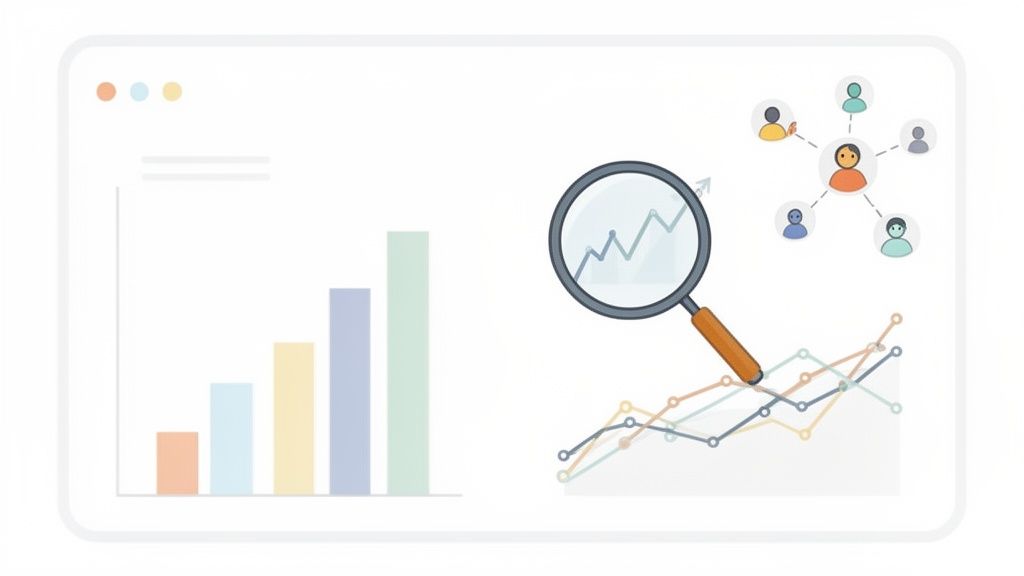
Instead of guessing what motivates your team, you can see it in the data. For instance, analytics might reveal that the engineering team frequently recognizes the product team for clear documentation, highlighting a crucial cross-functional behavior that contributes to project success. This approach allows leaders to spot which teams are highly engaged, identify individuals who might be feeling underappreciated, and prove the ROI of their culture initiatives. Using data is a cornerstone of effective employee recognition best practices because it provides objective evidence of what's working and where to focus your efforts.
How to Implement Analytics-Driven Recognition
- Establish a Baseline: Before launching a new program, capture baseline metrics for engagement, turnover, and existing recognition frequency. This allows you to accurately measure the program's impact over time.
- Track Key Metrics: Use a tool like AsanteBot to access actionable reports on recognition frequency, top givers and receivers, and the values most often cited. Monitor both quantitative data (how many kudos) and qualitative data (the themes within the messages).
- Segment Your Data: Analyze recognition patterns by team, department, or location. This can reveal "collaboration bridges" between departments or highlight teams that may need more encouragement to participate.
- Correlate with Other KPIs: Compare recognition trends with results from engagement surveys (e.g., from tools like Culture Amp or Peakon). A spike in recognition followed by a rise in engagement scores provides a powerful narrative for the value of your program.
- Act on Insights: Share findings transparently with managers to help them coach their teams. If data shows certain individuals are consistently overlooked, you can proactively find opportunities to support and acknowledge their work, preventing potential burnout or turnover.
8. Cross-Functional and Cross-Silo Recognition Programs
Effective recognition must break down departmental walls. Cross-functional recognition deliberately celebrates collaboration between teams and organizational silos that don't typically interact, such as engineering and marketing, or finance and product. This approach is vital for acknowledging the often-invisible support work from departments like IT, HR, or operations that enables the entire organization to succeed. Recognizing the entire team is important because it fosters a holistic view of company goals and builds empathy across different functions.
In a remote or hybrid setting, this practice is a powerful antidote to the digital silos that form naturally. When a sales team member gives a shout-out to someone in legal for an incredibly fast contract review, it doesn't just celebrate the individual; it highlights a successful cross-functional partnership. A practical example would be creating a "Project Launch Heroes" award that recognizes key members from product, engineering, marketing, and support who collaborated to deliver a successful launch. This type of acknowledgment is a cornerstone of advanced employee recognition best practices, as it reinforces that company success is a collective effort, not a series of isolated achievements.
How to Implement Cross-Functional Recognition in Slack
- Create a Shared Stage: Establish a company-wide channel like
#cross-team-winsor#collaboration-props. This creates a public forum where inter-departmental successes are made visible to everyone, from the C-suite to new hires. - Spotlight Collaborative Projects: Use all-hands meetings or company newsletters to feature projects that required significant cross-functional effort. Ask team leads to nominate individuals who were instrumental in bridging gaps between departments.
- Encourage "Internal Customer" Feedback: Frame support departments as teams with internal customers. For example, encourage the marketing team to recognize the IT team member who quickly resolved a critical website issue, explaining the direct impact on a campaign launch.
- Train Managers to Look Outward: Equip managers to identify and nominate contributors outside their immediate teams. A manager in engineering should be encouraged to recognize a product marketer who provided exceptional user insights that prevented a major development misstep.
9. Inclusive, Culturally-Responsive Recognition Design
Truly effective recognition is not one-size-fits-all. Inclusive, culturally-responsive recognition design acknowledges that team members from diverse backgrounds and with different personalities have varied preferences for how they receive praise. While one employee might thrive on a public shout-out in a company-wide channel, another may feel deeply uncomfortable with public attention and prefer a private, direct message from their manager.
This approach moves beyond a single method of appreciation and builds a system where everyone can feel genuinely valued in a way that resonates with them. Acknowledging these differences is crucial for global or remote teams where cultural norms around praise can vary significantly. By offering multiple avenues for appreciation, you ensure your program is equitable and makes every single employee feel seen and respected. Recognizing a team's collective effort is also important; for example, a successful project completion can be celebrated with a team lunch, which respects group harmony over individual spotlight. This is a cornerstone of modern employee recognition best practices that fosters true belonging.
How to Implement Inclusive Recognition in Slack
- Offer Multiple Recognition Channels: Don't rely solely on a public
#kudoschannel. Empower managers and peers to send private recognition through direct messages or tools like AsanteBot, which can facilitate both public and private acknowledgments. - Survey Your Team: Don't guess what people prefer. Use a simple poll or survey to ask employees how they like to be recognized. Questions can include preferences for public vs. private praise, tangible vs. verbal rewards, and team vs. individual callouts.
- Train on Inclusive Language: Coach managers and team members to use specific, impact-oriented language that avoids unconscious bias. Focus on the action and the result, ensuring praise is distributed equitably across all team members, not just the most visible ones.
- Make Private an Option: Explicitly state that choosing private recognition is a valid and respected option. For example, when using a recognition tool, allow a "send privately" checkbox. This removes any stigma and encourages participation from more introverted team members.
10. Manager-Led Recognition with Coaching and Accountability
While peer-to-peer programs democratize appreciation, manager-led recognition remains a powerful pillar for employee engagement and development. This approach goes beyond simple "thank yous" by formally equipping managers with the skills and tools to deliver meaningful recognition, tying it directly to coaching and performance. It establishes recognition as a core managerial responsibility, ensuring it's a consistent practice rather than an occasional, spontaneous act.
This method transforms recognition from a feel-good bonus into a strategic management tool. When a manager not only praises a direct report for excellent project management but also discusses how those skills can be applied to a future leadership role, the recognition becomes a catalyst for growth. Celebrating team achievements is equally vital. A practical example is for a manager to publicly recognize their entire team in a weekly meeting for hitting a collective goal, explaining how each person's effort contributed. This builds team morale and a sense of shared purpose. This is a critical component of employee recognition best practices, as it directly links daily contributions to long-term career development and retention.
How to Implement Manager-Led Recognition and Accountability
- Integrate Recognition into Managerial Training: Build modules on effective recognition into your manager onboarding and leadership development programs. Teach them how to give specific, impactful, and personalized feedback.
- Set Clear Expectations and Metrics: Include recognition activity as a key performance indicator (KPI) or Objective and Key Result (OKR) for managers. Track how frequently they recognize their direct reports to create accountability.
- Make it Part of 1-on-1s: Coach managers to dedicate a few minutes in every one-on-one meeting to recognize recent contributions. This creates a regular, predictable cadence for appreciation and feedback.
- Provide Tools and Data: Use platforms like AsanteBot to give managers visibility into their team's recognition patterns. Dashboards can show them who is being recognized and who might be overlooked, prompting more equitable acknowledgment.
- Model the Behavior from the Top: When senior leaders actively recognize their direct reports (the managers), it reinforces the importance of the practice and provides a clear example for them to follow.
Employee Recognition: 10-Point Best Practices Comparison
| Recognition Type | Implementation Complexity 🔄 | Resource Requirements ⚡ | Expected Outcomes 📊 | Ideal Use Cases ⭐ | Key Advantages 💡 |
|---|---|---|---|---|---|
| Real-Time, Peer-to-Peer Recognition | Low–Medium — lightweight Slack setup; cultural adoption needed | Low — minimal tooling, low admin overhead | Immediate morale lift; higher engagement and visibility | Distributed or fast-paced teams needing instant feedback | Fast, low-friction recognition that normalizes appreciation |
| Gamification with Leaderboards and Point Systems | Medium — design points/badges and rules; moderation required | Moderate — platform features, ongoing tuning and moderation | Higher participation; measurable activity but risk of quantity over quality | Competitive teams or behavior-driven campaigns | Drives engagement through competition and visible progress |
| Milestone & Anniversary Recognition Automation | Low — automated triggers from HRIS or Slack bots | Low — initial data integration; minimal ongoing admin | Consistent, fair milestone celebrations; fewer missed events | Scaling or fully-remote orgs wanting reliable rituals | Scalable, predictable recognition with minimal admin burden |
| Customizable Rewards & Redemption Systems | Medium — build/manage reward catalog and redemption flow | Moderate–High — budget for rewards, vendor integrations, fulfillment | Increased perceived value of recognition; higher redemption rates | Teams aiming to tie recognition to tangible incentives | Personalization of rewards increases motivation and choice |
| Structured Feedback Day & Recognition Rituals | Medium — requires scheduling, facilitation, and templates | Moderate — facilitator time, training, and documentation | Stronger psychological safety; deeper, higher-quality feedback | Teams wanting to institutionalize appreciation and feedback | Creates predictable space for meaningful recognition and reflection |
| Values-Based Recognition Tied to Culture | Medium — map behaviors to values and train staff | Moderate — communication, manager training, alignment work | Greater cultural alignment; clearer behavior expectations | Organizations focused on mission/values alignment | Reinforces desired behaviors and reduces ambiguous praise |
| Analytics-Driven Recognition Insights & Reporting | Medium–High — data collection, dashboards, privacy controls | High — analytics skill, tooling, and governance | Actionable insights on recognition equity, trends, and ROI | Large orgs or leadership teams seeking strategic insights | Quantifies recognition impact and surfaces gaps for intervention |
| Cross-Functional & Cross-Silo Recognition Programs | Medium — needs coordination and visible channels | Moderate — company-wide channels, program facilitation | Improved cross-team empathy and visibility of support roles | Matrixed or multi-department organizations | Breaks down silos and highlights often-overlooked work |
| Inclusive, Culturally-Responsive Recognition Design | Medium–High — supports multiple formats and localization | Moderate — training, localization, accessibility work | Broader participation and reduced cultural alienation | Global, multicultural, or diverse communication-style teams | Ensures recognition works for varied preferences and backgrounds |
| Manager-Led Recognition with Coaching & Accountability | Medium — manager training plus tracking and coaching | Moderate — training programs, manager time, dashboards | More consistent, personalized recognition; stronger retention | Organizations that emphasize manager-led development | Embeds recognition into management practice and career growth |
Putting It All Together: Your Blueprint for a Culture of Appreciation
We've explored a comprehensive framework of ten powerful employee recognition best practices, each designed to transform appreciation from a sporadic event into an embedded cultural habit. Moving beyond generic advice, this guide has provided a practical, actionable blueprint tailored for the modern, Slack-first workplace. The journey from a company that occasionally says "thanks" to one that breathes gratitude begins with understanding that recognition is not a singular program but a multi-faceted ecosystem.
The core takeaway is this: effective recognition must be timely, specific, and inclusive. Real-time peer-to-peer shoutouts capture the immediacy of achievement, while values-based recognition connects individual contributions to the company's North Star. Automating milestones ensures no one's special day is forgotten, and gamification adds a layer of friendly competition that fuels engagement. By implementing these practices, you create a virtuous cycle where positive behaviors are reinforced, visibility is democratized, and every team member, regardless of their location, feels seen and valued.
From Theory to Action: Your Next Steps
Building a robust culture of appreciation doesn't happen overnight. It's a strategic initiative that requires commitment, consistency, and the right tools. Here’s how you can start turning these best practices into reality:
-
Start Small and Iterate: You don't need to launch all ten initiatives at once. Begin with one or two high-impact practices. For many teams, implementing a simple, peer-to-peer recognition system within Slack is the perfect starting point. It’s visible, easy to adopt, and generates immediate positive momentum.
-
Align with Your Values: Before launching any program, revisit your company values. The most impactful recognition ties directly back to these principles. When an employee is praised for "acting like an owner" or "innovating fearlessly," it reinforces the very behaviors that drive your organization's success.
-
Empower Your Managers: As we discussed, managers are the linchpins of any recognition effort. Provide them with training, a budget, and clear expectations. Coach them on how to give meaningful, specific feedback and hold them accountable for recognizing their direct reports consistently. Their active participation signals that recognition is a core leadership responsibility, not just an HR task.
-
Measure What Matters: Leverage analytics to understand what’s working. Track participation rates, identify recognition trends across departments, and correlate this data with other key metrics like employee engagement scores and retention rates. This data-driven approach allows you to refine your strategy and demonstrate its tangible business impact to leadership.
The Enduring Impact of Authentic Recognition
Mastering these employee recognition best practices is one of the most powerful investments you can make in your people and your organization's future. It directly addresses the fundamental human need to be valued for one's contributions. A well-executed strategy goes far beyond simple morale-boosting; it becomes a critical driver of business outcomes. When employees feel appreciated, they are more engaged, more productive, and more likely to stay with the company long-term.
This culture of gratitude creates a resilient, collaborative, and high-performing environment. It fosters psychological safety, strengthens team bonds, and ultimately becomes a key differentiator in attracting top talent. For a deeper dive into talent management, explore strategies to reduce employee turnover and foster a loyal workforce. By weaving these practices into the fabric of your daily operations, you are not just checking a box; you are building a workplace where people feel genuinely connected to their work, their colleagues, and the company's mission.
Ready to put these employee recognition best practices into action without the manual overhead? AsanteBot integrates seamlessly into Slack to automate shoutouts, track points, manage rewards, and provide the analytics you need to build a thriving culture of appreciation. Start building a more engaged and connected team today with AsanteBot.
About the author

Keep reading
More from the blog
 AsanteBot
8 Small Tokens of Appreciation That Actually Boost Team Morale
In a competitive landscape, employee retention and engagement are paramount. While annual bonuses and grand gestures have their place, the real driver of daily motivation and a strong company culture lies in consistent, authentic acknowledgment.
 company culture
10 Innovative Employee Appreciation Activities to Boost Morale in 2026
In today's competitive landscape, attracting and retaining top talent requires more than just a paycheck.
 birthday messages
8 Types of Employee Happy Birthday Wishes That Actually Boost Morale
Celebrating an employee's birthday is more than a calendar reminder; it's a powerful opportunity to foster connection, demonstrate value, and reinforce a positive team culture.