
8 Peer to peer recognition examples You Should Know
Asante Bot Team

Fostering a culture of appreciation is more than a “nice-to-have”; it’s a critical driver of employee engagement, retention, and performance. The importance of team recognition lies in its ability to make employees feel seen and valued by their colleagues.
Table of Contents
- 1. Peer-to-Peer Kudos Cards or Digital Recognition Messages
- 2. Shout-Out Meetings or Team Appreciation Gatherings
- 3. Social Recognition Platforms and Apps
- 4. Peer Nomination Awards Programs
- 5. Peer-Written Testimonials and 360-Degree Feedback Recognition
- 6. Peer Mentorship and Development Recognition
- 7. Peer Collaboration and Cross-Functional Recognition
- 8. Peer-Selected Recognition Experiences and Celebrations
- Peer-to-Peer Recognition: 8-Method Comparison
- Final Thoughts
When this happens, they become more motivated, collaborative, and connected to their work. This is where peer-to-peer recognition becomes a powerful tool. It decentralizes appreciation, moving it from a top-down, manager-led initiative to an organic, everyday practice woven into your company’s fabric.
This comprehensive guide provides a curated collection of peer to peer recognition examples designed for immediate use, particularly within a Slack environment. You won’t find generic platitudes here. Instead, you’ll get copy-ready templates, strategic breakdowns, and actionable tips for implementing a recognition program that genuinely resonates with your team. We’ll move beyond simple “thank you” messages and explore nuanced ways to celebrate milestones, acknowledge cross-functional collaboration, and praise remote colleagues effectively.
Inside, you will find practical examples covering:
- Quick, impactful shout-outs for daily wins.
- Messages for celebrating major project milestones and personal achievements.
- Templates for recognizing crucial cross-team support.
- Best practices for remote and asynchronous praise.
Each example is analyzed for its strategic value, explaining why it works and how you can adapt it to your unique culture. We will also detail how to scale these efforts using tools like AsanteBot, incorporating features such as emoji-based currency, leaderboards, and customizable rewards. This listicle is your go-to resource for building a robust, authentic, and effective peer recognition system that strengthens team bonds and boosts morale from the ground up.
1. Peer-to-Peer Kudos Cards or Digital Recognition Messages
At its core, this method involves simple, direct written acknowledgments where one employee recognizes another’s contribution. Historically, this took the form of physical cards left on a desk, but it has evolved into a powerful digital format through email, internal platforms like Bonusly, or dedicated Slack channels. The importance of this type of team recognition is that it highlights specific achievements, behaviors, or qualities that made a positive impact on a colleague or the business.
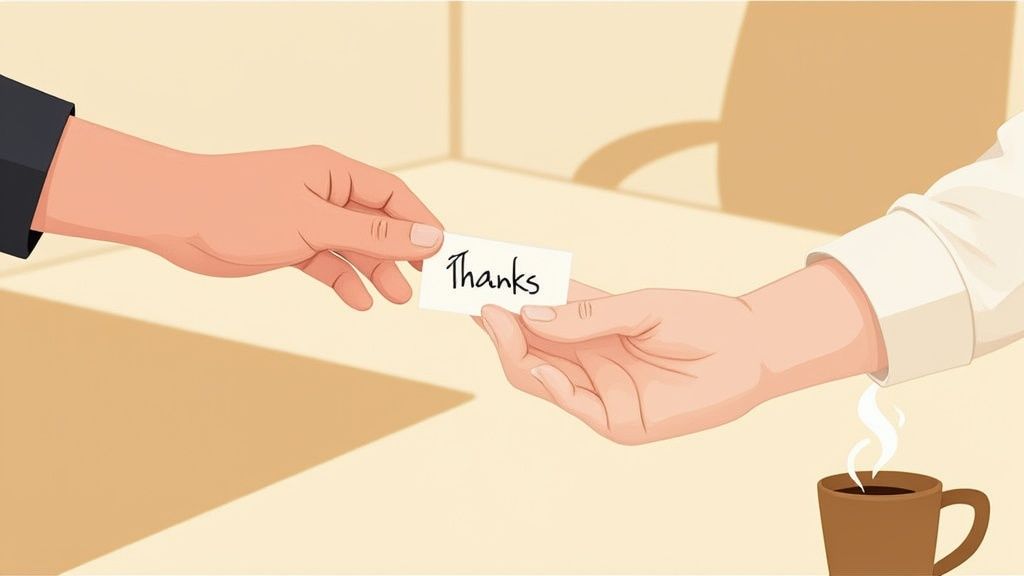
The power of this approach lies in its simplicity and directness. It requires minimal resources to get started but delivers significant returns in employee morale and engagement, as validated by extensive Gallup research on the effectiveness of recognition. When an employee receives specific, timely praise from a peer, it reinforces their value and strengthens team bonds.
Strategic Breakdown & Actionable Takeaways
Implementing a digital kudos system is one of the most accessible peer to peer recognition examples for any organization. It creates a written record of positive contributions that can be referenced during performance reviews and reinforces a culture of appreciation.
-
Be Specific: Move beyond generic “good job” comments. Instead of saying, “Thanks for your help on the project,” try, “Thank you for finding that critical bug in the code before deployment. Your attention to detail saved us from a major client issue.” This specificity makes the praise more meaningful.
-
Act Promptly: Deliver recognition as close to the event as possible. A digital message sent the same day an action occurs has a much stronger impact than one sent weeks later. This immediacy reinforces the desired behavior. Practical example: The moment a meeting concludes, send a message like, “Kudos to @Jane for that insightful presentation. Your data visualizations made complex information so easy to understand.”
-
Amplify Publicly: Use a dedicated Slack channel (e.g.,
#kudosor#shoutouts) for public recognition. This not only celebrates the individual but also broadcasts positive behaviors to the entire company, setting a standard for what is valued. Integrating emojis can further enhance the message’s tone and emotional impact. You can explore how to best use them by checking out our guide on the best emojis for Slack. -
Connect to Impact: Whenever possible, tie the recognized action to a tangible business outcome. For example, “Your clear and concise documentation for the new API onboarding process has reduced developer support tickets by 30%.” This shows employees how their individual contributions directly affect company goals.
2. Shout-Out Meetings or Team Appreciation Gatherings
This method moves peer recognition from written messages into a live, verbal format. It involves dedicating specific time during team meetings, company town halls, or special gatherings for employees to publicly acknowledge a colleague’s contributions. The importance of this approach is that it transforms recognition into a shared, communal experience, amplifying its impact in front of peers and leadership.
This verbal praise leverages the power of social validation and community. Drawing inspiration from concepts highlighted by Google’s Project Aristotle on psychological safety and Brené Brown’s research on vulnerability, these gatherings create a space where employees feel safe and encouraged to celebrate one another. When an employee hears their name and accomplishment announced in a group setting, it validates their work in a powerful, immediate way.
Strategic Breakdown & Actionable Takeaways
Integrating verbal shout-outs into regular meetings is a highly effective way to embed recognition into the fabric of your team’s culture. This practice is one of the most powerful peer to peer recognition examples because it fosters connection and visibility, especially in hybrid or remote environments where contributions can sometimes go unnoticed.
-
Create Psychological Safety: A successful shout-out segment depends on participation. Leaders must foster an environment where team members feel genuinely comfortable and encouraged to speak up without fear of judgment. Kick off the session with a leader giving the first shout-out to model the desired behavior.
-
Structure the Recognition: To avoid awkward silences, provide a simple framework. Encourage peers to mention the person’s name, the specific action they took, and the positive impact it had. Practical example: “I want to give a shout-out to Sarah for staying late to help me troubleshoot that server issue. Her expertise got us back online and prevented a major client delay.”
-
Rotate Facilitators: Prevent the meeting from feeling like a top-down exercise by rotating who leads the recognition portion. This empowers different team members to take ownership of the cultural ritual and encourages broader participation over time. It also helps ensure the spotlight is shared more equitably.
-
Plan Appreciation Events: Don’t limit shout-outs to standard meetings. Organize dedicated appreciation gatherings. When planning your events, consider fresh approaches to gratitude. For more specific examples, you might explore creative volunteer appreciation event ideas that emphasize heartfelt recognition. For more corporate-focused inspiration, check out our guide on office celebration ideas.
3. Social Recognition Platforms and Apps
This approach formalizes peer-to-peer appreciation by using dedicated digital platforms designed to streamline and gamify the process. Tools like Bonusly, HeyTaco, and 15Five allow employees to give and receive points, badges, or virtual currency tied to specific actions and company values. This system creates a centralized, visible hub for all recognition activity, moving it beyond informal messages into a structured program.
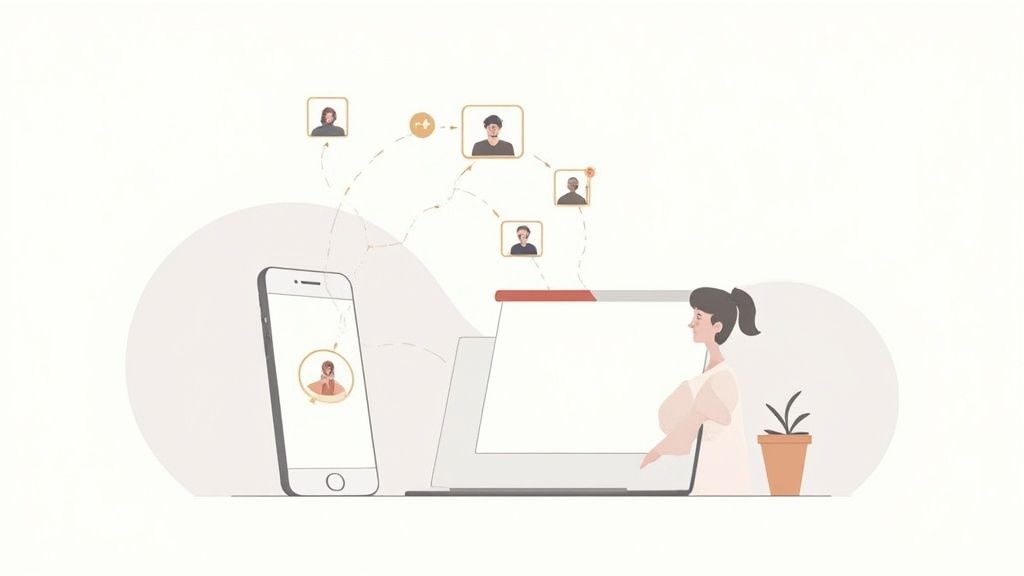
The primary advantage of these platforms is their ability to scale recognition, manage rewards, and provide valuable data insights. They often integrate directly into existing workflows, such as Slack or Microsoft Teams, making recognition a seamless part of daily communication. The importance of this approach is its ability to transform team recognition from an occasional event into a continuous, engaging habit. For example, HeyTaco famously uses a simple taco emoji (🌮) as a currency for praise within Slack, making the act of giving thanks both fun and easy.
Strategic Breakdown & Actionable Takeaways
Using a dedicated platform is one of the most powerful peer to peer recognition examples for organizations wanting to build a robust and measurable culture of appreciation. It provides structure, visibility, and a clear connection between recognition and rewards, which is essential for sustained employee engagement.
-
Integrate with Existing Workflows: Choose a platform that integrates smoothly with the communication tools your team already uses daily, like Slack or Teams. A seamless integration removes friction and encourages higher adoption rates because recognition can happen “in the moment” without switching contexts.
-
Establish Clear Point and Reward Structures: Define what types of contributions earn recognition and what the points can be redeemed for. Align these rewards with company values and culture, offering a mix of options like gift cards, company swag, extra time off, or charitable donations. This clarity ensures fairness and motivates participation.
-
Promote Adoption Through Leadership: Encourage managers and senior leaders to actively use the platform. When employees see leadership regularly giving and receiving recognition, it signals the program’s importance and sets a powerful example for the entire organization to follow. Practical example: A CEO could post, “Giving +50 points to @Mike for his incredible work on the annual report. #Excellence”
-
Analyze Recognition Trends: Regularly review the data and analytics provided by the platform. Identify top performers, recognize teams with high engagement, and spot which company values are being recognized most frequently. Share these insights with the company to reinforce positive behaviors and celebrate collective success.
4. Peer Nomination Awards Programs
This method formalizes peer recognition by creating a structured program where employees can nominate their colleagues for specific, predefined awards. Unlike spontaneous shout-outs, these programs often culminate in a formal selection process, presentation ceremonies, and sometimes include monetary or experiential rewards. Companies like Salesforce, with its Pinnacle Awards, and Intel have demonstrated how these programs can elevate exceptional contributions from an individual level to organizational-wide celebration.
The primary strength of a nomination program is its ability to spotlight significant achievements that align directly with company values or strategic goals. It provides a formal platform for employees to champion their peers’ hard work, fostering a sense of fairness and meritocracy. The importance of this type of team recognition is that by involving employees in the nomination and sometimes even the selection process, it deepens their engagement and reinforces the behaviors the organization wants to encourage.
Strategic Breakdown & Actionable Takeaways
Implementing a peer nomination program is a powerful way to formalize and elevate appreciation, making it one of the most impactful peer to peer recognition examples for reinforcing core values. This approach creates celebrated role models and provides clear examples of what excellence looks like within the company culture.
-
Define Clear Categories: Create specific award categories tied to your company’s values or strategic objectives. For example, “The Innovation Ignitor Award” for creative problem-solving or “The Customer Champion Award” for exceptional service. Clear criteria ensure nominations are relevant and fair.
-
Simplify the Nomination Process: Use a simple form or a dedicated Slack workflow to make nominations easy and accessible. The process should take less than five minutes and clearly ask for the nominee’s name, the award category, and a specific example of why they deserve it. Complexity is the enemy of participation.
-
Ensure Fair and Transparent Selection: Establish a diverse selection committee composed of employees from different departments and levels. This approach minimizes bias and increases trust in the program’s integrity. Outlining the selection process publicly further enhances transparency.
-
Celebrate All Nominees: While winners deserve the spotlight, it’s crucial to acknowledge everyone who was nominated. Publicly celebrating all nominees in a company-wide announcement or a dedicated Slack channel shows that all recognized efforts are valued, encouraging future participation and preventing feelings of being overlooked. Practical example: “Congratulations to our ‘Customer Champion’ nominees this quarter: @Anna, @David, and @Maria! Your dedication to our users is inspiring.”
5. Peer-Written Testimonials and 360-Degree Feedback Recognition
This structured approach elevates peer recognition from a simple shout-out to a formal, impactful endorsement. It involves collecting detailed positive feedback or testimonials from colleagues about an individual’s performance, skills, or contributions. This feedback is often compiled during performance review cycles, promotion considerations, or as part of leadership development programs, providing a comprehensive view of an employee’s impact.
The power of this method comes from its depth and formality. While a quick kudos message is motivating, a compiled set of testimonials from multiple peers offers profound validation and a multi-faceted look at an individual’s strengths. This process, popularized by organizations like the Center for Creative Leadership for 360-degree feedback, transforms peer sentiment into a valuable asset for career development and performance assessment.
Strategic Breakdown & Actionable Takeaways
Integrating testimonials is one of the most powerful peer to peer recognition examples for reinforcing long-term positive behaviors and supporting career growth. It formalizes peer validation, making it a tangible component of an employee’s professional journey and strengthening the importance of team recognition.
-
Provide Clear Prompts: To gather meaningful feedback, guide peers with specific questions. Instead of asking for general thoughts, prompt them with questions like, “Describe a time when [Employee Name] demonstrated exceptional leadership on a project,” or “How has their mentorship directly helped you or the team succeed?”
-
Ensure Confidentiality: Use a system that allows for anonymous or confidential submissions to encourage honest and candid feedback. This psychological safety ensures colleagues feel comfortable sharing detailed, constructive praise without reservation, leading to more authentic testimonials.
Not every piece of recognition belongs in a public channel — private kudos points let you send it one-to-one.
-
Compile and Deliver Thoughtfully: Organize the collected feedback into key themes, such as “Project Leadership,” “Cross-Functional Collaboration,” or “Technical Expertise.” Present this compiled summary to the employee in a supportive, one-on-one meeting, focusing on how this peer validation affirms their strengths and contributions.
-
Integrate into Formal Processes: Connect these peer testimonials directly to formal career milestones. Incorporate them into promotion packets, annual performance reviews, or talent development plans. This shows employees that their positive impact on peers is a recognized and critical factor in their advancement and success within the company. Practical example: During a review, a manager might say, “Multiple peers highlighted your calm demeanor during the server outage as critical to resolving the issue quickly.”
6. Peer Mentorship and Development Recognition
This form of recognition celebrates employees who actively invest in the growth and development of their colleagues. It moves beyond task-based appreciation to honor the time, effort, and wisdom shared through mentoring, coaching, and knowledge sharing. The importance of this is that by formally acknowledging mentors, companies signal that teaching and uplifting others is a highly valued contribution to the organization’s success and culture.
The impact of this approach is twofold: it motivates experienced employees to become mentors and validates the hard work they put into developing others, which often goes unnoticed. As highlighted by research from organizations like LinkedIn, mentorship is a critical driver of career progression and retention. When a company celebrates its mentors, it builds a self-sustaining cycle of learning, skill development, and internal talent mobility.
Strategic Breakdown & Actionable Takeaways
Recognizing mentorship is one of the most strategic peer to peer recognition examples because it directly invests in building your company’s collective skillset and leadership pipeline. It creates a powerful incentive structure that encourages your best performers to multiply their impact by elevating those around them.
-
Formalize the Acknowledgment: Don’t leave mentorship recognition to chance. Create a formal process, such as a “Mentor of the Quarter” award or a specific category in annual performance reviews. This institutionalizes the value of mentorship and gives it the same weight as other key performance indicators.
-
Empower the Mentees: Encourage mentees to be the primary drivers of recognition. Create a simple nomination process or a dedicated Slack channel where they can publicly thank their mentors. Practical example: A mentee could post, “Huge shout-out to @SarahJane for being an incredible mentor. Her guidance on navigating client negotiations was instrumental in closing the Acme deal last week!” This is both powerful and specific.
-
Showcase the Impact Story: When recognizing a mentor, tell the story of their impact. Instead of just announcing an award, share a brief narrative from the mentee about a specific skill they learned or a challenge they overcame with the mentor’s help. This makes the recognition more compelling and illustrates the real-world benefits of the mentorship relationship.
-
Provide Mentorship Resources: Back up your recognition program with tangible support. Offer training for employees who want to become better mentors, covering topics like active listening, constructive feedback, and goal setting. This shows a genuine commitment to fostering a culture of development, not just celebrating it superficially.
7. Peer Collaboration and Cross-Functional Recognition
This form of recognition shifts the focus from individual accomplishments to the collective success achieved when employees collaborate across different teams or departments. It specifically celebrates the individuals who act as bridges, break down organizational silos, and foster a spirit of partnership. This method highlights the synergy created when diverse skills and perspectives come together to solve a common problem, a concept heavily supported by research from sources like Harvard Business Review on collaborative leadership.

The strategic value of this approach is immense in today’s complex work environments. When you recognize cross-functional teamwork, you incentivize behaviors that lead to innovation, faster problem-solving, and improved efficiency. The importance of this team recognition is that it actively rewards the behaviors that break down departmental barriers. For example, a tech company might celebrate a product manager and a lead engineer who partnered to launch a complex feature, or a healthcare system could recognize a joint effort between nursing and IT that improved patient data accuracy.
Strategic Breakdown & Actionable Takeaways
Promoting cross-functional praise is one of the most powerful peer to peer recognition examples for building a truly unified and agile organization. It signals that teamwork and breaking down silos are not just encouraged but are core to the company’s definition of success.
-
Recognize the Connectors: Publicly acknowledge the individuals who facilitate communication and collaboration between teams. Practical example: “Huge thanks to Sarah from Marketing for proactively looping in the Sales team on the new campaign assets. Your foresight ensured they were perfectly prepared for client conversations.”
-
Highlight Shared Outcomes: Frame recognition around the collective achievement rather than individual tasks. Instead of praising separate contributions, focus on the integrated result. Try: “Shout-out to the entire Project Phoenix team (Design, Eng, and QA!) for their seamless collaboration. Together, you launched the new dashboard two weeks ahead of schedule.”
-
Create Recognition Moments: Intentionally build recognition opportunities into cross-functional projects. Kick-off meetings, milestone reviews, and project retrospectives are perfect moments for team leads to encourage peers to acknowledge each other’s collaborative efforts and contributions.
-
Use Collective Language: Encourage the use of words like ‘we’, ‘us’, and ‘together’ in recognition messages. This reinforces a mindset of shared ownership and collective success. For example: “What we accomplished with the Q3 report was amazing. Special thanks to Alex from Finance for helping us navigate the complex data.”
8. Peer-Selected Recognition Experiences and Celebrations
This method elevates recognition beyond simple praise by linking it to tangible, peer-selected experiences or perks. Instead of top-down rewards, teams democratically vote for a colleague whose contributions merit a special celebration or privilege. This could range from a team-funded lunch in their honor, a coveted reserved parking spot for a month, or first choice on flexible work arrangements.
The core strength of this approach is its democratic nature. When rewards are chosen and awarded by peers, it removes the perception of managerial bias and fosters a sense of collective ownership over the company culture. It shifts the focus from monetary value to shared experiences and status perks that are genuinely valued by the team, making it one of the most impactful peer to peer recognition examples for building camaraderie.
Strategic Breakdown & Actionable Takeaways
Implementing peer-selected experiences ties recognition directly to rewards that employees truly want, boosting motivation and engagement. The importance of this method is to ensure the process is transparent and the perks are desirable, creating a positive cycle of performance and appreciation.
-
Offer a Menu of Valued Perks: Don’t assume what your team values. Survey them to create a list of desirable experiences. Options could include an extra day of PTO, a budget for a professional development course, a premium subscription service, or the ability to choose the next team-building activity.
-
Establish a Transparent Voting System: Use a simple tool like a Slack poll, a Google Form, or a dedicated channel for nominations and voting. Clearly communicate the criteria, the voting period, and how the winner is chosen to ensure the process is seen as fair and equitable.
-
Balance Individual and Team Rewards: While individual perks like a prime parking spot are great, also include options that benefit the group. A peer-voted “Team Hero” could win a sponsored lunch for their entire department, which celebrates the individual while simultaneously reinforcing team unity.
-
Celebrate the Winner Publicly: Announce the winner and their specific contribution in a company-wide channel. Practical example: “Big congratulations to Sarah from Marketing, our Peer-Voted MVP for May! Her incredible work on the new campaign analytics dashboard has been a game-changer. The team has voted to celebrate with a catered lunch next Friday in her honor! 🍕🎉” This amplifies the recognition and reinforces the valued behaviors.
Peer-to-Peer Recognition: 8-Method Comparison
| Recognition Type | 🔄 Implementation Complexity | ⚡ Resource Requirements | 📊 Expected Outcomes | Ideal Use Cases | ⭐ Key Advantages (💡 Tip) |
|---|---|---|---|---|---|
| Peer-to-Peer Kudos Cards or Digital Recognition Messages | Low — quick to start, minimal process | Low — cards, email or lightweight apps | Increased morale, frequent personal acknowledgment | Small teams, daily/real-time recognition, informal culture | Highly personal and low-cost. 💡 Be specific and timely. |
| Shout-Out Meetings or Team Appreciation Gatherings | Medium — needs facilitation and agenda time | Low–Medium — meeting time, leader training | Amplified morale, visible reinforcement of values | Team meetings, town halls, teams that value public praise | Builds camaraderie and public reinforcement. 💡 Ensure psychological safety. |
| Social Recognition Platforms and Apps | Medium — setup, adoption and governance | Medium–High — subscription, integrations, admin | Scalable recognition, analytics on behavior patterns | Distributed/remote orgs, large companies seeking data | Data-driven and scalable. 💡 Align rewards with company values. |
| Peer Nomination Awards Programs | High — structured nominations and selection | High — administration, events, rewards budget | Prestigious recognition, strong value signaling | Annual awards, formal culture, large enterprises | Highly meaningful and ceremonial. 💡 Define clear criteria and diverse committees. |
| Peer-Written Testimonials & 360° Feedback | Medium–High — collection, anonymization and synthesis | Medium — time, tools, coordination | Holistic insight, development input, validation from peers | Promotions, performance reviews, leadership development | Deep, reflective recognition and development. 💡 Use prompts and optional anonymity. |
| Peer Mentorship & Development Recognition | Medium — program design and tracking | Medium — mentor time, program support, training | Strong leadership development and knowledge transfer | Talent development, succession planning, learning cultures | Rewards mentoring and growth. 💡 Invite mentee acknowledgements publicly. |
| Peer Collaboration & Cross-Functional Recognition | Medium — define contributions and capture stories | Low–Medium — coordination, documentation | Improved cross-team outcomes, reduced silos | Cross-functional projects, hackathons, process improvements | Reinforces teamwork and connectors. 💡 Highlight collective impact and stories. |
| Peer-Selected Recognition Experiences & Celebrations | Medium — voting process and logistics | Medium — budget for perks/events, coordination | Memorable perks, stronger team bonds, motivation | Monthly/quarterly spot recognition, team celebration moments | Tangible and memorable rewards. 💡 Rotate perks and keep selection transparent. |
Final Thoughts
The journey through these varied peer to peer recognition examples reveals a powerful, universal truth: appreciation is the currency of a thriving workplace. Moving beyond simple “thank yous,” we’ve seen how structured, specific, and authentic recognition can transform daily interactions into meaningful cultural cornerstones. From the immediate impact of a Slack kudos message to the lasting value of a peer-nominated award, the core principle remains the same. The importance of team recognition cannot be overstated; it validates effort, reinforces desired behaviors, and builds the psychological safety needed for teams to innovate and collaborate freely.
The examples provided are not just templates; they are strategic tools. Each one offers a different angle for fostering connection, whether it’s celebrating a quiet, behind-the-scenes contributor or acknowledging a major cross-functional win. The true power of these approaches lies in their adaptability. A startup can leverage a simple emoji-based system to build momentum, while a larger enterprise can implement a more structured peer nomination program to highlight leaders at every level. The key is to choose methods that align with your company’s unique culture, values, and workflow.
Key Strategic Takeaways
As you move from reading to implementation, keep these core principles at the forefront of your strategy:
- Specificity is a Superpower: Vague praise like “good job” is forgettable. Specific feedback like “Thank you for catching that bug in the pre-launch code; your attention to detail saved us from a major headache” is memorable and instructive. It tells the recipient exactly what behavior to repeat.
- Timeliness Amplifies Impact: Recognition delivered in the moment has a far greater effect than praise saved for a quarterly review. The closer the acknowledgment is to the action, the more the brain links the positive behavior with the positive reinforcement.
- Public Praise, Private Feedback: Public recognition serves a dual purpose. It celebrates the individual while signaling to the entire team what behaviors and values are important. Use public channels to amplify wins and reinforce your culture.
- Empowerment is Essential: The “peer-to-peer” element is what makes this system work. When employees are empowered to recognize each other without waiting for managerial approval, you create a decentralized, self-sustaining culture of gratitude.
Your Actionable Next Steps
Transforming these concepts into a tangible program is the next critical step. Begin by assessing your current state. Where is recognition already happening organically? Where are the gaps? A simple team poll can provide invaluable insights into what kind of appreciation your employees would find most meaningful.
Once you have a baseline, start small. Introduce a dedicated Slack channel for shout-outs or pilot a simple “Kudos Card” system with a single team. By starting with a small, manageable initiative, you can gather feedback, refine your process, and build momentum for a wider rollout. Remember, the goal is not to implement a perfect, all-encompassing system overnight. The goal is to start building the habit of recognition, one appreciative message at a time.
Ultimately, effective peer recognition is one of the most powerful and cost-effective tools for building a positive work environment and boosting morale. It directly impacts engagement, productivity, and belonging. This focus on internal culture is a critical component of broader employee retention strategies, which aim to understand and address staff needs before they lead to turnover. By creating a space where every contribution is seen and valued, you are not just celebrating wins; you are building a workplace where people genuinely want to stay, contribute their best work, and grow together.
Ready to automate and scale your recognition efforts in Slack? AsanteBot makes it easy to build a vibrant culture of appreciation with custom emoji currencies, leaderboards, and seamless reward redemption. Stop just talking about recognition and start building it into your team’s daily workflow with AsanteBot.
Keep reading
More from the blog
 Asante Bot
What's New in Asante Bot: Summer 2026
Bots can now give recognition points, celebrations go out on your schedule and timezone, and birthday messages write themselves. Plus a rebuilt help center, glossary, and honest comparison library.
 company culture
What Is HeyTaco? A Guide to Modern Team Recognition
At its core, HeyTaco is a simple tool for peer-to-peer recognition that plugs right into your team's chat platform, like Slack or Microsoft Teams.
 check in questions for meetings
10 Powerful Check In Questions for Meetings That Boost Team Morale in 2026
Starting a meeting with a generic "How's everyone doing?" often gets you little more than a chorus of "good, thanks.