

Managing a remote team isn't about trying to recreate the office experience online. Far from it. It’s a completely different discipline built on a foundation of trust, autonomy, and a sharp focus on clear outcomes. This is the new playbook, and it’s essential for any leader who wants to build a thriving team in today's flexible work world.
Table of Contents
The New Playbook for Modern Remote Teams
Leading a successful distributed team means you have to throw out the old rules. Forget about tracking hours or measuring productivity by who’s online the longest. Modern remote work management is all about results, mastering asynchronous communication, and intentionally building a strong culture. This isn't just a fleeting trend—it's a fundamental shift in how work gets done.
The numbers don't lie. By 2026, an estimated 27% of full-time employees around the globe are expected to be fully remote, with another 52% working in a hybrid model. This change requires a new kind of leadership. Interestingly, a full 29% of remote workers report feeling highly engaged, which actually surpasses the 20% engagement rate among their on-site counterparts. It’s clear proof that distance doesn't have to lead to disconnection.
The Four Pillars of Remote Leadership
To succeed in this environment, leaders need to build their strategy around four interconnected pillars. Think of these less as rigid rules and more as a flexible framework for creating a high-performing remote organization.
This playbook is built on communication, performance, culture, and the right technology to tie it all together.
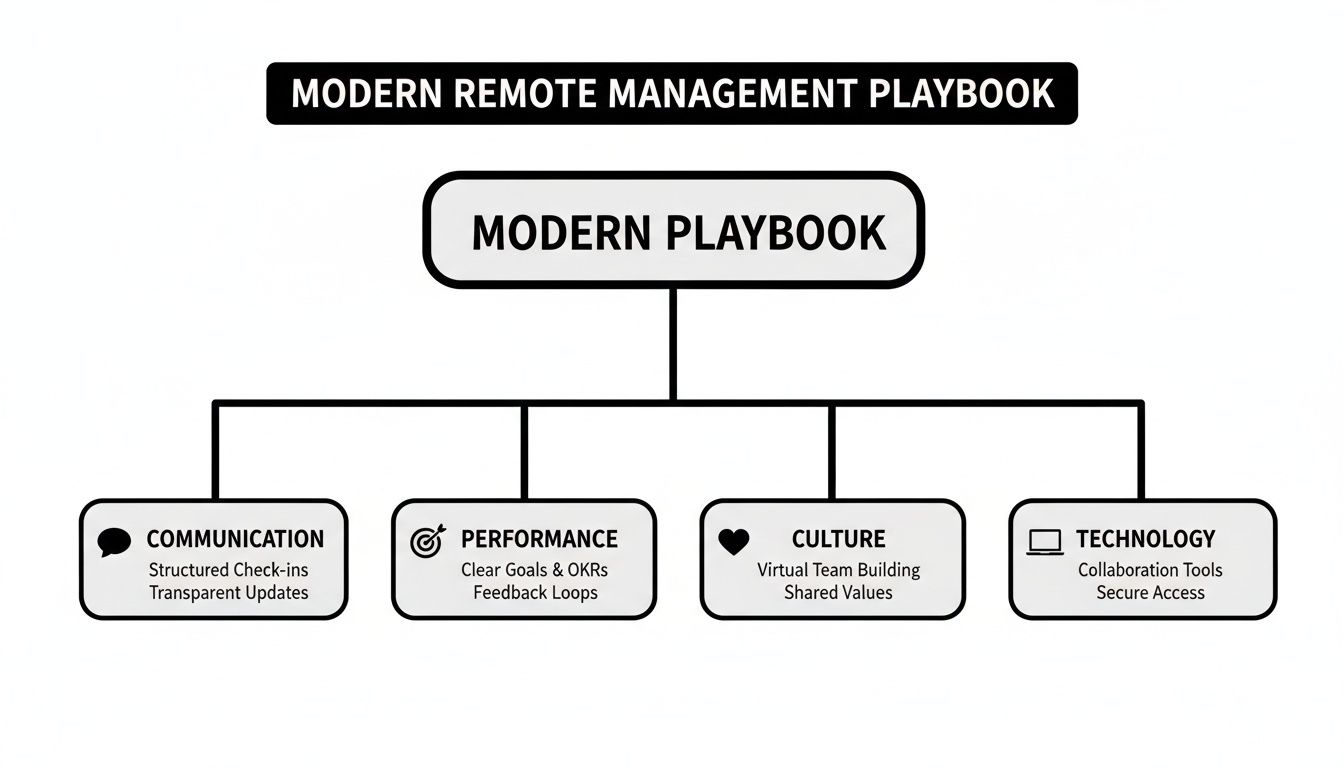
Each pillar is a non-negotiable area you have to get right to build a resilient and successful distributed team.
Here's a quick breakdown of what these pillars really mean in practice.
Key Pillars of Modern Remote Management
| Pillar | Core Principle | Why It Matters |
|---|---|---|
| Intentional Communication | Creating clarity and connection without relying on physical proximity. | Prevents misunderstandings, reduces isolation, and keeps everyone aligned on shared goals. |
| Outcome-Driven Performance | Measuring success based on results and impact, not on hours worked. | Fosters trust and autonomy, empowers employees, and focuses the team on what truly moves the needle. |
| Deliberate Culture Building | Actively fostering a sense of belonging, psychological safety, and recognition. | Boosts morale, improves retention, and creates an environment where people feel valued and motivated. |
| A Smart Technology Stack | Equipping your team with the right tools to collaborate seamlessly and effectively. | Removes friction, enables efficient asynchronous work, and supports all other pillars. |
Getting these pillars right is the first step. For a deeper dive into the practical strategies behind each one, this guide on how to manage remote teams breaks down everything you need to know to lead with confidence, no matter where your team is located.
Mastering Communication in a Distributed World
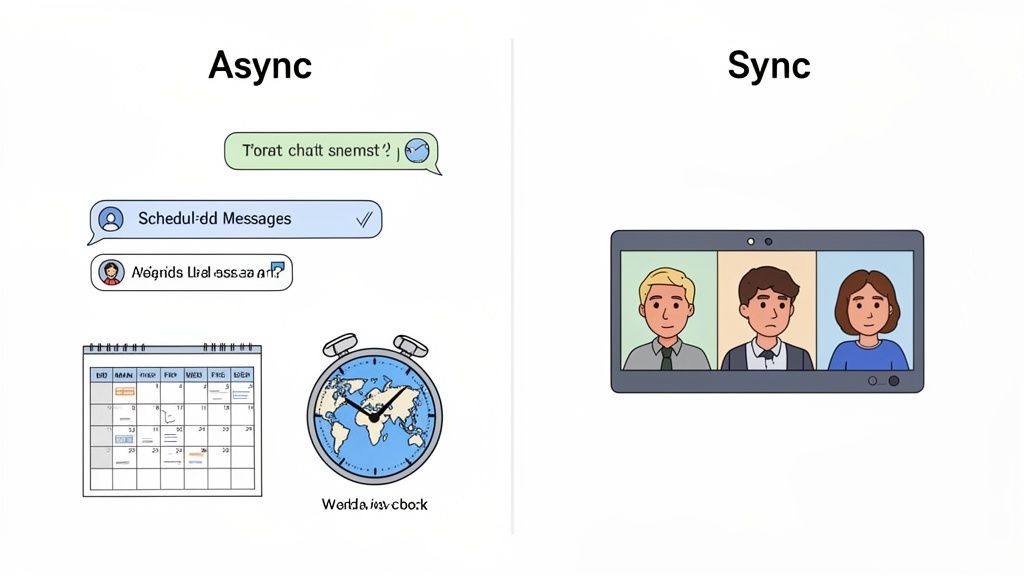
When you can't just walk over to someone's desk, communication has to be much more deliberate. Great remote work management isn't about trying to perfectly copy the in-office experience online. Instead, the best leaders get really good at blending two distinct styles of communication: asynchronous and synchronous.
The real game-changer for most remote teams is leaning heavily into asynchronous communication. This is simply communication that doesn't demand an instant reply. It’s the art of giving people the space to think and respond on their own time, which is a massive win for productivity and respecting different time zones.
A practical example is replacing a weekly status meeting. Instead of pulling everyone into a 30-minute video call, the project lead posts a detailed summary in a tool like Asana every Monday morning. Team members can then read the update, ask thoughtful questions in the comments, and add their own updates when it fits their schedule. Not only does this protect precious focus time, but it also creates a crystal-clear, searchable record of the project's journey.
Striking the Right Balance
Of course, you can't run a whole company on email and threaded comments alone. Synchronous communication—talking in real-time—still has a critical role to play. The trick is to treat it like a powerful, specialized tool you pull out for specific jobs, not as your default way of operating.
So, how do you decide which one to use? Here's a simple breakdown:
-
Go Asynchronous For:
- Routine Updates: Think daily stand-ups or weekly progress reports.
- Non-Urgent Feedback: Getting eyes on a draft document or a new design mock-up.
- General Announcements: Sharing company news or updates to the employee handbook.
-
Go Synchronous For:
- Complex Problem-Solving: Hashing out a tricky bug or brainstorming a new marketing campaign.
- Sensitive Conversations: One-on-one check-ins and performance reviews absolutely need that human, real-time connection.
- Urgent Decisions: When a critical issue pops up and you need immediate alignment from key players.
Synchronous communication is expensive—it costs everyone's time and attention simultaneously. Using it strategically for high-value interactions makes those moments more impactful and respects your team's focus.
Building Human Connection Intentionally
One of the biggest hurdles in remote management is figuring out how to recreate the spontaneous chats that build camaraderie in an office. This is why you have to intentionally create a "virtual watercooler." These are designated online spaces where the only agenda is to connect as people.
A simple, effective way to do this is by setting up a #pets-of-the-company or #random-and-funny channel in Slack. These channels give everyone a low-pressure way to share a bit of their personality, celebrate small life moments, and build the kind of rapport that makes working together feel less transactional.
This effort to foster social bonds is directly linked to recognition. When people actually know their colleagues as human beings, a shout-out for a job well done means so much more. It helps turn a collection of individual contributors into a genuine community, which is the secret sauce for keeping morale and engagement high for the long haul.
Focusing on Outcomes Instead of Hours
When your team is distributed, you can't fall back on the old habit of watching the clock or checking who’s online. Honestly, that was never a great way to measure productivity anyway. Effective remote work management requires a mental shift—away from tracking activity and toward measuring actual achievements.
This isn’t just a minor tweak. It's about fundamentally changing how you define success. Instead of clocking hours, you start tracking outcomes. This simple change hands autonomy back to your team, letting them manage their own time and energy. It builds a culture rooted in trust and accountability, not surveillance. When people know exactly what they need to accomplish, they’re free to figure out the best way to get there, whether that’s at 6 a.m. or 10 p.m.
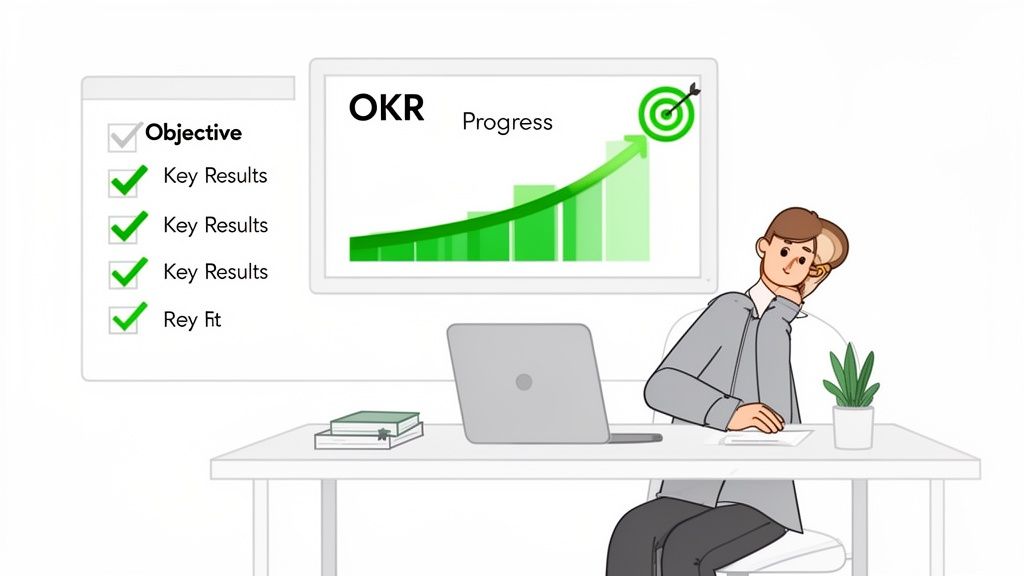
Of course, this approach only works if the goals are crystal clear. One of the best frameworks for this is Objectives and Key Results (OKRs). It sounds complex, but it's really just a simple formula. The Objective is the big thing you want to achieve, and the Key Results are the measurable steps that prove you’re on your way.
A Practical Example of Remote OKRs
Let’s see what this looks like for a remote marketing team. The goal is never just to "do more marketing." It needs to be tied to a specific business outcome.
Here’s a simple breakdown:
- Objective: Increase Brand Awareness in Q3
- Key Result 1: Grow organic website traffic by 15%.
- Key Result 2: Secure 5 high-quality guest post placements.
- Key Result 3: Increase social media engagement rate by 20%.
Suddenly, every team member can draw a straight line from their daily tasks to the company's bigger picture. That clarity is what makes outcome-based management so powerful. It aligns everyone around shared, measurable goals without a hint of micromanagement.
Redefining Performance Reviews
When you manage by outcomes, performance conversations get a lot more meaningful. The dreaded annual review, which often feels like a memory test, becomes a continuous conversation about progress. But in a fast-moving remote setup, waiting a full year for feedback is simply too long.
This is where regular, informal check-ins become your secret weapon. These aren't status updates; they are dedicated moments for support. A quick weekly or bi-weekly chat gives you a chance to talk through roadblocks, celebrate small wins, and offer real-time feedback. This consistent dialogue helps you spot problems early and makes sure every employee feels seen and supported.
A culture of recognition is the engine of an outcome-driven team. When you regularly celebrate the progress people make toward their goals—not just the final achievement—you reinforce the behaviors that lead to success and keep motivation high.
For instance, a manager could start a one-on-one by saying, "Hey, great job on that guest post pitch—I saw it landed! That's a huge step toward our KR2." That simple acknowledgment connects an individual's effort directly to the team's impact. It shows their work is not just noticed, but is actively moving everyone forward. This kind of consistent recognition is vital for fighting the isolation that can so easily creep into a remote team.
Building a Culture of Recognition from Afar
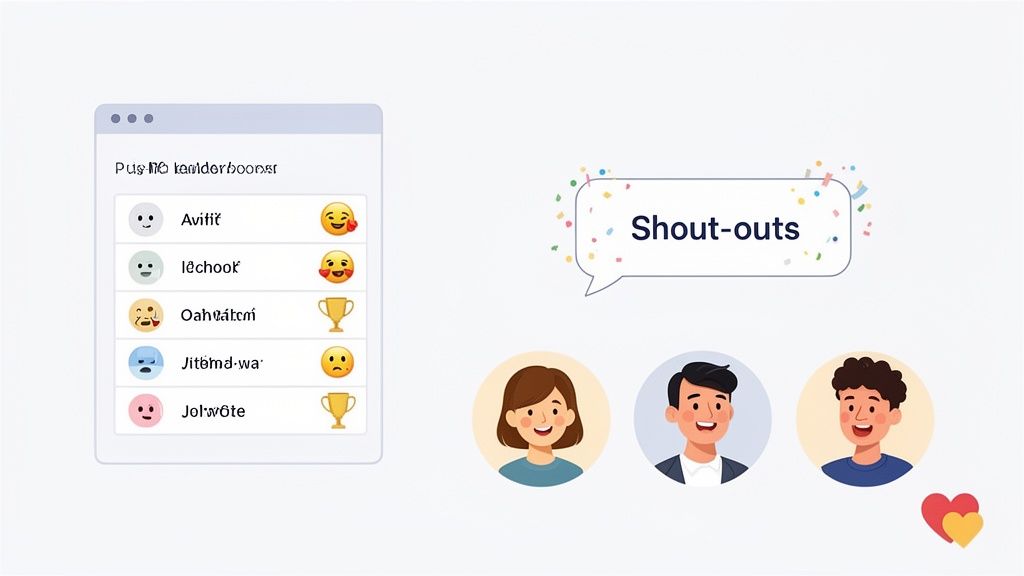
In a regular office, a high-five down the hall or a quick "great job" by the coffee machine goes a long way. But when your team is spread out, those small, spontaneous moments of appreciation vanish. It's a void that can easily make people feel isolated and invisible.
That’s why building a deliberate culture of recognition is a non-negotiable part of remote work management. Without it, good work gets done in silence, which can lead to disengagement and burnout. The importance of team recognition is twofold: it makes individuals feel valued for their contributions, and it publicly reinforces the behaviors and outcomes that are crucial to the team's success. As a manager, you have to create systems that make appreciation a daily, peer-to-peer habit, not just a rare, top-down announcement.
Making Appreciation a Daily Habit
The trick is to weave recognition right into your team’s daily flow, making it as natural as sending a Slack message. When you remove the friction, giving praise becomes a consistent practice instead of another forgotten item on a manager's to-do list.
One of the easiest ways to start is by kicking off every team meeting with a "shout-out" round. Before jumping into the agenda, give everyone a minute to acknowledge a colleague who helped them out or did something awesome.
For example, a developer might say, "Big shout-out to Maria in design. She turned around those new mockups in record time, which totally unblocked my work." This simple ritual immediately sets a positive tone and makes gratitude a public, celebrated act.
In a remote setting, recognition is more than just a morale booster; it's a vital communication tool. It signals what behaviors and outcomes the company values most, aligning the entire team without needing a single memo.
Using Technology to Amplify Recognition
While verbal shout-outs are fantastic, dedicated tools can really scale up your efforts, especially as your team grows. Technology becomes a crucial partner here.
Remote work opportunities have tripled since 2020, but this shift has also led to longer workdays. Employees are now putting in about 10% more time each week. Recognition platforms can help counteract the burnout by boosting morale and spotlighting engagement.
For teams that live and breathe in Slack, integrated apps are a game-changer. A tool like AsanteBot can turn a private thank-you note into a fun, public celebration. It lets team members award points to each other with simple emoji reactions, creating a transparent system where anyone can praise a colleague’s great work.
This approach gamifies appreciation through features like:
- Public Leaderboards: These show who is giving and receiving the most recognition, creating a positive feedback loop of gratitude.
- Customizable Rewards: Team members can redeem their points for actual rewards, adding a tangible incentive to great performance and peer support.
- Automated Celebrations: The tool never forgets important milestones like birthdays and work anniversaries, making sure everyone feels seen.
By embedding these rituals into your team’s digital headquarters, you build a vibrant culture of appreciation that fights isolation, boosts morale, and ultimately makes remote work feel truly rewarding. If you're looking for more ideas, check out our guide on how to keep your remote team motivated and engaged.
Choosing Your Essential Remote Tech Stack
A high-performing remote team doesn’t just materialize out of thin air. It’s built on a solid foundation of technology. The right tools are the digital backbone of your entire operation, making it possible for people to collaborate seamlessly, whether they’re in the next town or on the other side of the world. Great remote work management is really about building a tech ecosystem that’s secure, efficient, and genuinely helps your team do their best work.
Think of your tech stack less like a random collection of apps and more like a carefully selected toolkit. Each piece should solve a specific problem—from keeping projects on track to fostering the human connections that are so crucial for a strong culture. The real goal here is to remove friction, not just add more digital noise to everyone's day.
Core Categories of Remote Work Tools
To build that solid foundation, every distributed team needs software that covers a few key areas. When chosen well, these tools work together to create a cohesive digital workspace where communication is clear, work is visible, and team spirit can actually thrive.
- Project Management Hubs: These are your single source of truth for everything in progress. Platforms like Asana or Trello bring much-needed clarity, showing exactly who is doing what and by when. This is absolutely essential for making asynchronous progress possible.
- Collaboration and Documentation: This is your team's shared brain. A tool like Notion or Confluence lets you build out wikis, create detailed project briefs, and document processes, making sure critical knowledge is easy for everyone to find.
- Communication Platforms: This is the virtual office where daily life happens. Slack or Microsoft Teams act as the central hub for synchronous chats, asynchronous updates, company-wide announcements, and quick questions.
- Culture and Recognition Tools: These apps are all about the human side of work. A Slack-integrated tool like AsanteBot makes peer-to-peer appreciation a visible, engaging habit, which is a powerful way to fight isolation and keep morale high.
And for those times when you need to bring everyone together for bigger gatherings, like all-hands meetings or public-facing webinars, knowing the top virtual events platforms is a key part of your toolkit.
To help you visualize how these pieces fit together, here’s a quick breakdown of the essential tool categories for a high-performing remote team.
Remote Work Tool Stack Comparison
| Tool Category | Purpose | Example Tools |
|---|---|---|
| Project Management | The central hub for tracking tasks, deadlines, and project progress. Creates a single source of truth. | Asana, Trello, Jira, Monday.com |
| Real-Time Communication | The "virtual office" for instant messaging, quick questions, and team-wide announcements. | Slack, Microsoft Teams, Google Chat |
| Video Conferencing | For face-to-face meetings, team syncs, 1:1s, and more complex discussions. | Zoom, Google Meet, Microsoft Teams |
| Documentation & Wiki | A shared knowledge base for processes, project plans, and company information. | Notion, Confluence, Slite, Guru |
| Cloud Storage | Securely storing and sharing files so everyone has access to the latest versions. | Google Drive, Dropbox, OneDrive |
| Culture & Recognition | Tools to foster connection, celebrate wins, and build a strong team culture from afar. | AsanteBot, Donut, Bonusly |
| Security & Access | Protecting company and customer data with secure logins and connections. | 1Password, LastPass, NordVPN |
Each tool in this stack plays a vital role in creating a functional, connected, and secure remote environment. The key is to find the right combination that fits your team's specific workflow and culture.
Don't Overlook Security Protocols
Beyond just getting work done, your technology choices have a non-negotiable role in security. Protecting company and customer data becomes even more critical when your team is spread out, working from different networks all over the world.
A strong security posture is the foundation of professional remote operations. It builds trust not only with your clients but also with your employees, showing that you are committed to protecting their work and information.
This means putting baseline security measures in place isn't optional; it's a requirement. Every remote team should have clear policies and tools for this, including using Virtual Private Networks (VPNs) to secure connections, a robust password manager to enforce strong credentials, and straightforward data protection protocols that everyone understands and follows.
Onboarding New Hires for Remote Success
A new remote employee's first week can make or break their entire experience with your company. It's not like the office, where a newcomer can just soak up the culture by watching and listening. A remote start demands a thoughtful, structured plan to make them feel welcomed, connected, and ready to hit the ground running from the very first day. Good remote work management starts here.
The whole process should kick off well before their official first day. Think about it: sending a welcome package a week early with some company swag, their new laptop, and a clear "Day 1" agenda does wonders. It's a simple gesture that builds real excitement and proves you're invested in them before they’ve even logged on.
Structuring the First Weeks
A solid plan for the first few weeks gets rid of that "what am I supposed to be doing?" anxiety. One of the best things you can do is assign an onboarding buddy—a friendly peer who isn't their direct manager. This gives them a safe person to ask the "silly" questions, like "Which Slack channel is for random chatter?" or "What's the team's vibe on taking breaks?" This casual connection is pure gold for helping someone feel like they belong.
The goal of remote onboarding isn't just to dump information on someone. It's about forging connections. A great experience makes a new hire feel like they're truly part of the team, not just another user account.
To give them a clear runway, a 30-60-90 day plan is a must. This roadmap lays out specific, achievable goals for their first three months, showing them exactly how they can start contributing and making an impact.
- First 30 Days: It's all about learning. The focus should be on absorbing company culture, getting comfortable with the tools, and meeting the team.
- Next 30 Days: Time to start contributing. The new hire should begin picking up smaller tasks and getting more involved in team projects.
- Final 30 Days: The shift towards autonomy. By now, they should be handling work more independently and starting to take the initiative on their own.
This kind of structure, paired with frequent, informal check-ins, builds a strong foundation of confidence and productivity. To keep that momentum going, check out our guide on fun and effective team building activities for remote workers to help foster those crucial early relationships.
Of course. Here is the rewritten section, focusing on a natural, human-written tone and expert voice.
Answering the Tough Questions About Managing Remote Teams
When you shift to a distributed team, a whole new set of questions and challenges bubble up. It's totally normal. Getting remote management right means having good answers ready for those tricky, persistent problems.
Let's walk through some of the most common hurdles I see leaders face and break down the strategies that actually work. If there's one theme that ties all this together, it's intentionality. You simply can't let culture, communication, or well-being happen by accident anymore. Each one needs a deliberate game plan.
How Do I Keep Our Team Culture Alive When We're Remote?
Building a genuine culture without a shared office is all about consistent, visible effort. You have to create connection on purpose. It won’t just happen organically like it might have around the water cooler.
Here’s how you do it:
- Live Your Values Out Loud: Don't just hang your values on a virtual wall. In meetings and public channels, constantly connect team wins and project decisions back to your company's core mission. Say things like, "This is a perfect example of our 'customer-first' value in action."
- Carve Out Space for Fun: People need a place to just be people, not just colleagues. A simple
#randomor#furry-coworkerschannel on Slack gives everyone a low-pressure way to chat about life outside of work. It’s the virtual equivalent of bumping into someone in the breakroom. - Make Recognition a System: This is huge. In a remote setting, quiet, hard work can easily go unnoticed, which is a fast track to feeling isolated. You need a simple, consistent way for people to give each other kudos. A tool like AsanteBot built into Slack makes appreciation a visible, celebrated part of the daily routine, which directly tackles that feeling of being disconnected.
What's the Single Biggest Mistake Managers Make?
Easy. The most common trap is trying to perfectly replicate the in-office experience online. This is a recipe for disaster. It leads straight to micromanagement—things like obsessively watching people's status indicators or expecting instant replies—which completely kills trust and autonomy.
Great remote leadership isn't about virtual supervision. It's about empowerment. You have to shift your mindset to managing outcomes, not activity.
Stop focusing on if someone is at their desk and start focusing on the quality of their work. Give your team crystal-clear goals, make sure they have the tools and support they need, and then get out of their way. This builds a culture of ownership and accountability, which is a far more powerful motivator than someone breathing down your neck.
How Do I Stop My Team from Burning Out?
Remote burnout is incredibly real. It's usually fueled by that "always-on" pressure that creeps in when the lines between home and work get blurry. As a manager, you have to be the one who draws the line and protects your team's time.
A great place to start is by setting clear team norms around communication hours. For example, make it an explicit rule that no one is expected to answer messages after 6 p.m. or on weekends. But the most important part? You have to model this behavior yourself. When you send that "great work today!" message, also add, "Now seriously, log off and enjoy your evening." Acknowledging your team's hard work while actively encouraging them to disconnect is one of the strongest defenses against burnout.
Ready to build a culture of appreciation that boosts morale and fights burnout? With AsanteBot, you can make peer-to-peer recognition a fun, engaging, and measurable habit right within Slack. Start building a more connected team today.