
In today's competitive landscape, employee recognition has evolved from a simple 'nice-to-have' into a critical driver of engagement, retention, and productivity. Acknowledging your team's hard work isn't just about celebrating wins; it's about building a culture where every contribution feels seen and valued. The importance of this cannot be overstated: it creates psychological safety, strengthens peer relationships, and reinforces the behaviors that lead to success.
Table of Contents
At the core of all staff appreciation efforts lies the goal of knowing how to improve employee morale and reignite your team's spark. When employees feel appreciated, their motivation and commitment increase, directly impacting business outcomes. Why is this so crucial? Meaningful recognition shows them that their effort matters and is integral to the company’s mission, making them more resilient and invested.
This article moves beyond generic advice to provide a comprehensive roundup of ten actionable staff appreciation ideas. We'll explore practical examples, explain the importance of each approach, and offer specific implementation tips for HR managers and team leads. You will learn how tools like AsanteBot for Slack can help automate and amplify your efforts, turning recognition into a measurable, daily habit rather than a once-a-year event. We’ll cover everything from peer-to-peer programs and gamified leaderboards to customizable rewards and automated birthday celebrations, ensuring you have the strategies needed to build a thriving workplace.
1. Peer-to-Peer Recognition Programs
A peer-to-peer recognition program empowers employees to acknowledge and celebrate each other's contributions directly. This approach shifts the focus from traditional top-down praise to a more organic, team-driven culture of appreciation. It's one of the most effective staff appreciation ideas because colleagues often have the clearest view of day-to-day efforts. The importance lies in its authenticity: recognition from a peer who understands the context of the work often feels more genuine and impactful than praise from a manager who is further removed. This builds camaraderie and reinforces company values from the ground up.
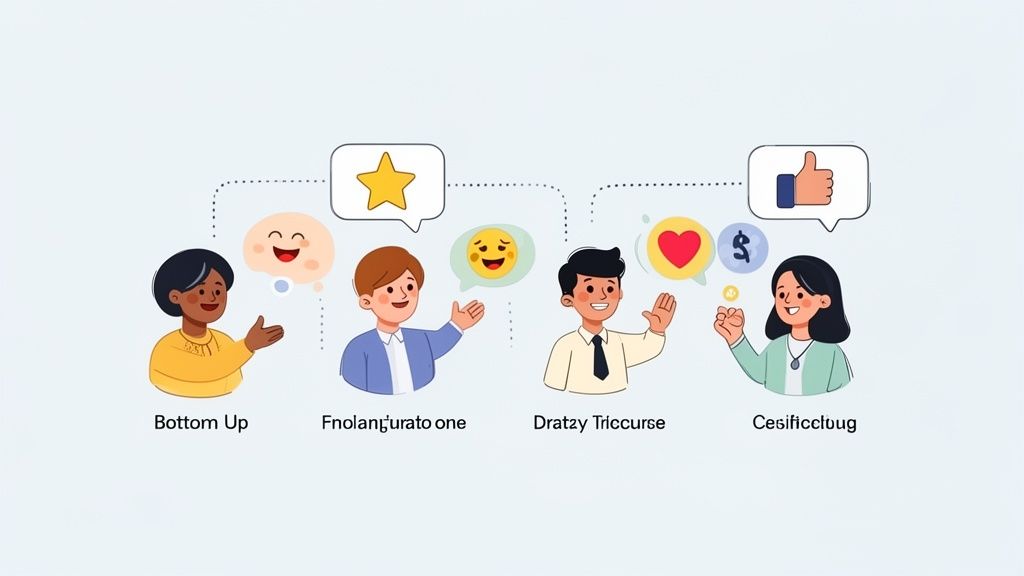
This method fosters a positive feedback loop where everyone feels seen and valued for their unique impact, whether it's helping a coworker on a tough project or demonstrating a core company value. For more inspiration, you can find several powerful peer-to-peer recognition examples that showcase different ways to implement this system effectively.
How to Implement It
- Platform: Use a dedicated Slack channel like
#kudosor#shoutoutswhere team members can post messages of thanks. Practical Example: An engineer might post, "Huge shoutout to @JaneDoe from marketing for creating that amazing one-pager on such short notice. It made my client demo a huge success!" - Structure: Create clear guidelines on what constitutes valuable recognition. Focus on specific actions tied to company values, goals, or extraordinary effort.
- Gamification: Integrate a tool like AsanteBot to assign a "point" value to a specific emoji (e.g., :taco: or :star:). Employees can "give" these emojis to colleagues, and AsanteBot tracks everything on a public leaderboard.
- Rewards: At the end of the month, the top point-earners can receive a small reward, such as a gift card, extra PTO, or a donation to a charity of their choice.
- Leadership: Encourage managers and senior leaders to actively participate. When leadership models the behavior, it signals the program's importance and boosts adoption across the organization.
2. Recognition Leaderboards and Gamification
A recognition leaderboard transforms staff appreciation into an engaging, visible, and friendly competition. This approach uses gamification elements like points, badges, and rankings to motivate participation in your recognition program. Its importance is rooted in visibility and motivation: it provides a public and dynamic way to celebrate both the employees receiving praise and those who are actively acknowledging their peers, reinforcing a culture of gratitude across the board.
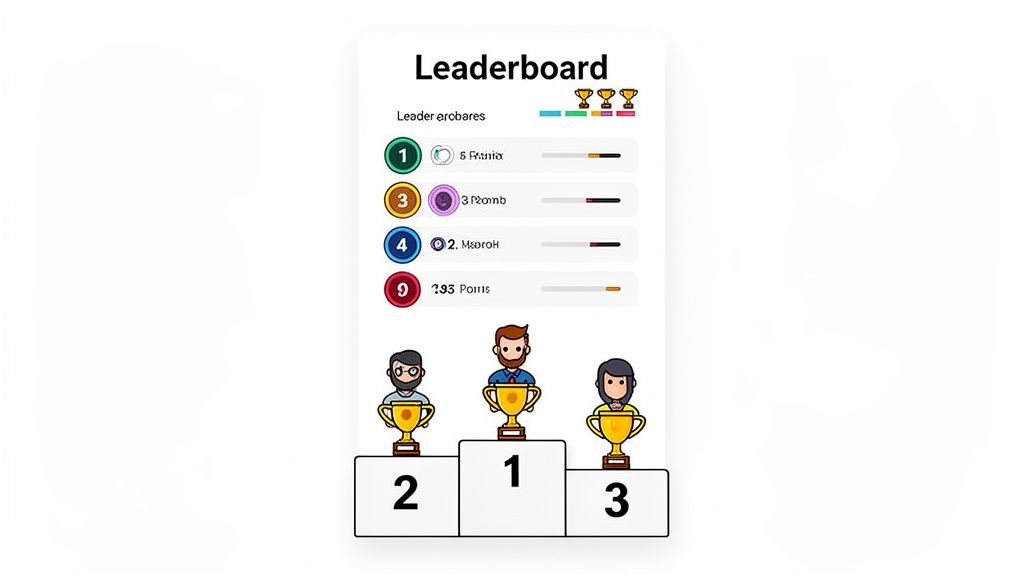
This method makes recognition a tracked and celebrated metric, just like any other key performance indicator. It creates a transparent system where positive contributions are consistently highlighted, motivating everyone to get involved. By showcasing top givers and receivers, you identify and amplify your company’s culture champions.
How to Implement It
- Categories: Create multiple leaderboards to celebrate different contributions. Practical Example: Track "Top Giver of the Month" (for the person who gives the most recognition), "Top Receiver of the Month" (for the person receiving the most), and a "Values Champion" (for the person most recognized for embodying a specific company value).
- Tools: Use a tool like AsanteBot to automatically track recognition given through specific emojis (e.g., :taco: or :star:) in a public Slack channel. The bot can generate and post leaderboards automatically.
- Frequency: Reset the leaderboards monthly or quarterly to give everyone a fresh start. This maintains engagement and prevents the same individuals from dominating the rankings indefinitely.
- Celebration: Publicly celebrate the winners at the end of each period. Acknowledge them in team meetings, all-hands calls, or a company-wide email to amplify their impact.
- Insights: Share insights from the leaderboards with managers. This data can help identify unsung heroes and highlight teams that are excelling at building a positive, appreciative culture.
3. Automated Birthday and Work Anniversary Recognition
Automated birthday and work anniversary recognition creates a systematic approach to celebrating personal and professional milestones, ensuring no one is ever overlooked. This method leverages technology to send timely reminders, post public shout-outs, and trigger celebratory messages, making appreciation consistent and scalable. The importance of this idea is consistency and personalization: it honors the individual journeys of team members, showing that the company values them as people, not just employees. This simple act builds loyalty and a sense of belonging.

By automating these key dates, you remove the chance of human error while building a predictable and heartwarming tradition. This consistent acknowledgment reinforces a culture of care and helps team members feel seen and celebrated for their loyalty and personal milestones.
How to Implement It
- Platform: Use an integrated Slack tool like AsanteBot to automatically post celebratory messages in a public channel like
#celebrationson an employee's birthday or work anniversary. - Personalization: Encourage team members to reply to the automated post with personal messages, memories, or GIFs. The automation acts as a prompt, but the human element makes it meaningful. Practical Example: The bot posts, "Happy 3-Year Work Anniversary to @JohnSmith!", and colleagues reply with notes like, "Congrats, John! I'll never forget how you saved that project in Q2!"
- Privacy: Always make participation an opt-in process. Allow employees to choose whether they want their milestones celebrated publicly, respecting individual privacy preferences.
- Tangible Gestures: Combine the digital shout-out with a small, tangible gift. This could be a digital gift card, a half-day of PTO, or a company-branded item delivered to their home.
- Timing: Schedule the automated posts to appear at a time when the team is most active, such as mid-morning, to maximize visibility and encourage immediate peer engagement.
4. Customizable Rewards and Redemption Systems
A customizable rewards system elevates recognition from a simple "thank you" to a tangible benefit that employees genuinely value. Instead of offering a one-size-fits-all prize, this approach allows team members to redeem points or emoji currency for rewards they personally choose. The importance here is employee choice: This personalization makes the recognition feel more meaningful and impactful, as employees can select items that align with their own lifestyles, interests, and needs.
This model gives employees autonomy over their rewards, whether they prefer a gift card to their favorite coffee shop, a subscription to a wellness app, or a donation to a meaningful cause. By empowering choice, you ensure the appreciation shown has a far greater impact. For teams looking beyond cash, exploring various non-monetary incentives can add even more variety and appeal to your rewards catalog.
How to Implement It
- Platform: Use a tool like AsanteBot, which offers a fully customizable rewards system that can be managed entirely within Slack. Team members can browse and redeem their points without leaving their primary workspace.
- Survey Employees: Before launching, send out a survey to ask what types of rewards would be most motivating. Categories could include professional development, wellness, tech gadgets, experiences, or charitable donations.
- Offer Diverse Options: Build a catalog that caters to different preferences. Practical Example: Offer a mix of rewards like a $25 Starbucks gift card, a subscription to Headspace, a donation to the World Wildlife Fund, or an extra half-day of PTO.
- Establish Clear Values: Be transparent about how points are earned and what their redemption value is. A clear and simple system prevents confusion and ensures fairness.
- Refresh the Catalog: Keep the rewards exciting by refreshing the options quarterly. Adding new and seasonal items gives employees something new to strive for and keeps the program from feeling stale.
5. Weekly Feedback and Shout-Out Sessions
A weekly feedback and shout-out session is a recurring, structured meeting where teams dedicate time to share peer appreciation, celebrate wins, and offer constructive feedback in a positive format. The importance of this practice is habit-building: It normalizes recognition by making it a consistent part of the team's routine, ensuring that appreciation doesn't become an afterthought. This creates a powerful engine for morale and continuous improvement.
This dedicated time ensures everyone’s contributions are seen and acknowledged, from major project milestones to the small daily efforts that keep things running smoothly. Beyond formal reviews, it's also helpful to gather sentiment more frequently. Consider implementing short, frequent pulse surveys to get a quick read on team morale and address issues proactively.
How to Implement It
- Structure: Dedicate the first 15 minutes of a weekly team meeting to this. Start with project wins, then move to individual shout-outs. Practical Example: A manager starts the meeting by saying, "Let's kick off with our weekly shout-outs. Who wants to start?" A team member might then say, "I want to thank Sarah for helping me troubleshoot that server issue last night. I couldn't have done it without her."
- Guidelines: Set clear rules for respectful and specific feedback. Encourage the "Situation-Behavior-Impact" model to ensure comments are actionable and meaningful, rather than generic praise.
- Automation: Use a tool like AsanteBot to automate the process in Slack. Schedule a recurring prompt in a team channel, like
#wins-and-props, that asks everyone to share their shout-outs for the week. - Rotate Facilitators: To increase team ownership and engagement, rotate the role of session facilitator. This gives different team members a chance to lead and reinforces that appreciation is everyone’s responsibility.
- Document and Share: Keep a running log of the shout-outs in a shared document or a dedicated Slack channel. This creates a lasting record of team achievements that can be referenced during performance reviews or company-wide announcements.
6. Spot Bonus and Micro-Rewards Programs
A spot bonus or micro-rewards program offers an agile way to recognize exceptional contributions with immediate, tangible rewards. Unlike annual bonuses tied to performance reviews, these are given "on the spot" for specific achievements, making them powerful tools for real-time reinforcement. Its importance lies in immediacy: this approach creates a culture of instant gratification where employees see a direct and immediate link between their outstanding work and its acknowledgment, which strongly reinforces desired behaviors.
This method is one of the most responsive staff appreciation ideas because it allows leaders to react quickly to moments of excellence. Whether it's a small cash bonus for solving a critical bug or a gift card for exceptional customer service, these immediate rewards make employees feel seen and valued in the moment.
How to Implement It
- Define Clear Criteria: Establish specific guidelines for what merits a spot award. This could include completing a project ahead of schedule, demonstrating a core company value in a high-stakes situation, or innovating a new process.
- Set a Budget: Allocate a clear budget for managers to use for spot rewards. The amounts can be small but meaningful. Practical Example: A manager could be given a $200 monthly budget to distribute as $25 or $50 gift cards for standout moments.
- Simplify the Process: Make the process for awarding a bonus fast and simple. A complicated approval workflow will discourage managers from using the program frequently.
- Public Recognition (Optional): Announce the reason for the reward publicly in a Slack channel like
#winsto celebrate the achievement, but keep the monetary amount private to respect the employee's privacy. - Train Managers: Equip managers with the knowledge and confidence to use the program fairly and consistently. Training should cover how to identify rewardable behaviors and avoid unconscious bias to ensure equity across all teams.
7. Analytics and Reporting on Recognition Patterns
A data-driven approach transforms recognition from a feel-good activity into a strategic tool for understanding team dynamics. By systematically collecting and analyzing recognition metrics, leaders can uncover valuable insights into team health, collaboration patterns, and cultural alignment. The importance of this is strategic insight: this method moves beyond anecdotal evidence, allowing you to see who recognizes whom, which behaviors are celebrated most often, and which teams are highly engaged, helping you build a healthier culture.
This strategic analysis helps identify unsung heroes, potential mentors, and cross-departmental collaboration hotspots. For instance, platforms like Culture Amp and Microsoft Viva provide sophisticated analytics that reveal how recognition flows through an organization, helping you reinforce desired behaviors and address cultural gaps before they become significant issues.
How to Implement It
- Choose a Platform: Use a tool with built-in analytics. AsanteBot provides actionable reporting directly within Slack, illuminating collaboration patterns and tracking recognition trends over time.
- Define Key Metrics: Focus on metrics like recognition frequency per team, top values being recognized, and cross-functional shoutouts. Avoid using data for performance management; the goal is to understand and improve culture.
- Promote Transparency: Be open with your team about what data is being collected and why. Frame it as a way to improve the employee experience and ensure everyone feels seen.
- Review and Share Insights: Schedule monthly or quarterly reviews of the data. Practical Example: During a leadership meeting, a manager presents a report showing that the "Innovation" value has been recognized 50% more this quarter, demonstrating a successful cultural initiative.
- Take Action: Use the insights to inform your people strategy. If you notice a team is consistently siloed, create opportunities for cross-functional projects. If a core value is rarely recognized, launch a campaign to bring it to the forefront.
8. Customizable Recognition Rituals and Ceremonies
Creating customizable recognition rituals and ceremonies embeds appreciation directly into your company's rhythm. These are intentionally designed, recurring moments, ranging from daily huddle shout-outs to quarterly awards ceremonies, that become anticipated traditions. The importance is in creating cultural touchstones: this approach makes recognition a predictable and celebrated part of your culture, consistently reinforcing the behaviors and values you want to see through shared experiences.
These structured events are powerful staff appreciation ideas because they create a formal stage for celebrating achievements, big and small. By establishing a regular cadence, like HubSpot's monthly 'Hubbie Awards' or Zappos' annual Culture Book ceremony, you build a shared history of success and ensure that recognition is a sustained practice, not just a sporadic event.
How to Implement It
- Establish a Calendar: Schedule a mix of recurring recognition moments. Practical Example: Implement a "Weekly Wins" Slack thread on Fridays, a "Value of the Month" winner announced at the monthly all-hands meeting, and a "Team of the Quarter" award ceremony.
- Vary the Format: Combine different types of recognition to keep things fresh. Feature a 'Behind the Scenes Hero' award alongside a 'Top Performer' award to celebrate diverse contributions. Make rituals accessible to remote teams by live-streaming events and creating digital "walls of fame."
- Leverage Data: Use your recognition tool's dashboard to identify deserving recipients. For example, you can use AsanteBot’s leaderboard to find consistent top performers or unsung heroes who regularly receive praise from their peers.
- Empower Teams: Allow individual teams to create their own unique rituals. A sales team might have a bell-ringing ceremony for closed deals, while an engineering team could have a "Golden Keyboard" award for innovative code.
- Involve Leadership: Rotate which leaders facilitate or present awards. This demonstrates that appreciation is a shared priority across the entire organization, not just an HR initiative.
9. Cross-Team and Cross-Department Recognition
This approach intentionally recognizes contributions that span organizational silos, fostering collaboration and breaking down departmental barriers. Its importance is in fostering unity: it highlights how different teams support each other to achieve larger company goals. By celebrating these partnerships, you surface the often-invisible work that strengthens the entire organization and encourages a culture of horizontal cooperation instead of isolated work.
This method moves beyond individual or team-specific praise to a more holistic view of success. It acknowledges that major achievements are rarely the work of a single department and reinforces the idea that everyone is on the same team. Highlighting this interconnectedness is key to building a cohesive and unified workplace.
How to Implement It
- Shared Channels: Create a company-wide Slack channel like
#project-winsor#cross-team-kudosfor public visibility. Encourage managers to share success stories from cross-functional projects. - Explicit Celebration: When a major project is completed, explicitly call out the contributions from all involved departments during all-hands meetings or in company newsletters. Practical Example: In a launch announcement email, include a section: "A special thanks to the Legal team for their fast turnaround, the Marketing team for their brilliant campaign, and the Support team for getting ready for customer questions."
- Promote Cross-Peer Recognition: Use a tool like AsanteBot to allow employees to easily send recognition to colleagues in any department. The public feed makes these interactions visible to everyone.
- Leaderboard by Collaboration: Configure a leaderboard that not only tracks individual points but also highlights which departments are collaborating most effectively, adding a fun, competitive element.
- Profile Partnerships: Regularly feature successful cross-departmental collaborations in internal communications. Detail the challenge, the joint solution, and the positive impact on the business to inspire others.
10. Feedback Integration with Performance Development
Integrating peer recognition with formal performance development transforms daily appreciation from a simple morale booster into a powerful tool for career growth. This strategic approach connects informal kudos and shoutouts directly to formal processes like performance reviews, goal setting, and succession planning. The importance is connecting recognition to growth: It ensures that the valuable, on-the-ground insights from colleagues don't just disappear but actively inform an employee’s professional journey, making their day-to-day contributions tangible parts of their advancement.
This method is one of the most impactful staff appreciation ideas because it validates day-to-day contributions in a meaningful, long-term way. When employees see that their positive impact, as recognized by their peers, is a factor in their formal reviews and development plans, it reinforces the value of their efforts and demonstrates a true commitment to a culture of appreciation.
How to Implement It
- Be Transparent: Clearly communicate to your team how peer recognition data will be used. Emphasize that it is a supportive tool to provide a holistic view of performance and will not be used punitively.
- Train Managers: Equip managers with the skills to incorporate peer feedback thoughtfully into performance conversations. Teach them to look for patterns and use specific examples from recognition channels to highlight strengths and development opportunities.
- Use Analytics: Leverage tools that provide analytics on peer recognition. Practical Example: Before a review, a manager runs a report in AsanteBot to see all the kudos an employee has received, noticing a trend of praise related to "mentorship," and decides to discuss a formal mentorship role with them.
- Balance Perspectives: Ensure peer feedback is weighted appropriately alongside self-assessments and manager evaluations. The goal is to create a comprehensive picture, not replace traditional performance metrics.
- Focus on Development: Frame the conversation around growth. Use recognition data to ask questions like, "Your peers consistently praise your collaboration skills. How can we leverage that strength in your next project?" This makes the process feel supportive, not evaluative.
Staff Recognition: 10-Point Comparison
| Feature | 🔄 Implementation complexity | ⚡ Resource requirements | ⭐ Expected outcomes | 📊 Ideal use cases | 💡 Key advantages |
|---|---|---|---|---|---|
| Peer-to-Peer Recognition Programs | Medium — platform setup + cultural adoption | Low–Med — minimal budget, training & admin | ⭐⭐⭐⭐ — stronger engagement, morale, retention | Daily/ongoing peer appreciation; culture-building | Authentic, timely, cost-effective; strengthens relationships |
| Recognition Leaderboards & Gamification | Medium–High — points model, fair design, monitoring | Med — platform features, design & moderation | ⭐⭐⭐⭐ — boosts participation; risk of competition | Drive engagement, spotlight culture champions, sales-oriented teams | Increases participation, transparency, identifies champions |
| Automated Birthday & Work Anniversary Recognition | Low — HR/calendar integration and reminders | Low — minimal maintenance; relies on accurate data | ⭐⭐⭐ — consistent, equitable milestone recognition | Large/distributed orgs to avoid missed milestones | Ensures equity, low admin burden, scalable |
| Customizable Rewards & Redemption Systems | High — reward catalog, integrations, fulfillment | High — budget, ops, vendor integrations | ⭐⭐⭐⭐ — high perceived value; increased motivation | Diverse workforces valuing choice; retention programs | Personalization, tangible incentives, reduces unwanted gifts |
| Weekly Feedback & Shout-Out Sessions | Medium — scheduling and facilitation cadence | Low–Med — regular meeting time, facilitator | ⭐⭐⭐⭐ — stronger team bonds, ongoing feedback | Remote or cross-functional teams needing routine connection | Predictable recognition, builds psychological safety, surfaces feedback |
| Spot Bonus & Micro-Rewards Programs | Medium — approval workflows, payroll integration | Med–High — budget controls and monitoring | ⭐⭐⭐⭐ — immediate motivation; cost risk if unmanaged | Fast-paced teams needing real-time recognition | Immediate impact, flexible, perceived fairness when controlled |
| Analytics & Reporting on Recognition Patterns | High — data pipelines, dashboards, privacy controls | Med–High — tooling, analysts, governance | ⭐⭐⭐⭐⭐ — actionable insights on culture, bias, risk | HR/leadership seeking data-driven culture decisions | Reveals patterns, informs interventions, supports promotions |
| Customizable Recognition Rituals & Ceremonies | Medium — planning, calendar alignment, leader buy-in | Low–Med — event time and coordination | ⭐⭐⭐⭐ — memorable culture reinforcement; risk of rote | Companies wanting repeatable, high-visibility moments | Creates ritual, reinforces values, enables storytelling |
| Cross-Team & Cross-Department Recognition | Medium — platform-wide visibility & leader alignment | Med — coordination, cross-dept communication | ⭐⭐⭐⭐ — breaks silos, improves collaboration | Matrixed/project-based orgs celebrating partnerships | Fosters collaboration, surfaces internal partners, builds company culture |
| Feedback Integration with Performance Development | High — system integrations, policy & training needs | High — change management, privacy, analyst effort | ⭐⭐⭐⭐ — aligns recognition with growth & retention | Organizations formalizing peer input in reviews/promotions | Connects day-to-day appreciation to development & advancement |
Turning Appreciation into a Sustainable Habit
We’ve explored a comprehensive toolkit of staff appreciation ideas, moving far beyond the occasional gift card or annual bonus. From dynamic peer-to-peer recognition programs and gamified leaderboards to automated anniversary celebrations and customizable reward systems, the central theme is clear: effective recognition is not a single event, but an integrated, sustainable cultural habit. It's about creating a system where appreciation is frequent, specific, and visible to everyone.
The true power of these strategies lies in their ability to transform recognition from a top-down, managerial task into a shared, team-wide responsibility. When every employee is empowered to give and receive acknowledgment, you cultivate an environment of psychological safety and mutual respect. This is where morale is built, collaboration thrives, and a sense of belonging is genuinely felt.
Key Takeaways for Building Your Recognition Strategy
To translate these ideas into action, focus on these core principles:
- Consistency Over Grandeur: A small, daily shout-out in a public Slack channel often has a more lasting impact than a large, infrequent bonus. The goal is to make recognition a predictable and normal part of the workday.
- Personalization is Paramount: A one-size-fits-all approach falls flat. The most meaningful appreciation acknowledges an individual's specific contributions and rewards them in a way they personally value, whether that's professional development, extra time off, or a unique experience.
- Empowerment Drives Engagement: Your role as a leader isn't to be the sole source of praise. It's to provide the tools and framework, like a peer-recognition system, that allow team members to celebrate each other's wins organically.
- Data Informs Culture: Don't just guess what's working. Use analytics to understand recognition patterns. Are certain teams or individuals being overlooked? Is praise aligned with company values? Data helps you refine your approach and ensure fairness.
Your Actionable Next Steps
Building a culture of appreciation is a marathon, not a sprint. Start by selecting one or two ideas from this list that best fit your team's current needs and budget.
- Launch a Pilot Program: Choose a single team or department to test a peer-to-peer recognition system. Use a tool that integrates directly into your workflow to make participation seamless.
- Gather Feedback Immediately: After the first few weeks, survey the pilot group. What do they like? What feels clunky? Use their insights to iterate before a company-wide rollout.
- Automate the Basics: Set up automated birthday and work anniversary messages. This is a simple, high-impact way to ensure no one's milestones are missed, and it demonstrates that you care on a consistent basis.
Ultimately, investing in robust staff appreciation ideas is an investment in your most valuable asset: your people. It's the foundation for a resilient, engaged, and high-performing workforce where employees don't just work for a paycheck; they feel seen, valued, and connected to a shared mission.
Ready to stop managing spreadsheets and start building a self-sustaining culture of recognition? AsanteBot integrates seamlessly with Slack to automate peer-to-peer shout-outs, anniversary celebrations, and custom rewards, making it effortless to implement the very staff appreciation ideas we've discussed. See how it works by visiting AsanteBot and start your journey toward a more engaged team today.