
8 Powerful Feedback Peer Examples to Strengthen Team Culture in 2026
Dusan Milovanovic
In fast-paced, often remote work environments, the quality of peer-to-peer communication can make or break a team. Generic praise like "good job" falls flat, while poorly delivered criticism creates friction. The solution lies in mastering the art of specific, actionable, and supportive peer feedback. This guide provides a deep dive into powerful models and a comprehensive list of feedback peer examples designed to foster psychological safety, reinforce positive behaviors, and build a culture where everyone feels seen and valued.
Table of Contents
- 1. Specific Behavior Recognition (SBR)
- 2. The SBI Model (Situation-Behavior-Impact)
- 3. Growth-Focused Peer Feedback (Feed-Forward)
- 4. Values-Aligned Recognition (Core Values Amplification)
- 5. Peer-to-Peer Appreciation (Horizontal Recognition)
- 6. Micro-Recognition (Quick, Frequent Appreciation)
- 7. Collaborative Problem-Solving Recognition (Teamwork Acknowledgment)
- 8. Impact-Focused Recognition (Outcome & Legacy Appreciation)
- 8-Method Peer Feedback Comparison
- Making Recognition a Ritual, Not an Event
We will move beyond surface-level compliments to explore structured frameworks that drive real improvement and connection. You'll find specific, replicable templates for everything from constructive criticism to positive reinforcement, all easily adaptable for platforms like Slack. The importance of team recognition cannot be overstated; it is not just about communication, but a direct way to improve workplace culture by making peer appreciation a central, powerful engine for growth and morale.
This article breaks down exactly how to give feedback that matters. We’ll analyze the strategy behind each example, providing actionable takeaways you can implement immediately. By understanding these models, you can transform simple messages into meaningful moments that strengthen collaboration, boost morale, and create a truly supportive team dynamic, especially when amplified by tools that integrate recognition directly into your workflow.
1. Specific Behavior Recognition (SBR)
Specific Behavior Recognition (SBR) is a powerful method for delivering feedback that moves beyond generic praise. Instead of complimenting general traits like "being a good teammate," SBR focuses on acknowledging the exact, observable actions that led to a positive outcome. This precision makes the feedback more meaningful, memorable, and, most importantly, repeatable. It answers the "what" and "why" behind the praise, providing a clear blueprint for desired behaviors. The importance of this type of team recognition is that it shows employees that their individual actions are seen and have a direct, positive effect, which encourages them to repeat those valuable behaviors.
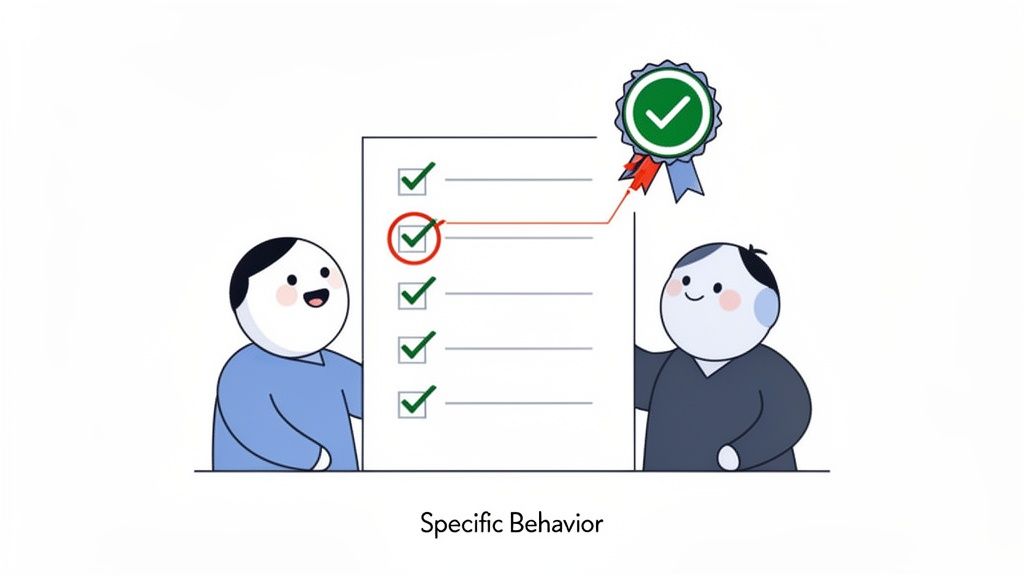
This approach is highly effective because it reinforces the specific actions you want to see more of, directly contributing to a culture of high performance. When a colleague understands precisely which behavior was valuable, they are more likely to repeat it, and others are more likely to emulate it.
Example Breakdown
Here are some SBR feedback peer examples that illustrate the difference between generic and specific recognition:
-
Generic Praise: "Thanks for being so helpful this week, Sarah."
-
Practical SBR Example: "Kudos to Sarah for creating that detailed project FAQ document. It saved me hours of searching for answers and helped me meet my deadline."
-
Generic Praise: "Great job on the presentation, David."
-
Practical SBR Example: "David, your data visualization on slide 10 was brilliant. It made a complex topic easy for the client to understand and was the turning point in the meeting."
Actionable Tips for Implementation
To integrate SBR into your team's workflow, especially within platforms like Slack, consider these strategies:
- Structure the Feedback: Coach your team to use a simple "Situation-Action-Impact" framework. Describe the context, the specific action taken, and the positive result it created.
- Use Themed Prompts: In a tool like AsanteBot, set up weekly prompts like, "Share a specific action a teammate took that helped you make progress this week."
- Link to Company Values: Create custom emoji reactions in Slack that correspond to company values (e.g., a :customer-focus: emoji). Train your team to use these when recognizing specific actions that embody that value, making recognition a visible part of your culture.
2. The SBI Model (Situation-Behavior-Impact)
The SBI Model is a structured framework for delivering peer feedback that provides essential context and clarity. Developed by the Center for Creative leadership, this model guides the giver to describe the Situation (when/where), the specific Behavior (what was done), and the resulting Impact. This three-part structure removes subjectivity and personal interpretation, making the feedback objective, memorable, and easier for the recipient to understand and act upon.
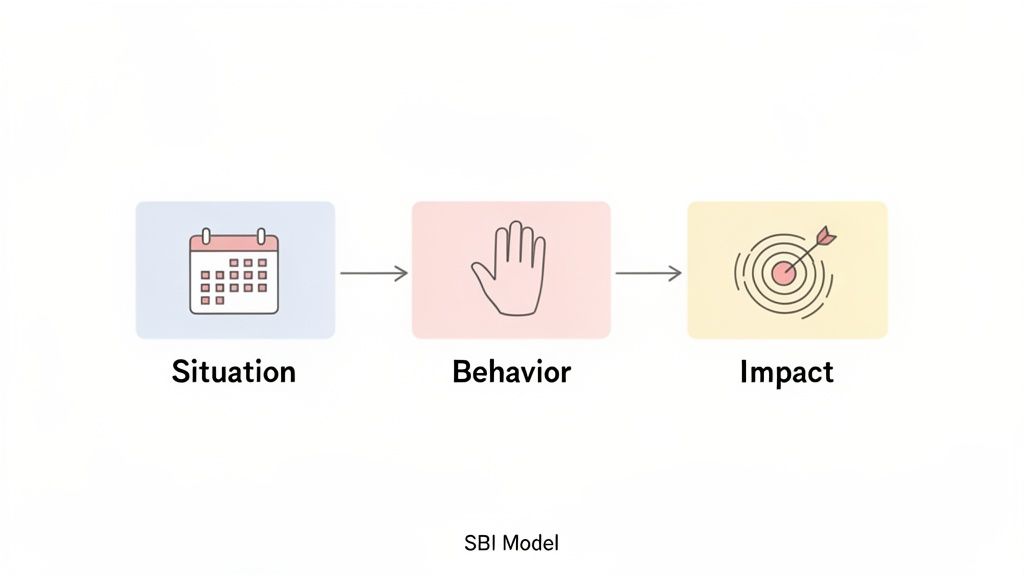
This methodical approach is crucial for building a culture of meaningful team recognition. By linking a specific behavior to a tangible outcome, the SBI model helps employees see the direct connection between their actions and the team's success. This is why team recognition is so important: it transforms feedback from a simple "good job" into a powerful learning opportunity and reinforces an employee's sense of purpose.
Example Breakdown
Here are some practical SBI feedback peer examples that demonstrate how the model adds depth and clarity:
-
Generic Praise: "You're great with clients."
-
Practical SBI Example: "(S) During Tuesday's client call, (B) you patiently asked clarifying questions about their new requirements. (I) Because of that, the client felt heard, and they signed the renewal contract on the spot."
-
Generic Praise: "Thanks for your help with the server issue."
-
Practical SBI Example: "(S) When the server went down this morning, (B) you calmly coordinated troubleshooting across three different teams. (I) As a result, we restored service 40 minutes faster than our typical recovery time."
Actionable Tips for Implementation
To effectively embed the SBI model in your peer recognition process, particularly in a digital-first environment like Slack, try these tactics:
- Create Guided Templates: In a tool like AsanteBot, set up customizable "Feedback Day" prompts that guide users through separate "Situation," "Behavior," and "Impact" fields to ensure they provide complete feedback.
- Tag Feedback by Impact: Use custom emoji categories in Slack to tag SBI feedback by the type of impact (e.g., :revenue-boost:, :culture-win:, :efficiency-gain:). This makes it easy to track and celebrate different kinds of contributions.
- Model the Behavior: Regularly share exemplary SBI feedback in company-wide announcements or channels to model the format for newer team members and reinforce its importance.
3. Growth-Focused Peer Feedback (Feed-Forward)
Growth-focused feedback, often called "feed-forward," shifts the conversation from past performance to future potential. Instead of dissecting what went wrong, this method helps peers identify opportunities for development and highlight untapped strengths. It's a forward-looking approach that fosters psychological safety, framing feedback as an investment in a colleague's growth rather than a judgment of their past actions.
This technique, popularized by Marshall Goldsmith, is crucial for building a culture where team recognition is tied to development. The importance of this form of recognition is that it encourages continuous improvement and shows team members that their potential is seen and valued. This is a powerful way to provide feedback from peers because it builds confidence and charts a clear path for skill enhancement.
Example Breakdown
Here are some practical feed-forward feedback peer examples that focus on future opportunities:
-
Standard Feedback: "Your presentation was good, but it lacked data."
-
Practical Feed-Forward Example: "Your presentation was incredibly clear. I'd love to see you add more data visualization next time. You have a real gift for storytelling, and numbers would amplify that impact."
-
Standard Feedback: "The project handoff was a bit disorganized."
-
Practical Feed-Forward Example: "You totally owned that project handoff. If you documented your process from this one, it could easily become our new team standard for future projects."
Actionable Tips for Implementation
To cultivate a feed-forward culture, especially in a tool like Slack, try these strategies:
- Use Focused Prompts: In AsanteBot, schedule a recurring "Feedback Friday" prompt like, "What's one strength you saw in a teammate this week that you'd love to see them lean into more?"
- Create Growth-Oriented Emojis: Design custom Slack emojis that signify potential, such as
:leadership-spark:or:innovation-idea:. Encourage the team to use these when they spot a colleague demonstrating a budding skill. - Connect to Opportunities: When a peer offers feed-forward recognition, team leads should follow up by connecting that individual with relevant development opportunities, like a mentorship match or a new project that utilizes their emerging talent.
4. Values-Aligned Recognition (Core Values Amplification)
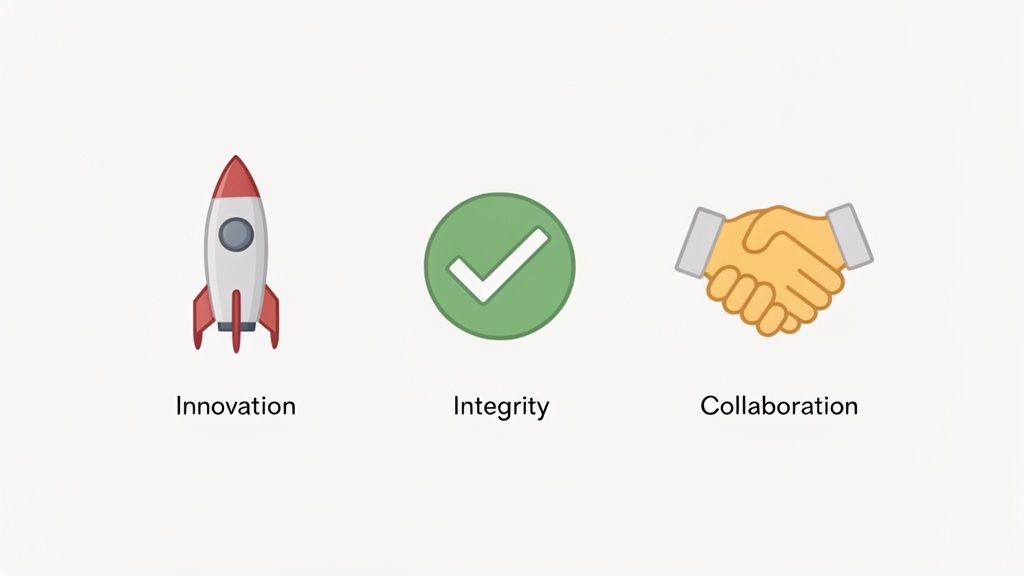
Values-Aligned Recognition explicitly connects peer feedback to organizational core values, reinforcing your company’s cultural identity with every shout-out. Instead of generic praise, this method encourages peers to recognize colleagues for embodying specific company principles like innovation, integrity, or collaboration. This transforms team recognition from a simple "thank you" into a strategic tool for amplifying the behaviors that define your culture.
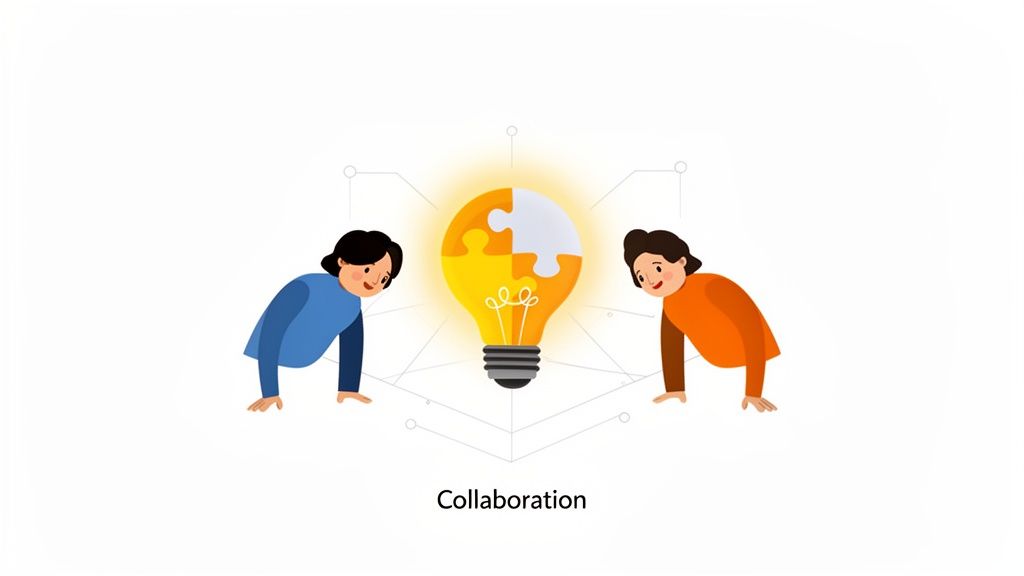
This approach makes abstract values tangible and observable in day-to-day work. The importance of this type of team recognition is that it links individual actions to the company's mission. By linking specific actions to core values, you create a powerful feedback loop that shows team members what living the culture looks like in practice, making them feel like a crucial part of the organization's identity.
Example Breakdown
Here are some practical feedback peer examples that show how to link recognition directly to company values, especially within a Slack environment using custom emojis:
-
Generic Praise: "Good job solving that issue, Maria."
-
Practical Values-Aligned Example: "Shout-out to Maria for embodying our 'Customer Obsession' value! 💜 She didn't just fix the bug but also created a guide for the client to prevent future issues."
-
Generic Praise: "Thanks for your help, Leo."
-
Practical Values-Aligned Example: "Big thanks to Leo for demonstrating our 'Collaboration' value. 🤝 He jumped in to help the marketing team with their data pull, even though it was outside his department."
Actionable Tips for Implementation
To effectively implement Values-Aligned Recognition, particularly with tools like Slack and AsanteBot, consider these tips:
- Create Value-Specific Emojis: Define 3-5 core values and assign each a distinct custom emoji in Slack (e.g., 🚀 for 'Innovation'). Train the team on what each emoji represents so the connection is clear.
- Use Themed Prompts: Schedule weekly AsanteBot prompts focused on a single value. For example, "Who embodied our 'Take Ownership' value this week? Share an example!"
- Feature in Reports: Highlight values-aligned recognition in weekly summaries or leaderboards. This showcases who is driving the culture and reinforces the importance of these behaviors to the entire organization.
5. Peer-to-Peer Appreciation (Horizontal Recognition)
Peer-to-Peer Appreciation shifts the focus from traditional top-down feedback to horizontal recognition between colleagues at similar levels. This approach democratizes acknowledgement, empowering every team member to celebrate a colleague's contributions. It builds psychological safety and strengthens team bonds by fostering a culture where everyone is responsible for uplifting one another, not just managers.
This method is crucial for modern, collaborative teams, especially in remote settings where visibility can be limited. The importance of team recognition at the peer level is that it ensures valuable contributions are seen and celebrated in real-time, boosting morale and reinforcing a collaborative spirit without managerial gatekeeping. It demonstrates that appreciation is a shared responsibility, strengthening the entire team fabric.
Example Breakdown
Here are some practical feedback peer examples that showcase effective horizontal recognition:
-
Generic Praise: "Thanks for your help, Alex."
-
Practical Peer-to-Peer Example: "Huge thanks to Alex for patiently walking me through the new API documentation. Your clear explanations saved me from getting blocked and helped our team stay on schedule."
-
Generic Praise: "Good job, team."
-
Practical Peer-to-Peer Example: "Shoutout to Maria for picking up some of my tasks when I had a family emergency. It meant so much to know the team had my back, and I really appreciate you stepping up."
Actionable Tips for Implementation
To build a strong culture of horizontal recognition, especially in a digital workspace like Slack, try these strategies:
- Establish a Cadence: Use a tool like AsanteBot to enable a weekly "Feedback Day." This creates a dedicated time and a natural prompt for colleagues to share shout-outs they might otherwise forget.
- Model the Behavior: Leadership and managers should frequently and publicly give peer-to-peer praise to their own colleagues. This normalizes the behavior and shows it's valued across all levels of the organization.
- Create Cross-Functional Channels: Set up dedicated Slack channels (e.g.,
#kudos-all,#wins-and-thanks) where individuals from different departments can recognize collaborators, breaking down silos and improving inter-team relationships. For more ideas, explore different employee appreciation phrases to inspire your team.
6. Micro-Recognition (Quick, Frequent Appreciation)
Micro-recognition focuses on delivering small, frequent acknowledgments of everyday contributions rather than reserving praise for major milestones. This approach transforms feedback from a formal event into a continuous, lightweight habit. Quick emoji reactions and brief shout-outs compound over time, creating a powerful culture of constant appreciation and making team members feel consistently seen and valued.
This method is effective because its low friction encourages participation from everyone. When recognition is easy, it happens more often, reinforcing positive behaviors in real time. The importance of this type of frequent team recognition is that it maintains a steady level of morale and engagement, celebrating the small wins that drive big results and preventing employees from feeling overlooked in their day-to-day efforts.
Example Breakdown
Here are some practical micro-recognition feedback peer examples that show how quick, digital gestures can convey meaningful appreciation:
-
Generic Praise: "Thanks for your help."
-
Practical Micro-Recognition Example: Reacting with a 👍 emoji on a colleague's message that reads, "Here’s the link you needed," immediately acknowledging their support.
-
Generic Praise: "Good idea."
-
Practical Micro-Recognition Example: Using a custom 💡 emoji on a teammate's suggestion in a brainstorming thread to instantly highlight their creative contribution to the whole group.
-
Generic Praise: "Nice work on that report."
-
Practical Micro-Recognition Example: Dropping a 🎯 emoji in a channel right after someone posts, "Q3 performance report is now live," to celebrate their precision and timely delivery.
Actionable Tips for Implementation
To build a culture of micro-recognition, particularly in a fast-paced environment like Slack, try these tactics:
- Create Custom Emoji Categories: Develop a set of custom emojis that align with different types of contributions, such as ⚡ for speed, 💡 for innovation, and ❤️ for embodying company values. This adds a layer of specific meaning to each reaction.
- Encourage Public Recognition: Guide your team to use micro-recognition in public channels instead of direct messages. This amplifies the impact, making appreciation visible and encouraging others to participate.
- Set Intentional Limits: Use tools like AsanteBot to set daily emoji reaction limits (e.g., five per person). This healthy scarcity encourages team members to be more thoughtful and intentional with their praise, preventing it from becoming diluted.
7. Collaborative Problem-Solving Recognition (Teamwork Acknowledgment)
Collaborative Problem-Solving Recognition celebrates how peers work together to overcome challenges. This feedback style shifts the focus from just the final outcome to the crucial process of teamwork itself: the communication, mutual support, and shared learning that happens when colleagues tackle a problem together. It highlights the relational dynamics that lead to a breakthrough, reinforcing trust and psychological safety.
This approach is vital for distributed and cross-functional teams where interdependence is high. The importance of this type of team recognition is that it acknowledges how a team succeeded, modeling the exact collaborative behaviors you want to see replicated. This builds resilience and shows that the organization values the journey, not just the destination.
Example Breakdown
Here are some practical feedback peer examples that acknowledge teamwork and collaborative effort:
-
Vague Acknowledgment: "Good job, marketing and engineering."
-
Practical Collaborative Example: "Huge credit to Jen (Marketing) and Alex (Engineering) for their work on the new feature launch. Jen did an amazing job translating technical specs into clear customer benefits, and Alex was patient in explaining the engineering constraints. The result is a seamless user experience that shows what true partnership can achieve."
-
Vague Acknowledgment: "Thanks for fixing that issue."
-
Practical Collaborative Example: "When the project went sideways, I was so impressed watching you and Mark have that hard conversation to reset expectations. Your honesty and shared commitment to finding a new path forward saved the project from derailing."
Actionable Tips for Implementation
To foster a culture that values teamwork, especially in a remote or hybrid setup, try these tactics:
- Run a Collaboration Prompt: In a tool like AsanteBot, schedule a recurring "Feedback Day" question: "Who did you collaborate with this week, and what specific action made that partnership successful?"
- Create Collaboration Emojis: Develop custom Slack emojis that represent teamwork, such as
:great-pairing:,:cross-team-win:, or:consensus-builder:. Encourage the team to use these when they see great collaboration happening. - Invest in Team Bonds: To truly embrace collaborative problem-solving, organizations can benefit from investing in engaging Next-Level Corporate Team Building Activities that foster stronger team bonds and open communication.
8. Impact-Focused Recognition (Outcome & Legacy Appreciation)
Impact-Focused Recognition moves beyond acknowledging a task well done to celebrating the tangible, long-term consequences of that work. Instead of just praising effort, this feedback style connects a peer's actions to meaningful business outcomes like customer satisfaction, revenue growth, team efficiency, or cultural strength. It answers the crucial question, "What difference did my work actually make?"
This approach is vital for helping employees see their role in the bigger picture, which boosts motivation and engagement. The importance of this form of team recognition is profound: when colleagues understand the legacy of their contributions, they feel a deeper sense of purpose and are more likely to think strategically about their future work, driving long-term value for the organization.
Example Breakdown
Here are some practical Impact-Focused feedback peer examples that connect actions to significant outcomes:
-
Action-Based Praise: "Thanks for updating the onboarding documents."
-
Practical Impact-Focused Example: "Your new documentation has reduced our new hire onboarding time by three days. That impact compounds with every person we hire, directly contributing to our scalability."
-
Action-Based Praise: "Great catch on that bug in the code."
-
Practical Impact-Focused Example: "You caught that critical security bug before it hit production. I can't even quantify the potential crisis you prevented for our customers and our reputation. Thank you."
-
Action-Based Praise: "You've been a great mentor to Alex."
-
Practical Impact-Focused Example: "Your mentorship during code reviews has helped Alex ship features independently. You didn't just help with one task; you helped a teammate become a stronger developer. That's true leverage."
Actionable Tips for Implementation
To foster a culture where impact is a key part of team recognition, especially in a distributed environment, try these tactics:
- Tell Impact Stories: During team meetings or in company-wide Slack announcements, don't just state what happened. Narrate the cause-and-effect story to make the connection between action and outcome visible to everyone.
- Create Impact Emojis: In Slack, create custom emoji reactions that represent different types of impact, such as :moneybag: for revenue/efficiency, :target: for customer success, or :rocket: for innovation. This makes recognizing specific outcomes quick and visual.
- Use Outcome-Based Prompts: In a tool like AsanteBot, configure prompts that encourage thinking about results. For example: "Whose work created a noticeable positive impact for our customers this week?" or "Share a time when a peer's action saved the team significant time or resources."
8-Method Peer Feedback Comparison
| Approach | 🔄 Implementation Complexity | ⚡ Resource / Effort | ⭐ Expected Outcomes | 💡 Ideal Use Cases | 📊 Key Advantages |
|---|---|---|---|---|---|
| Specific Behavior Recognition (SBR) | Medium — requires thoughtful, specific inputs | Low–Medium — emoji labels + brief training | High — clear repeatable behaviors reinforced | Remote/distributed teams needing clarity | Actionable praise; measurable behavior patterns |
| The SBI Model (Situation‑Behavior‑Impact) | Medium–High — structured 3‑part format; training needed | Medium — longer entries; templates helpful | High — reduces defensiveness; memorable feedback | Startups/SMBs & remote teams seeking structure | Contextual feedback linking action to outcome |
| Growth‑Focused Peer Feedback (Feed‑Forward) | Medium — mindset shift toward future focus | Medium — careful phrasing; pair with dev plans | Medium–High — fosters learning & psychological safety | Early‑stage teams; high‑turnover orgs | Encourages improvement; motivates without blame |
| Values‑Aligned Recognition (Core Values Amplification) | Medium — needs clear, maintained value definitions | Low–Medium — emoji mapping + onboarding | High — strengthens cultural identity & consistency | Organizations building or shifting culture | Strategically reinforces values; visible analytics |
| Peer‑to‑Peer Appreciation (Horizontal Recognition) | Low — lightweight and decentralized | Low — frequent emoji interactions | High frequency — boosts cohesion & belonging | Flat hierarchies; remote‑first startups | Frequent authentic recognition; shared ownership |
| Micro‑Recognition (Quick, Frequent Appreciation) | Low — minimal process friction | Low — seconds per recognition; set limits | Medium–High — sustained morale & momentum | Any team size; fast‑paced environments | Continuous reinforcement; scales easily |
| Collaborative Problem‑Solving Recognition | Medium — requires clarity on contributions | Medium — longer narratives for team context | High — strengthens trust and cross‑team bonds | Cross‑functional & distributed teams | Promotes teamwork; surfaces collaboration patterns |
| Impact‑Focused Recognition (Outcome & Legacy) | Medium–High — needs business context and metrics | Medium–High — manager/data input often required | High — increases purpose and visible impact | Mission‑driven or knowledge work; remote teams | Links work to outcomes; supports storytelling and retention |
Making Recognition a Ritual, Not an Event
Moving beyond theory and into practice is the true test of any cultural initiative. Throughout this article, we’ve dissected a variety of powerful feedback peer examples, from the structured precision of the SBI model to the immediate impact of micro-recognition in a Slack channel. The common thread weaving through each of these frameworks is a shift in mindset: transforming feedback from an occasional, formal event into a consistent, daily ritual.
This transition is not just a "nice-to-have" element of modern workplaces; it's a strategic imperative. The importance of team recognition lies in its ability to build psychological safety, reinforce desired behaviors, and create a powerful undercurrent of motivation that annual reviews simply cannot replicate. When employees feel seen and valued for their specific contributions, they become more engaged, more innovative, and more connected to the company's mission.
From Examples to Everyday Action
The strength of the feedback peer examples we've explored is their adaptability. You don't need to implement all eight models at once. The goal is to build a sustainable habit of recognition.
Actionable Next Steps:
- Start Small and Specific: Choose one framework that best aligns with your team's current needs. If your team struggles with clarity, start with the SBI (Situation-Behavior-Impact) model. If you want to boost morale quickly, encourage Micro-Recognition.
- Lead by Example: As a manager or team lead, be the most active user of the system you want to build. Model the behavior you want to see by publicly and privately giving thoughtful feedback based on these examples.
- Lower the Barrier to Entry: The biggest obstacle to consistent feedback is often friction. Integrating recognition into the tools your team already uses every day, like Slack, removes the mental effort required to praise a colleague. This is where the true power of habit-forming is unlocked.
Mastering these approaches is about more than just making people feel good; it's about building a high-performance feedback loop. Each piece of specific, constructive, or positive feedback is a data point that helps individuals and the team as a whole to calibrate and grow. By investing in these skills, you are building a more resilient, collaborative, and self-aware organization that thrives on continuous improvement. The ultimate benefit is a culture where excellence is not just rewarded, but actively and consistently nurtured from the ground up, by everyone, for everyone.
Ready to turn these feedback peer examples into a seamless part of your team's daily routine? AsanteBot integrates directly into Slack, making it effortless to give and track meaningful recognition. Start building a stronger, more connected culture today by exploring how AsanteBot can automate and amplify your team's appreciation efforts.
About the author

Keep reading
More from the blog
 constructive feedback
Mastering feedback from peers: Boost Team Growth
Let’s get straight to it: peer feedback is simply the process where team members share insights with each other about their work, skills, and overall contribution.
 company culture
What Is HeyTaco? A Guide to Modern Team Recognition
At its core, HeyTaco is a simple tool for peer-to-peer recognition that plugs right into your team's chat platform, like Slack or Microsoft Teams.
 AsanteBot
8 Powerful Peer Feedback Examples to Elevate Your Team in 2026
In today's fast-paced, often-remote work environment, the simple act of acknowledging a colleague's contribution can be the difference between a disconnected group and a high-performing team.