
Emojis Slack: A Practical Guide to Using Emojis in Slack for Team Recognition
Dusan Milovanovic
Using emojis in Slack is about more than just reacting to messages—it’s a surprisingly powerful way to build team culture and give instant recognition. A simple emoji can replace those long, channel-clogging “thank you” chains with a clean, visible nod that boosts morale without the noise.
Table of Contents
- Why Slack Emojis Are a Secret Weapon for Team Culture
- Getting Started with Custom Emojis for Recognition
- Building a Recognition Program with Slack Integrations
- Designing Meaningful Rewards and Leaderboards
- Common Mistakes to Avoid with Your Recognition Program
- Got Questions About Using Emojis for Recognition? We’ve Got Answers.
Why Slack Emojis Are a Secret Weapon for Team Culture
Whether your team is in the office or fully remote, making people feel seen and valued is what holds everything together. The problem is that traditional recognition often feels too formal or infrequent to make a real impact. This is where using emojis in Slack completely changes the game.
They offer a lightweight, immediate way to celebrate wins, acknowledge effort, and just make your team feel more connected. Instead of a manager waiting for the weekly meeting to give a shout-out, a coworker can instantly add a 🎉 or 🙏 emoji to a message about a finished project.
This simple act flips the script on recognition. It stops being a top-down, formal process and becomes a peer-to-peer, everyday habit.
The Power of Micro-Acknowledgements
I’ve found that consistent, small acts of appreciation often mean more than big, rare gestures. Emojis make these “micro-acknowledgements” totally effortless.
Think about the last time a colleague bailed you out of a tough spot. A quick DM is nice, but adding a custom :lifesaver: emoji to their message in a public channel is a visual, public nod that everyone can see. When others pile on with their own reactions, it amplifies that positive feeling and encourages more of that helpful behavior across the team.
The importance of team recognition can’t be overstated. When people feel their contributions are noticed, they’re more engaged, more motivated, and far more likely to stick around. Emojis offer a simple yet profound way to weave that recognition right into your daily workflow.
Transforming How We Communicate at Work
The shift toward emoji reactions has fundamentally changed how teams talk to each other. It’s not just a hunch; the data backs it up. By early 2025, Slack reported that emoji reactions and threaded replies appeared in roughly 78% of workplace interactions on the platform. This trend was also spotted in independent research, which showed reactions cut down on message volume while boosting visible, positive acknowledgements. You can dig deeper into this shift in workplace communication if you’re curious.
This really shows how a single icon can say “I see you” or “great job” without cluttering a channel with another message.
This visual language makes conversations more efficient and turns acknowledging good work into a seamless part of the day.
The Impact of Emoji-Driven Recognition in Slack
To really see the difference, it helps to compare the old way of doing things with the new, emoji-powered approach.
| Challenge | Traditional Solution | Emoji-Based Solution in Slack |
|---|---|---|
| Noisy Channels | Reply chains of “Thanks!” or “Great job!” clog up conversations. | A single emoji reaction provides acknowledgement without adding noise. |
| Delayed Recognition | Praise is saved for formal reviews or weekly team meetings. | Instant, in-the-moment recognition with a relevant emoji. |
| Low Engagement | Team members are hesitant to interrupt a channel for minor praise. | Low-friction reactions make it easy for anyone to participate and show support. |
| Top-Down Culture | Recognition primarily comes from managers, creating a hierarchy. | Peer-to-peer recognition becomes the norm, fostering a collaborative culture. |
Ultimately, integrating emojis strategically moves your team from a cluttered, formal communication style to one that’s immediate, inclusive, and genuinely supportive.
Getting Started with Custom Emojis for Recognition
If you want to build a recognition culture that actually feels authentic, moving beyond Slack’s default emoji set is your first real step. This is where you can start to inject your team’s unique personality into everyday acknowledgements. Think of it as creating a visual language that reflects your company values, inside jokes, and what you really celebrate. It makes praise feel less corporate and way more personal.
The technical side of things is a breeze. As long as an admin hasn’t locked it down, any team member can upload a custom emoji. You just need a square image under 128KB, give it a name like :our-emoji:, and you’re good to go. The real magic, though, isn’t in the upload button—it’s in what you choose to create and how you keep it all organized.
Naming Your Emojis for Clarity
Once you start adding emojis, your library can get messy, fast. If people can’t find the right emoji, they just won’t use it. That friction is the enemy of a good recognition program, which is why a smart naming convention from day one is a game-changer.
The best trick I’ve found is to use prefixes. These act like little folders for your emojis. When someone types : to search, all your related emojis will pop up together in a neat, easy-to-scan list.
Here are a few naming structures that work really well:
praise-orkudos-: Perfect for general shout-outs (e.g.,:praise-greatjob:,:kudos-hustle:).value-: This directly connects recognition to your company’s core values (e.g.,:value-customerfirst:,:value-ownership:).team-: Great for team-specific wins or project milestones (e.g.,:team-falcons-win:,:team-project-launch:).
This one small organizational habit keeps your system from becoming a chaotic mess, making it completely intuitive for everyone to participate.
Creative Ideas for Your Custom Emoji Vocabulary
The custom emojis that get the most use are always the ones that mean something to your team. They should tell a story, not just be generic symbols. This is your chance to turn shared experiences into tangible appreciation. For a deeper dive, you can find a ton of inspiration for creating custom emojis in Slack.
Team recognition hits differently when it feels genuine. Emojis that reflect shared jokes, project milestones, or company values make every “thank you” more powerful because they’re rooted in a shared understanding.
Try creating emojis that celebrate the specific behaviors you want to see more of. Here are a few ideas to get your own creative juices flowing:
:gold-star:Perfect for acknowledging work that was truly above and beyond.:life-saver:For that colleague who jumped in to help you out of a tough spot.:bullseye:A great way to recognize someone for nailing a difficult target or key result.:teamwork:Use this to celebrate awesome collaboration, especially across different departments.:mic-drop:For that flawless presentation or a project that was executed perfectly from start to finish.
When you build out this custom vocabulary, you’re doing more than just adding little pictures. You’re building a simple, powerful toolkit that empowers everyone to celebrate each other, every single day.
Building a Recognition Program with Slack Integrations
Custom emojis are great, but let’s be honest—they’re just the beginning. To truly build a culture of recognition, you need to scale those simple reactions into a structured, company-wide system. Moving from random shout-outs to an automated program makes sure recognition is consistent, fair, and visible to everyone. This is where tools that plug right into Slack really shine.
Integrations like AsanteBot are built to listen for specific emojis in Slack and convert them into tangible, trackable recognition. Suddenly, a :kudos: emoji isn’t just a quick thumbs-up; it’s a trigger that can log a formal shout-out, award points, and feed into a bigger celebration of team achievements. This simple shift turns a fleeting moment into a measurable part of your company culture.
Setting Up a Dedicated Recognition Channel
First things first, you need a central hub for all this positive energy. A dedicated public channel—think #wins, #praise, or #shoutouts—is absolutely key to amplifying these moments.
When someone gets praise in a DM or a small, private channel, the impact is pretty limited. But a public channel turns every piece of recognition into a company-wide announcement. Not only does this make the recipient feel seen and valued, but it also broadcasts the exact behaviors and company values you want to see more of. It becomes a living, breathing archive of what success looks like at your company.
Automating Praise with Bots and Workflows
With your channel in place, you can now bring in an integration to do the heavy lifting. The goal is simple: make giving recognition as easy as adding an emoji.
Here’s how a typical workflow plays out in the real world:
- You pick a trigger emoji. Let’s say you create a custom emoji called
:props:to be your official recognition signal. - The bot starts listening. A tool like AsanteBot keeps an eye on all public channels for that specific emoji reaction.
- The magic happens. When someone reacts to a message with
:props:, the bot instantly grabs that message and posts a nicely formatted shout-out in your#winschannel. It’ll usually tag the person who gave the praise and the person who received it.
This kind of simple automation removes all the friction. Nobody has to remember to copy and paste a message into the right channel. The system just handles it, ensuring every bit of recognition gets the spotlight it deserves.
If you’re new to creating custom emojis, it’s a breeze. The whole process is really just a simple three-step flow.
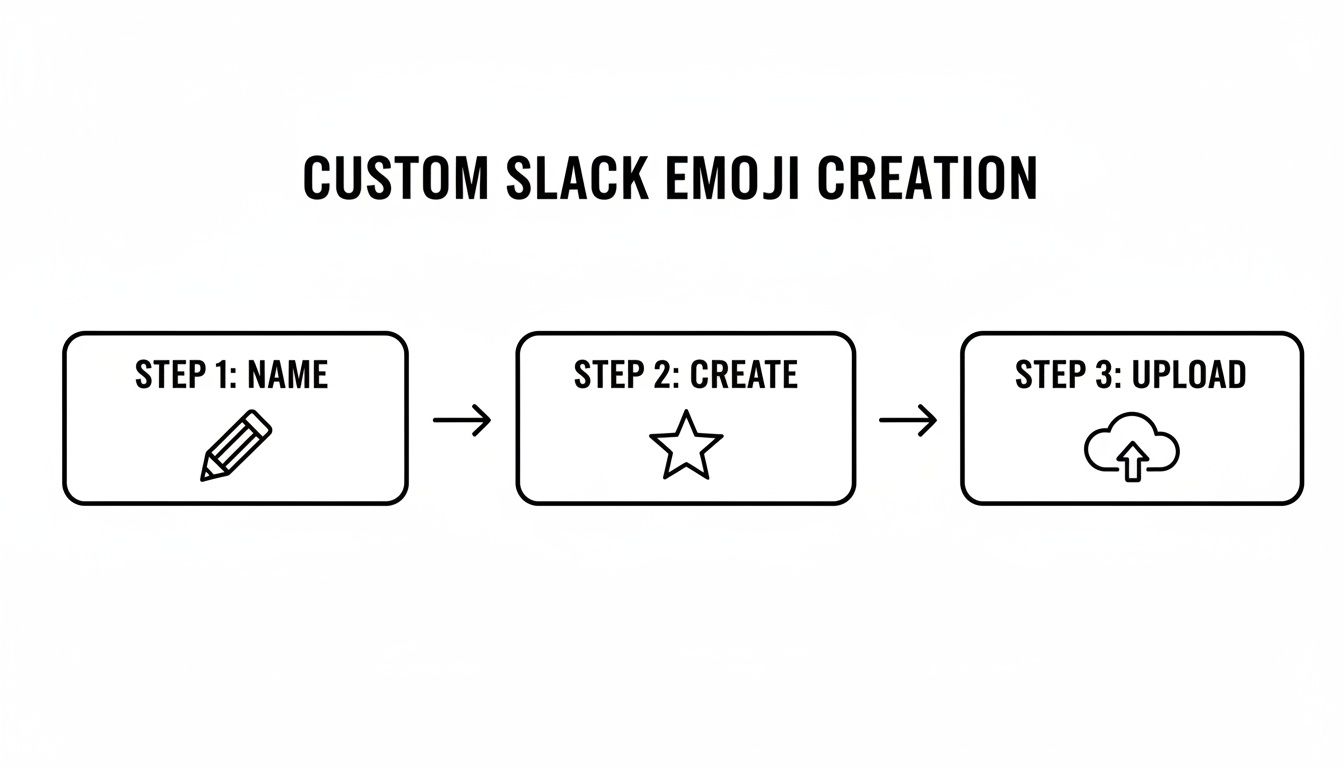
As you can see, you just name your emoji so people can find it, create or find an image, and upload it. It’s immediately ready for your team to use.
At its core, team recognition is about making people feel valued. When you automate the process, you guarantee that praise isn’t just given, but seen. This creates a powerful, positive feedback loop that lifts up the entire organization.
To take your program even further, you can explore how different Slack applications can be combined for a seamless experience. If you want a handpicked list of tools to get started, our guide to the best Slack apps for employee engagement at https://asantebot.com/blog/best-slack-apps/ is a great resource. By connecting the right tools, you’re building an engine for celebrating success right inside the platform your team already uses every day.
Designing Meaningful Rewards and Leaderboards
Alright, you’ve got your emoji-based recognition program up and running. The good vibes are flowing in Slack. Now what? How do you connect those digital high-fives to something more tangible? This is where you build a system that turns emojis in Slack into real-world motivation through rewards and a bit of friendly competition. This is the step that can transform a feel-good initiative into a powerful engine for engagement.
The heart of this system is a well-designed rewards catalog. And I don’t mean just throwing a few expensive prizes in a list; it’s about offering incentives that genuinely resonate with your team. A generic, one-size-fits-all approach is a recipe for a program that fizzles out quickly. The key is variety and personalization.
Why Team Recognition Matters: Acknowledging effort is a fundamental human need. In a work context, consistent recognition tells employees that their work is not only seen but also valued. This validation boosts morale, increases motivation, and strengthens their connection to the company’s mission. When people feel appreciated, they are more likely to go the extra mile.
When recognition leads to something meaningful, its impact is magnified. By offering real choices, you empower your team to pick what truly motivates them, which makes the entire program feel more personal and valuable.

Crafting a Compelling Rewards Catalog
A great rewards catalog is a mix of fun, practical, and meaningful options. Think beyond just gift cards and consider what actually aligns with your company culture and the things your people care about.
Here are a few practical examples to get you started:
- Professional Development: This is a huge one. Offer credits for online courses, tickets to industry conferences, or subscriptions to professional publications. It’s a win-win.
- Company Swag (the good kind): Forget the cheap t-shirts. Think high-quality hoodies, branded backpacks, or premium desk accessories people will actually want and use.
- Experiences: An extra day of PTO is almost always a winner. You could also offer a company-sponsored team lunch or tickets to a local concert or sporting event.
- Charitable Donations: Empower your team to turn their points into a donation to a charity they care about. This connects individual recognition to a greater good and feels amazing.
This whole visual language is part of a much bigger trend. It’s estimated that by 2025, around 10 billion emojis were being sent daily worldwide, with the official Unicode count growing to nearly 4,000 distinct icons. This explosion in visual communication makes tools like Slack even more central to how we work. You can dig deeper into these emoji trends and statistics to see just how widespread this is.
Using Leaderboards for Healthy Competition
While rewards are the “what,” leaderboards provide the “who.” They offer visibility and spark a bit of friendly competition. When you set them up thoughtfully, a leaderboard can seriously boost participation without making recognition feel like just another performance metric.
The goal of a leaderboard isn’t to create winners and losers. It’s to celebrate the people who are actively building up their colleagues and to inspire others to join in.
To keep things effective and inclusive, make sure you celebrate both the givers and receivers. A “Top Givers” board highlights your culture champions, while a “Top Receivers” board shows who is making a huge impact on their peers.
Here are a few tips I’ve seen work well to keep leaderboards fresh:
- Run monthly or quarterly contests with small prizes for the top participants.
- Create unique categories, like a “Cross-Department MVP” for the person who recognizes people outside their own team the most.
- Reset the scores periodically. This gives everyone a fresh start and a new chance to climb the ranks.
When you combine a thoughtful rewards catalog with engaging leaderboards, you create a self-sustaining cycle of recognition. Emojis become the currency, praise is the action, and the rewards and visibility create a fun, motivating experience that cements a positive and appreciative culture.
Common Mistakes to Avoid with Your Recognition Program
A great recognition program is about more than just the tech; it’s about the people and the culture you’re trying to build. One of the biggest missteps I see is simply launching a new tool and expecting magic to happen. If you want a program to succeed, you have to be intentional and steer clear of a few common pitfalls.
The most frequent stumble? A complete lack of clear communication right out of the gate. If your team doesn’t understand why you’re suddenly using emojis in Slack for recognition or how it all works, the whole system will feel clunky and forced. You need to lay out simple, easy-to-digest guidelines that explain the purpose and the process.
This clarity is especially vital for making sure everyone feels included. Emojis aren’t universal—they can mean wildly different things across cultures and even generations.
Establishing a Shared Understanding
To head off any confusion, you need to create a shared understanding of what your company’s recognition emojis actually mean. This doesn’t have to be some massive, bureaucratic rulebook. A simple one-pager or a pinned message in your main recognition channel can do the trick. Just define your core emojis, like :kudos: or :teamwork:.
This is more important than you might think, especially with a multi-generational workforce. For instance, recent workplace communication studies revealed that 44% of Gen Z workers frequently use emojis with ironic or sarcastic meanings. That’s nearly three times the rate of their Millennial colleagues, who came in at just 17%. You can dive into the full findings on workplace communication to see just how wide that gap is.
Without a shared definition, a well-meaning emoji could easily get lost in translation. Taking a few minutes to define your emoji vocabulary ensures everyone is speaking the same visual language, which makes recognition feel much more authentic and consistent.
The Critical Role of Leadership Buy-In
Here’s another mistake I see all the time: leaders who don’t participate. If your managers and executives aren’t using the system, it sends a loud and clear message that recognition isn’t a real priority. Their involvement is probably the single most powerful way to show the program matters and to set the right example.
Team recognition thrives on authenticity. When leaders actively and genuinely celebrate their teams using the same tools as everyone else, it demonstrates that appreciation is a core company value, not just another HR initiative.
Get your leadership team to be the first and most frequent users of your new system. Their participation won’t just lift morale; it will naturally encourage others to jump in, creating a powerful, self-sustaining cycle of appreciation.
Here are a few simple ways to nudge them along:
- Gentle reminders: Prompt leaders to share praise during their weekly check-ins or team huddles.
- Showcase good examples: When a leader gives great recognition, highlight it in a company-wide email or a all-hands meeting.
- Tie it to goals: Make cultural contributions, including giving recognition, a small part of leadership performance conversations.
By sidestepping these common errors, you can transform your emoji-driven recognition program from a novelty into a true cornerstone of a positive, supportive, and highly engaged workplace.
Got Questions About Using Emojis for Recognition? We’ve Got Answers.
When you’re about to roll out a new recognition program using Slack emojis, you’re bound to have some questions. Thinking through the practical details ahead of time is the key to a smooth launch that actually sticks, turning a fun idea into a real part of how your team works together.
Let’s get into some of the most common things leaders ask.
How Many Custom Emojis Do We Really Need?
My advice? Start small. It’s really tempting to go all out and create a dozen different emojis, but it’s far more effective to launch with just 3-5 core recognition emojis. Keep them simple and easy for everyone to remember.
The best ones are usually tied directly to your company values or specific behaviors you want to see more of. Think :kudos: for a job well done or :teamwork: when someone steps up to help a colleague. You can always add more down the road as you get feedback from the team. A tight, focused set ensures the emojis you do have are meaningful and don’t just become noise.
What’s the Best Way to Announce the New System?
How you introduce this matters. A lot. The goal is to get people excited and clear on how it works from day one. I’ve seen this work best with an announcement in a company-wide channel, or even better, during an all-hands meeting where you can show it in action.
Be sure to cover these points in your announcement:
- The “Why”: Briefly touch on why peer-to-peer recognition is so important for your culture.
- The “How”: Give a quick demo. Show people exactly what to do and what happens when they use one of the special emojis.
- The Emojis: Clearly define what each custom emoji stands for. This creates a shared language of appreciation.
The best launches I’ve seen are fun and led from the top. Get your leadership team to be the first ones to use the new emojis right after the announcement. It creates instant momentum.
The real goal isn’t just to introduce a new tool; it’s to signal a genuine commitment to celebrating each other’s contributions. A thoughtful announcement sets the stage for a culture where appreciation is a daily habit.
Can We Actually Track Recognition? And Are There Other Ways to Do This?
Absolutely, and honestly, this is where the magic happens. Slack itself doesn’t have a built-in way to do this, but that’s what integrations are for. A tool like AsanteBot plugs right into Slack and lets you see everything—analytics, leaderboards, who’s giving and receiving the most praise.
Now, if a third-party bot isn’t in the cards right now, you can create a manual process. It takes a bit more legwork, but it’s doable. Just pick a dedicated emoji, something like :shoutout:, and ask everyone to use it for recognition. Then, once a week, a manager or team lead can simply search for that emoji in Slack and pull together a summary to post in your main recognition channel. It’s not automated, but it still gets the job done and makes sure great work gets seen.
Ready to build a culture of appreciation without all the manual effort? AsanteBot integrates directly into Slack, turning simple emojis into a powerful, automated recognition program with rewards, leaderboards, and analytics. Start building a more connected team today.
About the author

Keep reading
More from the blog
 employee appreciation phrases
10 Powerful Employee Appreciation Phrases to Use in 2026
Finding the right employee appreciation phrases can feel like searching for a key to unlock better team morale and performance.
 employee engagement
Creating positive workplace culture: Practical leadership
Building a great workplace culture isn’t just a “nice-to-have” anymore—it’s a core business strategy.
 AsanteBot
10 Employee Recognition Program Examples That Work in 2025
In today's competitive landscape, attracting and retaining top talent requires more than just a compelling salary.