
How to Boost Team Morale and Drive Real Performance
Asante Bot Team
Low team morale isn't just a mood issue; it’s a real business problem. To fix it, you have to dig into the root causes—things like a lack of recognition or psychological safety—and build consistent habits that show your people they're genuinely valued. This isn't just about making people happy; it’s about preventing dips in productivity and keeping your best talent from walking out the door.
Table of Contents
- Why Low Morale Is More Than Just a Bad Vibe
- Making Recognition a Meaningful Habit
- Building an Environment of Psychological Safety
- Your Playbook of Daily and Weekly Morale Boosters
- Fueling Morale with Real Career Conversations
- How to Measure and Sustain High Morale
- Answering Your Top Questions About Team Morale
Why Low Morale Is More Than Just a Bad Vibe
Before we jump into solutions, let's get real about what’s at stake. Low morale is a silent killer of productivity, innovation, and ultimately, your bottom line. It's way more than a quiet office or a few sarcastic comments in a meeting. It’s a bright, flashing warning sign of deeper problems in your organization.
The costs are very real and spread throughout the company. When engagement tanks, you start seeing missed deadlines, a drop in the quality of work, and a noticeable increase in turnover. These aren't just abstract HR metrics; they're direct hits to your profitability and growth.
The Real Costs of Disengagement
The financial hit from poor morale is genuinely shocking. A recent Gallup report found that employee engagement worldwide has slumped to just 21%. That disengagement is estimated to cost the global economy around $438 billion in lost productivity. The data makes it crystal clear: a disengaged team is a direct financial drain.
It doesn’t stop there. Low morale can poison client relationships and bring internal projects to a screeching halt. A team that feels unmotivated isn’t going to go the extra mile for a customer, which can lead to bad service and lost accounts. Internally, innovation dies because nobody feels safe or inspired enough to stick their neck out with a new idea.
When morale is low, team members shift from a mindset of 'How can we win?' to 'How can I avoid losing?' This defensive posture stifles creativity, collaboration, and proactive problem-solving.
Spotting the Early Warning Signs
Learning how to boost team morale starts with catching the subtle symptoms before they turn into a full-blown crisis. You have to look past the obvious numbers and really pay attention to the day-to-day dynamics of your team.
Keep an eye out for these tell-tale signs:
- Proactive communication dries up: People stop sharing ideas in meetings or offering to help each other out.
- Cynical humor increases: The jokes become a little too sharp, often aimed at projects, leadership, or the company itself.
- Absenteeism creeps up: You start noticing more last-minute sick days or a general feeling that people are checked out, even when they’re online.
- Discretionary effort vanishes: Employees are doing the bare minimum to get by. That extra spark and willingness to pitch in on new initiatives is gone.
If you want to get a better handle on what makes teams tick, exploring the principles of business psychology offers some incredibly valuable insights. Spotting these signs early gives you a fighting chance to fix the real issues before they do lasting damage.
Making Recognition a Meaningful Habit

When it comes to boosting team morale, recognition is your secret weapon. It is the single most effective way to show employees that their work is seen and valued. This validation connects their individual efforts to the larger company mission, reinforcing that what they do every day truly matters. Without it, even the most dedicated employee will eventually feel like just a cog in a machine.
This isn't just about warm fuzzies; it's a smart business strategy. When people feel seen, they're more engaged and less likely to leave. It's no secret that today's job market is competitive. With roughly 50% of employees open to new opportunities and not nearly enough feeling appreciated, making recognition a real habit is a powerful way to keep your best people. You can dig into more of these trends and workplace statistics on Cake.com.
From Generic Praise to Specific Impact
The real magic happens when you shift from broad compliments to specific, impactful acknowledgments. Anyone can say, "nice work." But when you call out a specific action and explain the positive result, you're showing you actually pay attention. It validates their hard work and makes them want to do it again.
Just look at the difference here:
- Generic: "Great work on the project, Sarah."
- Specific: "Sarah, your deep dive into the user feedback for the project was a game-changer. You spotted that critical flaw before launch, which easily saved the engineering team a week of rework."
The second one has teeth. It directly links Sarah’s contribution to a tangible, positive outcome. That’s the kind of praise that actually sticks and genuinely boosts morale.
True recognition isn’t just about celebrating the final win. It’s about acknowledging the grind, the smart decisions, and the collaborative spirit that made the win possible. When you notice the process, you build a culture of excellence.
Practical Ways to Build a Recognition Habit
You can't wait for the annual review to give praise; the moment will be long gone. The goal is to weave recognition right into the daily and weekly flow of your team's communication until it becomes second nature.
Here are a few simple but effective ways to get started right away:
- Create a Dedicated Slack Channel: Fire up a
#kudosor#shoutoutschannel. It creates a public space for anyone on the team to thank a colleague, which fosters amazing peer-to-peer recognition—often the most powerful kind. For example, a designer could post, "Big shout-out to Alex in engineering for staying late to help me test that new UI component. It made a huge difference!" - Kick Off Meetings with Wins: Spend the first five minutes of your weekly team sync sharing wins from the past week. It can be anything from squashing a stubborn bug to landing great client feedback. This simple trick starts every meeting on a high note.
- Personalize Your Approach: Pay attention to what makes your team members tick. Some people thrive on public praise, while others would much rather get a thoughtful DM or even a handwritten note. Tailoring your recognition shows you see them as an individual, not just another employee.
To help you decide which approach might work best for your team, here's a quick comparison of different strategies.
Recognition Strategies Comparison
| Recognition Type | Potential Impact on Morale | Implementation Effort | Example |
|---|---|---|---|
| Public Slack Shout-out | High (builds team spirit) | Low | Posting in a #kudos channel celebrating a project launch. |
| Private Direct Message | High (very personal) | Low | A detailed DM thanking someone for their extra effort. |
| Meeting Kick-off Wins | Medium (sets positive tone) | Low | Starting the weekly meeting by going around the room for wins. |
| Small Tangible Rewards | Medium (can feel transactional) | Medium | A gift card or team lunch for hitting a major milestone. |
| Formal Awards Program | Varies (can feel corporate) | High | An "Employee of the Month" program with a formal prize. |
Ultimately, a mix of these approaches often works best. The key is consistency.
By making these small, consistent efforts a part of your routine, you create a powerful positive feedback loop. Great work gets noticed, which encourages more great work, building a resilient and high-morale culture. If you’re looking for more structured ideas, these employee recognition program examples are a great source of inspiration.
Building an Environment of Psychological Safety
High morale isn't just about celebrating the good times. The real test is how your team navigates challenges, disagreements, and even the occasional failure. This is where psychological safety becomes your most valuable asset. It's that unspoken, shared belief that you can voice an idea, ask a "dumb" question, raise a concern, or admit a mistake without being shot down or shamed.
When that safety net is missing, people operate from a place of fear. They won't ask for help when they're drowning in a task. They’ll hide their mistakes instead of learning from them. And they definitely won't challenge a bad idea, even if they see it heading for a cliff. That kind of silence is toxic for morale and absolutely lethal for innovation.
Lead by Example: Vulnerability is a Superpower
If you want to build psychological safety, it has to start with you. The fastest way to get there is for leaders to model vulnerability themselves.
When you openly admit you made a mistake or say, "I actually don't know the answer to that," you're not showing weakness. You're giving everyone else on your team permission to be human. It single-handedly breaks down the illusion of a flawless hierarchy and reframes the group as a team of real people working together.
For instance, a manager could kick off a project post-mortem with something like:
"Looking back, I realize I should have brought the data team into the loop way earlier. That was my oversight, and it caused some serious last-minute scrambling for everyone. Let's talk about how we can avoid that next time."
That one simple act of owning a misstep flips the script. It makes it safe for others to be honest about their own stumbles, turning what could have been a blame game into a genuine learning moment. It’s a game-changer for morale because it shows that imperfection is just part of the process.
Set the Ground Rules for Healthy Disagreement
Conflict and debate are going to happen—in fact, you want them to happen. The magic is in making sure they’re constructive, not destructive. A psychologically safe team is one where healthy, respectful debate is the norm, and the best ideas win out, no matter whose they were.
To get there, you have to be intentional about setting some ground rules.
Here's how to actively cultivate it:
- Attack the idea, not the person. The language here is key. Instead of "You're wrong about that," try shifting to, "I see that point, but have we considered this other angle?" It keeps the focus on the work.
- Assume good intentions. Coach your team to give each other the benefit of the doubt. Most of the time, disagreements come from different perspectives or information, not from a bad place.
- Enforce a "no interruptions" rule. Let people finish their thoughts. It's a basic sign of respect that ensures everyone feels heard.
By actively shaping how your team disagrees, you create a space where people feel respected enough to voice a dissenting opinion. This doesn't just produce better decisions; it constantly reinforces that every voice matters. That deep-seated trust is the true foundation for both high morale and elite performance.
Your Playbook of Daily and Weekly Morale Boosters
Boosting team morale isn't about a single grand gesture or an occasional team lunch. Real, lasting momentum comes from the small, consistent, and intentional actions you weave into the fabric of your daily and weekly routines. This playbook is all about building sustainable habits that create a genuinely supportive and productive culture.
It really all boils down to one thing: recognizing that your team's time and focus are their most valuable resources. When you actively protect these, you're sending a crystal-clear message that you respect their well-being and trust them to do great work. This isn't just about managing tasks; it's about creating an environment where people can actually thrive.
Protect Your Team’s Focus Time
Constant interruptions are the silent killers of morale. A culture of back-to-back meetings and endless pings leaves zero room for the deep, focused work needed to solve tough problems. Protecting your team's focus time is one of the most powerful ways to show you value their contributions, not just their constant availability.
Here are a few simple but incredibly effective strategies I've seen work wonders:
- Establish a 'No-Meeting' Day: Pick one day a week, like a 'No-Meeting Thursday,' and block it out for the entire team. This gives everyone a predictable, sacred block of time for uninterrupted work.
- Set Clear Communication Hours: Encourage everyone to use their Slack status to signal when they're in deep work mode. This simple habit helps manage the expectation of an instant response.
- Audit Your Meeting Cadence: Get in the habit of asking, "Does this really need to be a meeting?" Could a quick Slack update, a shared doc, or an asynchronous video clip get the job done instead?
Implement Consistent Check-In Rituals
Consistent rituals create a sense of stability and connection, which is especially crucial for remote or hybrid teams. These don't have to be long or formal, but they absolutely should be predictable. The goal is to create small, positive touchpoints throughout the week.
A simple five-minute check-in at the start of a meeting can reveal more about your team's state of mind than a dozen formal surveys. It’s in these moments that you build the human connection essential for high morale.
For example, kick off your Monday sync with a quick, non-work-related icebreaker. Just ask, "What was a highlight from your weekend?" This helps team members connect as people before diving into project updates. In the same spirit, wrap up the week with a 15-minute huddle to share wins, no matter how small. It’s a fantastic way to end the week on a high note and reinforce a culture of appreciation.
This timeline shows how fostering a psychologically safe environment—where morale can truly flourish—is a journey, not a destination.
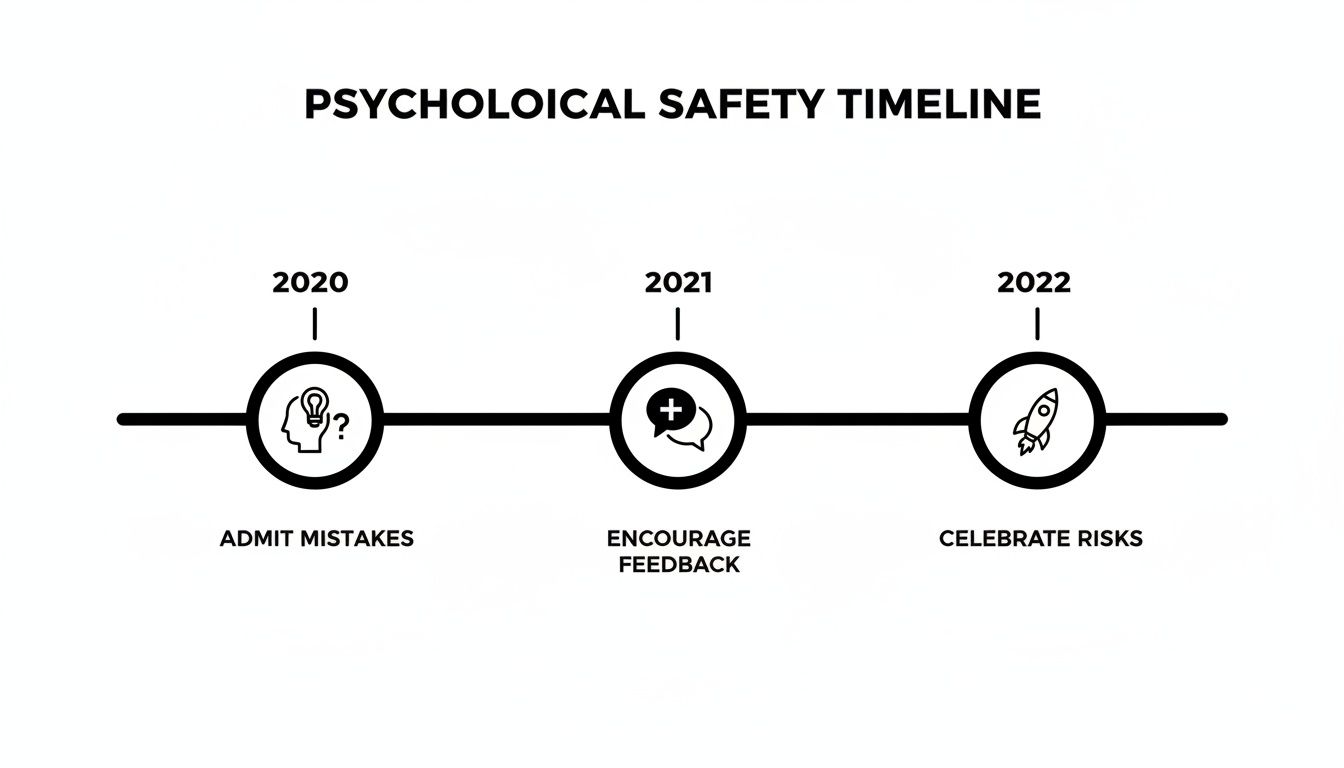
As you can see, it's an evolution. It starts with leaders showing vulnerability and grows into a culture that celebrates taking smart risks.
Manage Workloads Transparently
Nothing torpedoes morale faster than the feeling of being overwhelmed and unsupported. Transparent workload management isn't about micromanaging—it's about creating clarity and ensuring fairness. When team members can actually see what everyone is working on, it dials down the anxiety and helps prevent burnout.
A shared project board or even a simple spreadsheet can work wonders here, visualizing tasks and deadlines for everyone. This transparency empowers the team to spot potential bottlenecks and re-prioritize work before anyone gets overloaded.
For more creative ideas that directly foster collaboration, check out these Next-Level Corporate Team Building Activities. When you combine strong daily habits with engaging team events, you create a powerful, multi-faceted approach to boosting morale.
To make this even more practical, here’s what a week of intentional morale-boosting actions might look like.
Sample Weekly Morale-Boosting Schedule
This schedule provides a simple framework for integrating consistent, positive actions into your leadership routine. You can adapt it to fit your team's unique rhythm and needs.
| Day | Action | Goal |
|---|---|---|
| Monday | 5-min personal check-in at the start of the week | Connect on a human level before diving into work. |
| Tuesday | Publicly praise a team member in a shared channel | Highlight great work and reinforce positive behaviors. |
| Wednesday | Ask, "What's one thing I can do to help you?" in 1:1s | Proactively offer support and remove roadblocks. |
| Thursday | "No-Meeting Thursday" | Protect deep work time and reduce meeting fatigue. |
| Friday | 15-min "Weekly Wins" huddle | End the week on a high note by celebrating collective achievements. |
Following a simple plan like this helps turn good intentions into ingrained habits. Consistency is what separates fleeting morale spikes from a truly resilient and positive team culture.
Fueling Morale with Real Career Conversations
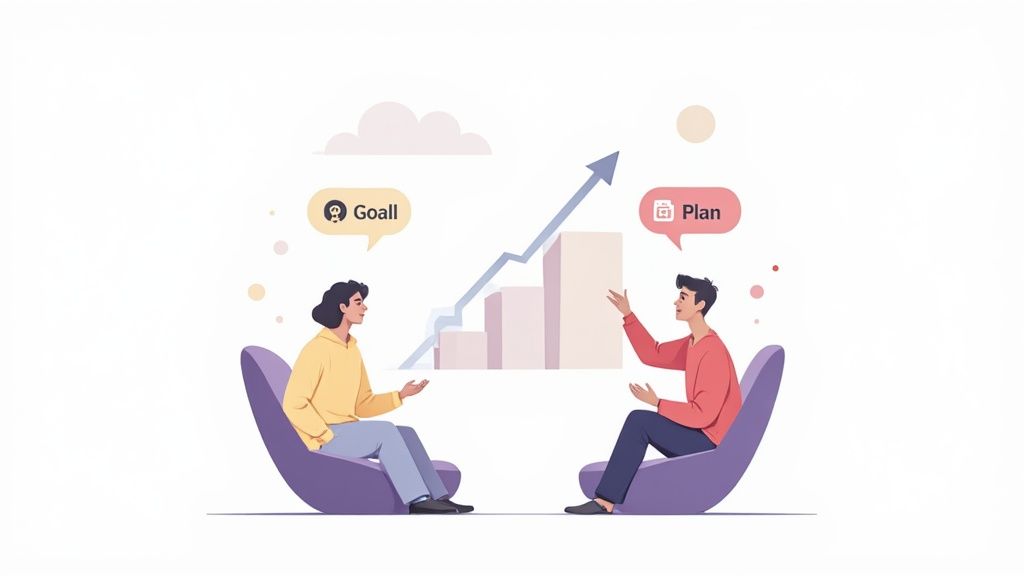
Daily recognition and psychological safety are the bedrock of good morale, but what keeps people invested for the long haul? The belief that they have a real future with the company.
When employees see a clear path forward, their engagement skyrockets. On the flip side, a dead-end job is a recipe for quiet quitting. It’s no surprise that a lack of growth opportunities is a top reason why 63% of workers decide to leave.
This is your chance to evolve from a task manager into a career coach. If you're only talking about growth during an annual performance review, you're already behind. True loyalty is built in the small, consistent conversations that link someone's personal ambitions to their day-to-day work.
From Annual Review to Ongoing Dialogue
Let's ditch the high-pressure, once-a-year review model. It's outdated and often feels more like a judgment than a conversation.
A much better approach is to weave career conversations directly into your regular one-on-ones. Try dedicating just 15 minutes every month or two specifically to professional development. This small shift makes growth a normal, ongoing topic instead of a scary, formal event.
You don't need a script, just some simple, open-ended questions to get the ball rolling:
- "What part of your work has felt the most energizing for you lately?"
- "Are there any skills you've seen others use that you'd be interested in learning?"
- "If you look ahead a year from now, what's one new thing you'd like to have accomplished?"
Notice these questions aren't about evaluating performance; they're about exploring potential. They help you uncover what truly motivates each person, which allows you to spot growth opportunities they might not have even considered for themselves.
When an employee feels their manager is genuinely invested in their long-term career success—not just their immediate output—it builds a powerful bond of loyalty and trust that directly fuels morale.
Creating Simple, Actionable Growth Plans
The point of these chats isn't to fill out a complicated HR form. The goal is to create a simple, living document that you can both reference. A shared Google Doc with just three columns is often all you need to keep things focused and track progress.
| Goal | Actions to Get There | Check-in Date |
|---|---|---|
| Improve public speaking skills | Co-present at the next team demo; join a local Toastmasters club | July 15th |
| Gain experience in project management | Shadow the lead PM on the upcoming 'Phoenix' project | August 1st |
| Learn basic data analysis | Complete the company-sponsored online SQL course | September 30th |
This simple framework helps turn a vague aspiration like "get better at presenting" into concrete, achievable steps.
When you help people connect the dots between their daily work and their long-term goals, their job becomes more than just a list of responsibilities—it becomes a launchpad for their future. That feeling of progress is one of the most sustainable morale boosters you can create.
How to Measure and Sustain High Morale
You've rolled out new recognition programs and started building daily habits to lift spirits. That's fantastic. But how do you actually know if it's working? Measuring morale isn't about launching a massive, once-a-year survey. It's about taking the team's pulse consistently with smaller, more frequent check-ins to see what’s landing and where you might need to pivot.
And once you’ve got that positive momentum, the real challenge begins: making it last. The goal is to turn these initiatives from temporary projects into permanent parts of your culture. You're trying to build a self-sustaining system where recognition, psychological safety, and growth are just woven into the fabric of how your team operates.
Gauging the Team's Pulse Without Big Surveys
Formal surveys have their time and place, but they're often lagging indicators. By the time you get the results, the feeling on the ground might have already changed. For a real-time read on morale, you need to tap into more immediate, qualitative data.
Pay close attention during your regular one-on-ones and team meetings. Listen for the subtle shifts in language and energy. Are people openly talking about their challenges, or have conversations become clipped and purely transactional? These day-to-day dynamics offer incredibly rich insights.
Here are a few simple ways to keep a finger on the pulse:
- Quick Polls: A simple Slack poll on a Friday afternoon can work wonders. Ask something straightforward like, "How are you feeling about your workload this week?" and give them a simple emoji scale (e.g., 🟢, 🟡, 🔴) to react with. It's low-effort and gives you an instant snapshot.
- Track the Unsolicited Feedback: Keep a private note of the off-the-cuff comments you hear. When a team member says, "That no-meeting day was a lifesaver, I finally got into a deep focus state," jot it down. These little nuggets are pure gold.
- eNPS Surveys: If you want a more structured metric that’s still lightweight, the Employee Net Promoter Score (eNPS) is a great tool. It’s a quick, quantifiable way to gauge team sentiment. You can learn more about what the Employee Net Promoter Score is and see how you might apply it.
Weaving Morale Boosters into Your Team's DNA
Making these new habits stick is the secret to long-term success. To truly sustain high morale, these actions need to become so routine that they just feel like "how we do things here." That takes consistency, especially from leadership.
For instance, if you started celebrating wins in your weekly team sync, don't let it be the first thing you cut when you're short on time. Protect that ritual. When leaders consistently model these behaviors, they send a clear signal to everyone else that this stuff actually matters.
True cultural change happens when positive behaviors are no longer a top-down mandate but a peer-to-peer reality. You'll know you've succeeded when you see team members organically recognizing each other or defending someone's focus time without any prompting from you.
This shift—from managed activities to organic habits—is the final piece of the puzzle. It’s what creates a resilient, positive environment that can weather the inevitable tough sprints and keep your team thriving for the long haul.
Answering Your Top Questions About Team Morale
Even the best-laid plans run into tricky situations. When it comes to boosting morale, a few common challenges always seem to surface. Let's dig into some of those questions I hear all the time and talk through some real-world solutions.
"I Have Zero Budget for Rewards. Now What?"
This is probably the most common roadblock managers face, but here's the good news: the most powerful recognition doesn't cost a dime. The real goal isn't to buy loyalty; it's to build a culture where people feel genuinely seen and valued for their work.
When you can't offer gift cards or bonuses, shift your focus to what truly motivates people.
-
Public Praise: Don't underestimate the power of a specific, public shout-out. A heartfelt "Thank you" in a team meeting or a dedicated Slack channel shows everyone that you're paying attention to the details. It costs nothing but a few moments of your time.
-
Trust and Autonomy: One of the biggest compliments you can give a high-performer is more trust. Let them take the lead on a new project or give them full ownership of a process. This shows you respect their skills far more than a $25 coffee card ever could.
-
The Gift of Time: After a grueling project or a tough week, offering an unexpected half-day off is an incredibly valuable reward. It tells your team that you see their hard work and care about their well-being.
Meaningful recognition is about authentic appreciation, not transactions. When you make people feel valued, you'll find that intrinsic motivation kicks in, and that's something no budget can buy.
"How Do I Deal With a Really Cynical Person on My Team?"
Ah, the team cynic. We've all managed one. A single person's negativity can really drag the whole team's energy down, so you have to address it—but with care.
More often than not, a cynical employee is actually a passionate employee who has been let down or feels ignored. Their negativity isn't random; it's usually rooted in a past disappointment.
A cynical employee isn't necessarily a lost cause. They are often just a passionate employee who has been disappointed. Your goal is to find the source of that disappointment.
The first step is always a private one-on-one. Don't go in with accusations. Instead, get curious. Try opening with something like, "I've noticed you seem frustrated in our recent meetings. Can you help me understand what's on your mind?"
Then, just listen. The goal is to understand their perspective, not to win an argument. You might uncover a legitimate problem—maybe a workflow is broken, they feel stuck in their career, or they believe their ideas are never heard. Addressing their specific concern is the only way to start rebuilding that trust and, hopefully, turn their attitude around.
Ready to make recognition an effortless, daily habit? AsanteBot is a Slack app that transforms appreciation into a fun, measurable part of your culture with leaderboards, custom rewards, and automated celebrations. Get started in two minutes for free.
Keep reading
More from the blog
 check in questions for meetings
10 Powerful Check In Questions for Meetings That Boost Team Morale in 2026
Starting a meeting with a generic "How's everyone doing?" often gets you little more than a chorus of "good, thanks.
 company culture
Unlocking Motivation with Non Monetary Incentives
In a world where top talent can work from anywhere, non-monetary incentives have become the strategic advantage that sets great companies apart.
 Tips & Tricks
Mastering Giphy with Slack for Engaging Team Communication
Using Giphy with Slack is way more than just a fun little distraction. It’s actually a surprisingly powerful tool for adding some much-needed personality and emotion back into our digital conversations.